Key Takeaways
- Corona sits at the crossroads of the 91 and I-15 freeways, providing easy access to treatment resources in both Riverside and Orange Counties.
- Sober living costs in Corona range from $600 to $1,800 per month depending on the level of support and amenities.
- Quality sober living homes in Corona require sobriety, drug testing, meeting attendance, and employment or enrollment in treatment.
- Corona's suburban environment and strong local economy support stable recovery with employment opportunities.
- Completing residential treatment before entering sober living produces the strongest long-term outcomes.
Why Corona Is a Strong Choice for Sober Living
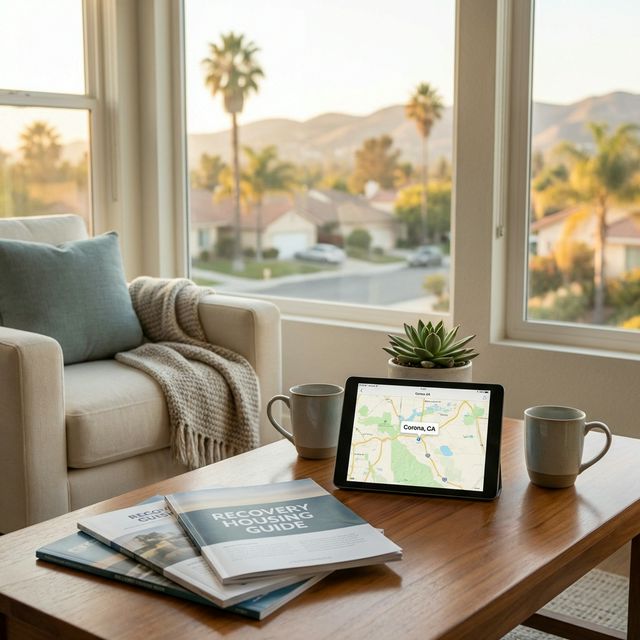
Corona, a city of nearly 160,000 residents in western Riverside County, occupies a geographic sweet spot that makes it particularly well-suited for recovery housing. Situated at the convergence of the 91 freeway and I-15, Corona serves as a gateway between the Inland Empire and coastal Orange County, providing residents with access to treatment resources, employment opportunities, and recovery support services across a wide region.
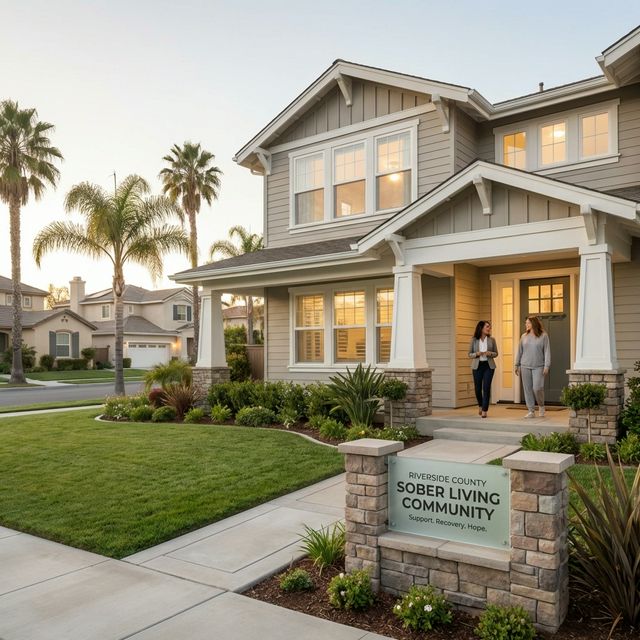
The city's suburban character offers a quieter, more stable environment than the urban neighborhoods where many sober living homes are concentrated in larger metropolitan areas. Tree-lined residential streets, community parks, local shopping centers, and a strong sense of neighborhood identity create conditions that support the routine and stability essential to early recovery.
Corona's proximity to Trust SoCal in Fountain Valley, approximately 25 minutes west via the 91 freeway, makes it particularly convenient for individuals who complete residential treatment at Trust SoCal and want to continue outpatient services while living in a sober, supportive environment. This seamless transition from treatment to sober living, with ongoing clinical support, significantly improves long-term recovery outcomes.
What Quality Sober Living Looks Like in Corona
The sober living landscape in Corona includes homes operating at various levels of structure and support. Understanding these levels helps you choose a home that matches your needs, recovery stage, and financial situation.
Level II homes, which represent the majority of quality options in Corona, feature a dedicated house manager who enforces community rules, conducts regular drug testing, facilitates house meetings, and provides general oversight of the recovery environment. Level III homes add on-site clinical services such as counseling, case management, and structured recovery programming.
- Random and scheduled urine drug screens to maintain accountability
- Mandatory recovery meeting attendance, typically three to five meetings per week
- House meetings for community building and conflict resolution
- Curfew enforcement, usually 10 PM on weeknights and midnight on weekends
- Employment or active enrollment in outpatient treatment required within 30 days
- Household chore rotations and shared responsibility for communal spaces
Not all sober living homes are created equal. Look for certification through CCAPP or NARR, visit the property in person, and speak with current residents before committing. Avoid homes that do not enforce drug testing or meeting attendance requirements.
Costs and Financial Planning for Sober Living in Corona
Sober living in Corona is generally more affordable than comparable options in coastal Orange County while offering similar access to regional resources. Monthly costs for shared rooms typically range from $600 to $1,200, while private rooms run from $1,000 to $1,800. Most homes require a security deposit equal to one month's rent and first month's payment at move-in.
Because sober living is classified as housing rather than treatment, it is not covered by health insurance. However, the relative affordability of Corona compared to cities like Anaheim, Huntington Beach, or Newport Beach makes it accessible to individuals on limited budgets. Some nonprofit organizations and county assistance programs offer scholarships for qualifying individuals.
When budgeting for sober living, account for additional expenses beyond rent including food, transportation, phone service, and personal items. Many Corona sober living homes include utilities and Wi-Fi in the monthly fee, but confirm what is covered before signing any agreement.
Recovery Resources Accessible from Corona
Corona's central location provides access to an extensive network of recovery resources. Multiple AA and NA meetings are held daily within the city, and the broader western Riverside County area hosts dozens more. The Inland Empire Central Office of AA maintains a comprehensive meeting schedule that includes Corona and surrounding communities.
Outpatient treatment providers in Corona offer individual therapy, group counseling, and intensive outpatient programs for substance use disorders. For individuals who completed treatment at Trust SoCal, continuing outpatient services at the Fountain Valley facility is convenient from Corona, with the drive taking approximately 25 to 35 minutes depending on traffic.
Employment resources in Corona are robust, with a diverse local economy that includes manufacturing, healthcare, retail, and food service industries. Many sober living homes assist residents with job placement through connections with local employers who are supportive of hiring individuals in recovery.
Making the Most of Your Time in Sober Living
Sober living is not simply a place to sleep between treatment sessions. It is an active phase of recovery that requires engagement, effort, and intentionality. The individuals who benefit most from sober living are those who embrace the structure, build genuine relationships with housemates, and use the time to establish the habits and routines that will carry them through independent living.
Get a sponsor early and work the steps if you are engaged in a 12-step program. Attend meetings beyond the minimum requirement. Seek employment that provides stable income and a sense of purpose. Develop healthy habits around sleep, nutrition, and exercise. Build sober friendships both inside and outside the house. These investments compound over time and create the strong foundation that lasting recovery requires.
The goal of sober living is to prepare you for independent, substance-free living. Most professionals recommend staying for at least 90 days, though six months to a year provides a significantly stronger foundation. Resist the temptation to leave prematurely because you feel better. Feeling better is a sign that sober living is working, not a signal that you no longer need it.
The six months I spent in sober living in Corona were the most important months of my recovery. I learned how to show up for life, hold a job, pay my bills, and be accountable to people who cared about me.
— Former sober living resident, Corona

Kristin Stevens, LCSW
Licensed Clinical Social Worker