Key Takeaways
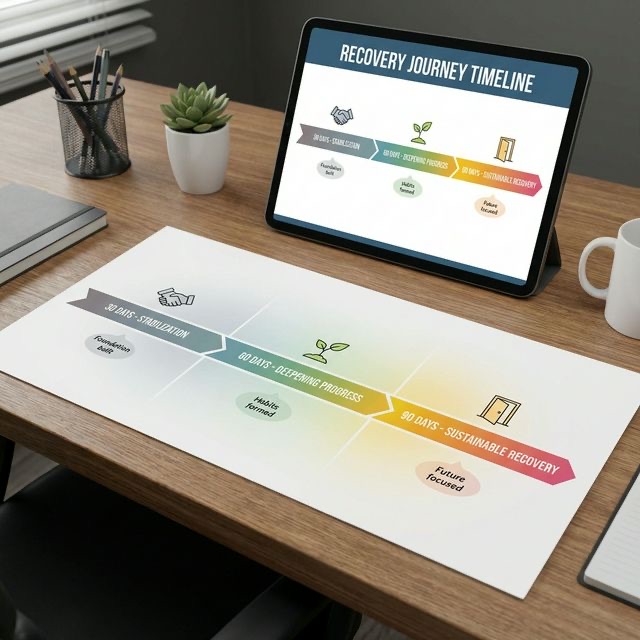
- Research from NIDA shows that treatment lasting at least 90 days produces significantly better outcomes than shorter stays.
- The appropriate length of treatment depends on substance type, severity of addiction, co-occurring disorders, and personal circumstances.
- Insurance often covers 30 days initially, but extensions can be authorized based on clinical necessity.
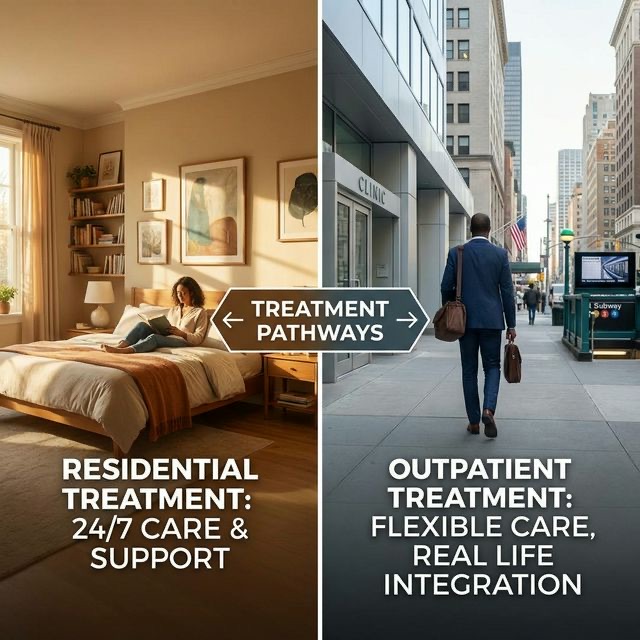
- Treatment duration includes all levels of care, not just residential: detox, residential, PHP, IOP, and aftercare.
- Leaving treatment too early is one of the strongest predictors of relapse.
The Research on Treatment Duration
The National Institute on Drug Abuse has been clear in its guidance: treatment lasting less than 90 days is of limited effectiveness. This finding is based on decades of research showing that the brain needs extended time to heal from the neurochemical damage caused by chronic substance use. While 30-day programs remain common, they often represent only the beginning of a treatment journey rather than a complete course of care.
A study published in the Archives of General Psychiatry tracked treatment outcomes across varying program lengths and found that individuals who remained in treatment for at least 90 days had significantly lower relapse rates at one-year follow-up compared to those who completed only 30 days. The improvement was not marginal; clients in longer programs were roughly twice as likely to maintain sobriety at the one-year mark.
It is important to understand that the 90-day benchmark refers to total engagement in structured treatment, not necessarily 90 days of residential care. A comprehensive treatment plan at Trust SoCal in Orange County might include two weeks of medical detox, 30 days of residential treatment, six weeks of partial hospitalization, and ongoing intensive outpatient programming. Together, these phases create the sustained therapeutic engagement that research shows is most effective.
NIDA research consistently shows that treatment engagement of at least 90 days is associated with significantly better outcomes. This applies across all substances and all levels of care.
Factors That Influence Treatment Length
No two people enter treatment with the same clinical profile, which is why treatment length must be individualized. Several key factors influence how long a person should remain in treatment, including the type and severity of the substance use disorder, the duration of active addiction, the presence of co-occurring mental health conditions, previous treatment history, and the stability of the home environment.
Individuals with severe opioid or alcohol dependence typically require longer treatment stays due to the complexity of medical detox and the protracted withdrawal symptoms associated with these substances. Similarly, clients with co-occurring disorders such as depression, anxiety, PTSD, or bipolar disorder often need additional time to stabilize both conditions simultaneously. A person with a straightforward alcohol use disorder and no co-occurring conditions may progress through treatment more quickly than someone with polysubstance use and complex trauma.
The home environment also plays a significant role in determining appropriate treatment length. Clients who have a stable, supportive home environment may be able to transition to outpatient care sooner, while those returning to environments where substance use is prevalent may benefit from a longer residential stay or placement in sober living housing.
- 1Substance type and severity: Opioid and alcohol dependencies often require longer treatment due to complex withdrawal.
- 2Co-occurring mental health disorders: Dual diagnosis treatment takes additional time to address both conditions.
- 3Previous treatment history: Individuals with prior relapses may benefit from extended stays.
- 4Duration of active addiction: Longer histories of use correlate with longer recovery timelines.
- 5Home environment stability: Unsafe or triggering home environments may warrant extended residential care.
- 6Physical health complications: Medical issues related to substance use may require additional treatment time.
Understanding 30, 60, and 90 Day Programs
Treatment programs are commonly organized into 30, 60, and 90-day tracks, but these numbers are somewhat arbitrary and do not reflect the way clinical decisions are actually made. A 30-day program typically provides enough time for medical detox and an introduction to therapy, but rarely enough time for deep therapeutic work or meaningful behavior change. It can serve as a solid foundation, but most clients need additional care after completing a 30-day stay.
A 60-day program allows more time for therapeutic engagement and often coincides with the period when clients begin to experience genuine emotional breakthroughs. By the second month, the initial fog of early recovery has lifted, and clients are better able to participate fully in individual and group therapy. However, 60 days may still be insufficient for individuals with complex clinical presentations.
The 90-day program aligns most closely with the research evidence and provides the most comprehensive treatment experience. Clients have time to move through the stages of change, develop robust coping skills, address underlying trauma and mental health conditions, and practice applying recovery principles in real-world situations through supervised outings and gradual reintegration. At Trust SoCal in Fountain Valley, treatment plans are designed to be flexible, allowing the clinical team to extend or modify the timeline based on each client's progress.
What Happens When People Leave Treatment Too Early
Leaving treatment prematurely, whether against medical advice or simply because the allotted days have been used up, is one of the most significant risk factors for relapse. During the early weeks of recovery, the brain is still healing from the effects of chronic substance use, cravings remain intense, and new coping skills have not yet been practiced enough to become automatic responses to triggers.
Research from the Treatment Episode Data Set shows that clients who leave treatment before completion are four to seven times more likely to relapse within the first year compared to those who complete their recommended course of care. The period immediately following discharge from residential treatment is especially dangerous, as the sudden transition from a structured, supportive environment to the triggers and temptations of daily life can be overwhelming.
This is why the continuum of care model is so important. Rather than abruptly ending treatment after a fixed number of days, the most effective approach involves a gradual step-down through multiple levels of care. At Trust SoCal, clients transition from residential treatment to PHP, then to IOP, and finally to alumni programming and community-based support. Each step provides slightly less structure while building greater independence and self-efficacy.
If you or your insurance company is pressuring you to leave treatment before your clinical team recommends, ask your treatment team to submit a peer review or appeal. Your clinical needs should drive the timeline, not arbitrary benefit limits.
How Insurance Affects Treatment Duration
Insurance coverage is a practical reality that often influences treatment length. Most private insurance plans initially authorize 28 to 30 days of residential treatment, with the possibility of extensions based on continued medical necessity. The treatment team submits utilization reviews documenting clinical progress and justifying the need for additional days. Insurance companies may approve extensions in increments of five to seven days.
Medi-Cal and other Medicaid programs in California typically cover residential treatment for up to 90 days or longer when medical necessity is demonstrated. The Mental Health Parity and Addiction Equity Act requires insurers to cover substance use disorder treatment at the same level as other medical conditions, which has improved access to extended care for many clients.
Trust SoCal's admissions team works directly with insurance companies to maximize coverage and advocate for the treatment duration that your clinical team recommends. If you have questions about your coverage for addiction treatment, call (949) 280-8360 for a free, confidential insurance verification.
Making the Most of Your Time in Treatment
Regardless of how long you stay in treatment, your level of engagement matters as much as the duration itself. Clients who actively participate in therapy, complete assignments, attend all scheduled groups, and practice new skills consistently achieve better outcomes than those who merely go through the motions for the required number of days. Recovery is not something that happens to you; it is something you build through daily effort and willingness.
Talk openly with your treatment team about your progress, concerns, and any reluctance you may feel. If you notice that you are counting down the days until discharge rather than focusing on your recovery, bring that up in therapy. The most transformative treatment experiences happen when clients stop viewing rehab as something to endure and start seeing it as an opportunity to fundamentally change the trajectory of their lives.

Amy Pride, MFTT
Marriage & Family Therapy Trainee