Key Takeaways
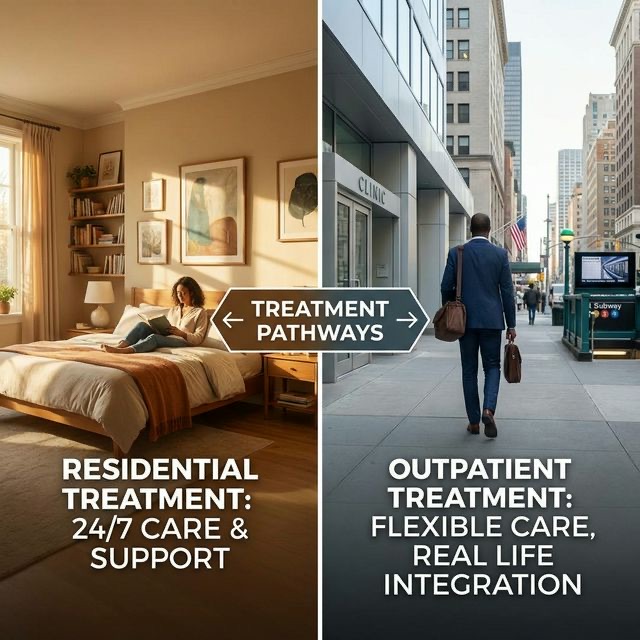
- Residential treatment provides 24/7 structured care in a supervised environment, making it ideal for severe addictions and those needing separation from triggers.
- Outpatient treatment allows clients to live at home while attending therapy sessions, making it suitable for those with strong support systems and milder substance use disorders.
- The best choice depends on addiction severity, co-occurring mental health conditions, home environment stability, and prior treatment history.
- Many people benefit from stepping down through multiple levels of care, starting with residential and transitioning to outpatient programs.
Understanding Residential vs. Outpatient Treatment
When exploring addiction treatment options, the question of residential vs. outpatient treatment comes up early in the process. Both levels of care provide evidence-based therapies and clinical support, but they differ significantly in structure, intensity, and daily commitment. Understanding these differences is essential for choosing the path that gives you the strongest foundation for lasting recovery in Southern California.
Residential treatment, also called inpatient treatment, requires you to live at the facility for the duration of your program, typically 30 to 90 days. Outpatient treatment allows you to live at home or in sober living while attending scheduled therapy sessions at the treatment center. Between these two poles exist intermediate levels of care such as partial hospitalization programs and intensive outpatient programs, which offer varying degrees of structure and clinical intensity.
Neither option is inherently better than the other. The right choice depends on your individual circumstances, including the severity of your addiction, your mental health needs, the stability of your home environment, and your work or family obligations. A thorough clinical assessment is the best way to determine which level of care will support your recovery most effectively.
What Residential Treatment Looks Like
Residential treatment offers the highest level of non-hospital care available for substance use disorders. Clients live on-site in a structured, substance-free environment with access to medical staff and therapists throughout the day and night. The immersive nature of residential care removes clients from the people, places, and situations that trigger substance use, allowing them to focus entirely on recovery.
A typical day in residential treatment includes individual therapy, group counseling, psychoeducation workshops, wellness activities, and community meetings. Meals, sleep schedules, and recreational time are all built into a structured daily routine designed to support physical and emotional healing. The consistent schedule helps clients develop healthy habits that carry forward into life after treatment.
The American Society of Addiction Medicine (ASAM) criteria provide a standardized framework for determining the appropriate level of care based on six dimensions including withdrawal potential, medical conditions, emotional and behavioral conditions, readiness to change, relapse potential, and recovery environment.
Who Benefits Most from Residential Care
Residential treatment is recommended for individuals with moderate to severe substance use disorders, particularly those who have been unable to maintain sobriety in less intensive settings. People with co-occurring mental health conditions such as depression, anxiety, PTSD, or bipolar disorder often benefit from the comprehensive clinical environment that residential care provides. Additionally, those whose home environments are unstable or filled with substance use triggers are better served by the protective structure of an inpatient setting.
Individuals with a history of multiple relapses or previous unsuccessful treatment attempts may also need the intensity that residential care offers. The 24/7 therapeutic environment provides constant support during the most vulnerable early weeks of recovery, when cravings and emotional instability are at their peak.
What Outpatient Treatment Looks Like
Outpatient treatment encompasses several levels of care that allow clients to receive therapy while maintaining their daily responsibilities. Standard outpatient therapy typically involves one to two sessions per week, while intensive outpatient programs require nine or more hours of programming per week, usually spread across three to five days. Partial hospitalization programs offer the most intensive outpatient option, with five to six hours of daily programming five days per week.
The flexibility of outpatient treatment makes it accessible to people who cannot take extended time away from work, school, or caregiving responsibilities. Clients attend therapy sessions during scheduled hours and return home in the evenings, practicing the skills they learn in real time within their daily environment. This real-world application can be a strength of outpatient care for individuals with strong external support systems.
Who Benefits Most from Outpatient Care
Outpatient treatment is generally appropriate for individuals with mild to moderate substance use disorders who have a stable living situation, a supportive home environment, and the self-discipline to attend scheduled sessions without the structure of a residential setting. It is also an excellent option for individuals stepping down from residential treatment who need continued support as they reintegrate into daily life.
People who are highly motivated, have a strong sober support network, and do not have severe co-occurring mental health conditions may do well starting at the outpatient level. However, it is critical that the decision is based on a clinical assessment rather than convenience alone, as starting at a lower level of care than clinically indicated can compromise outcomes.
Comparing Outcomes: What the Research Shows
Research on treatment outcomes shows that the level of care matched to the client's needs produces the best results. A landmark study published by the National Institute on Drug Abuse found that treatment lasting at least 90 days, regardless of setting, significantly improves long-term sobriety rates. The key factor is not where treatment occurs but whether the intensity of care matches the severity of the individual's condition.
That said, residential treatment generally produces better outcomes for individuals with severe addictions, co-occurring disorders, and limited social support. The structured environment prevents early dropout, which is one of the strongest predictors of relapse. Outpatient programs, when appropriately matched to clients with less severe conditions, show comparable outcomes at lower cost and with less disruption to daily life.
At Trust SoCal, our clinical team uses ASAM criteria to assess each client and recommend the most appropriate level of care. Some clients begin in residential treatment and step down to outpatient programming, while others enter directly at the outpatient level. The goal is always to match the intensity of treatment to the individual's clinical needs.
Cost and Insurance Considerations
Cost is a significant factor in the decision between residential and outpatient treatment. Residential programs are generally more expensive because they include housing, meals, and around-the-clock staffing in addition to clinical services. However, most health insurance plans provide coverage for residential treatment when it is deemed medically necessary, and the cost difference after insurance may be smaller than you expect.
Outpatient treatment is typically less costly on a per-day basis and may be easier to get approved by insurance. However, when you factor in the potential costs of relapse, lost productivity, and the need for retreatment, investing in the appropriate level of care upfront often proves more cost-effective in the long run. Trust SoCal's admissions team can help you understand your specific insurance benefits and out-of-pocket costs for both options.
Ask your insurance company specifically about coverage for each level of care: residential, PHP, IOP, and standard outpatient. Understanding your benefits for each level helps you plan a complete continuum of care without unexpected financial surprises.
The Step-Down Approach: Using Both Levels of Care
For many individuals, the most effective treatment journey involves progressing through multiple levels of care rather than choosing just one. This step-down approach, also called a continuum of care, begins with the most intensive level needed and gradually reduces structure as the client builds stability and coping skills. A common pathway moves from medical detox to residential treatment to partial hospitalization to intensive outpatient to standard outpatient therapy.
The step-down model allows for a gradual transition back to independence while maintaining therapeutic support at every stage. Each step down represents an increase in personal responsibility and real-world engagement, with the safety net of clinical support still in place. Research consistently shows that this graduated approach produces better long-term outcomes than abrupt transitions from intensive care to no care.
At our Orange County treatment center, we offer the full continuum of care under one clinical umbrella. This means your treatment team follows you from residential through outpatient programming, ensuring continuity of care and a seamless transition at each step. You never have to start over with a new provider or re-explain your story.
Making Your Decision
The decision between residential and outpatient treatment should be guided by clinical assessment, not convenience or cost alone. Be honest with yourself and your treatment team about the severity of your substance use, the stability of your home environment, your mental health needs, and your history with previous treatment attempts. The goal is to set yourself up for success by starting at the level of care that gives you the best chance of building a strong recovery foundation.
If you are unsure which level of care is right for you, our clinical team at Trust SoCal is available to conduct a confidential assessment and provide a personalized recommendation. Whether you need the immersive support of residential treatment or the flexibility of outpatient care, the most important step is reaching out and starting the conversation about your recovery.

Rachel Handa, Clinical Director
Clinical Director & Therapist