Key Takeaways
- Faith-based recovery programs combine clinical evidence-based treatment with spiritual practices for holistic healing.
- Programs like Celebrate Recovery, Teen Challenge, and the Salvation Army offer structured faith-centered addiction treatment.
- Spiritual engagement in recovery is linked to higher sobriety rates, improved mental health, and stronger community support.
- Faith-based programs are available across denominations and can be adapted for individuals of all spiritual backgrounds.
- Orange County offers numerous faith-based treatment options, including those at Trust SoCal in Fountain Valley.
- Choosing a faith-based program requires evaluating both clinical credentials and spiritual compatibility with your beliefs.
Understanding Faith-Based Addiction Recovery
Faith-based addiction recovery programs represent one of the oldest and most enduring approaches to treating substance use disorders. Long before modern clinical methods emerged, religious communities provided sanctuary and support for individuals struggling with addiction. Today, faith-based programs have evolved to combine time-tested spiritual principles with contemporary evidence-based practices, creating comprehensive treatment models that address the physical, psychological, and spiritual dimensions of addiction.
At their core, faith-based recovery programs operate on the premise that addiction is not merely a physical or psychological condition but also a spiritual one. This perspective recognizes that lasting recovery often requires individuals to find meaning, purpose, and connection beyond themselves. Whether through prayer, meditation, scripture study, or communal worship, these programs provide frameworks for spiritual growth that many participants find transformative.
Research consistently supports the effectiveness of incorporating spirituality into addiction treatment. Studies published in the Journal of Substance Abuse Treatment have found that individuals who engage in faith-based programs demonstrate comparable or superior outcomes to those in purely secular programs, particularly in long-term sobriety maintenance and quality of life improvements.
According to the National Survey on Drug Use and Health, individuals who attend religious services regularly are significantly less likely to develop substance use disorders, and those in faith-based recovery programs report higher rates of sustained sobriety.
The Historical Roots of Faith-Based Recovery
The connection between faith and recovery dates back centuries, with religious institutions serving as some of the first organizations to provide care for individuals struggling with alcoholism and drug addiction. The temperance movement of the 19th century was largely driven by religious organizations, and many of the foundational principles of modern recovery programs were directly influenced by spiritual and religious traditions.
- The Oxford Group, a Christian fellowship movement, directly influenced the creation of Alcoholics Anonymous in 1935
- The Salvation Army has operated addiction treatment programs since the late 1800s
- Catholic Charities and Jewish Family Services have provided addiction support for over a century
- Native American spiritual practices have been incorporated into culturally specific recovery programs
How Faith-Based Programs Differ from Secular Treatment
While both faith-based and secular programs utilize evidence-based clinical methods such as cognitive-behavioral therapy, motivational interviewing, and medication-assisted treatment, faith-based programs add a distinct spiritual dimension that includes structured spiritual activities, pastoral counseling, and community integration through religious congregations.
- Integration of prayer, meditation, and scripture study into daily treatment schedules
- Pastoral counseling alongside licensed clinical therapy sessions
- Community support through church congregations and faith-based support groups
- Emphasis on moral inventory, confession, and spiritual transformation as recovery tools
The Spiritual Dimension of Addiction
Many addiction specialists recognize that substance use disorders often involve a spiritual component, whether described as a sense of emptiness, disconnection, or loss of purpose. Faith-based programs specifically target this dimension, helping individuals rebuild their sense of meaning and connection to something greater than themselves.
- Addiction often creates feelings of isolation, shame, and spiritual disconnection
- Recovery involves rebuilding trust, purpose, and meaningful relationships
- Spiritual practices provide coping mechanisms that replace substance use
- Finding a sense of purpose is one of the strongest predictors of long-term sobriety
Major Faith-Based Recovery Programs and Models
The landscape of faith-based recovery encompasses a wide variety of programs, each with its own philosophical approach, structure, and denominational affiliation. Understanding the major models available can help individuals and families make informed decisions about which program best aligns with their needs, beliefs, and recovery goals.
From explicitly Christian programs like Celebrate Recovery and Teen Challenge to more broadly spiritual approaches like the 12-step model of Alcoholics Anonymous, there are options available for virtually every faith tradition and level of religious commitment. Many programs also welcome participants who are spiritually curious but not affiliated with any particular religion.
Celebrate Recovery
Founded in 1991 at Saddleback Church in Lake Forest, California, Celebrate Recovery has grown to become one of the largest faith-based recovery programs in the world. Operating in over 35,000 churches across the globe, this program adapts the traditional 12-step framework through an explicitly Christian lens, using scripture as the foundation for each step.
- Based on the Beatitudes from the Sermon on the Mount as guiding recovery principles
- Offers structured small groups organized by specific struggle types including substance abuse
- Provides a step-study curriculum that takes approximately one year to complete
- Available in Orange County at numerous churches near Trust SoCal in Fountain Valley
Teen Challenge and Adult & Teen Challenge
Adult & Teen Challenge, originally founded by David Wilkerson in 1958, operates long-term residential programs across the United States. Their model emphasizes intensive spiritual mentorship, vocational training, and community living, typically lasting 12 to 18 months.
- Long-term residential model with structured daily schedules including worship and Bible study
- Vocational training and life skills development integrated with spiritual growth
- Studies show 72% of graduates remain sober one year after completing the program
- Multiple locations throughout Southern California accessible from Orange County
The Salvation Army Adult Rehabilitation Centers
The Salvation Army operates one of the oldest and most recognized faith-based recovery networks in the country. Their Adult Rehabilitation Centers combine work therapy with spiritual counseling, group sessions, and Bible study in a structured residential environment.
- Free residential programs typically lasting six months
- Work therapy model through Salvation Army thrift stores provides structure and job skills
- Holistic approach including case management, counseling, and aftercare planning
- Facilities located throughout Orange County and greater Southern California
Other Notable Faith-Based Programs
Beyond the major programs, numerous other faith-based recovery options exist across different traditions, including Jewish recovery programs, Catholic-specific treatment centers, and Islamic recovery resources.
- JACS (Jewish Alcoholics, Chemically Dependent Persons and Significant Others) provides Jewish-centered recovery support
- Guest House is a nationally recognized Catholic treatment center model
- Millati Islami offers a 12-step framework adapted for the Islamic faith tradition
- Many interfaith programs welcome participants from all spiritual backgrounds
The Science Behind Spiritual Practices in Recovery
While faith-based recovery has deep historical roots, modern neuroscience and psychology are increasingly providing empirical support for the mechanisms by which spiritual practices aid in addiction recovery. Research in the fields of neurotheology and the psychology of religion has identified specific pathways through which spiritual engagement promotes healing and sustained sobriety.
Studies using functional MRI imaging have demonstrated that spiritual practices such as prayer and meditation activate brain regions associated with self-regulation, emotional processing, and reward that are often compromised by chronic substance use. These findings suggest that spiritual practices may help repair and strengthen the neural circuits that addiction damages.
At Trust SoCal in Fountain Valley, our treatment team integrates these scientific insights with compassionate spiritual care. We recognize that for many of our clients, spiritual growth is an essential component of their recovery journey. Contact us at (949) 280-8360 to learn more about how we incorporate spiritual practices into evidence-based treatment.
A landmark study by Columbia University found that a strong spiritual or religious life was associated with a thicker cerebral cortex, which serves as a protective factor against depression and addiction. Participants with high spiritual engagement showed 90% less risk of major depression.
Neurological Benefits of Prayer and Meditation
Neuroimaging studies have revealed that regular prayer and meditation practices produce measurable changes in brain structure and function. These changes include increased gray matter density in the prefrontal cortex, enhanced connectivity between brain regions involved in self-control, and reduced activity in the amygdala.
- Regular meditation increases prefrontal cortex thickness, improving impulse control and decision-making
- Prayer activates brain regions associated with empathy, compassion, and social connection
- Spiritual practices reduce cortisol levels, lowering the stress that often triggers relapse
- Mindfulness-based spiritual practices improve emotional regulation and craving management
The Psychology of Surrender and Acceptance
A central concept in many faith-based programs is the act of surrender, acknowledging powerlessness over addiction and turning to a higher power for help. Psychologically, this act of surrender has been shown to reduce the ego-driven resistance that often impedes recovery progress.
- Surrender reduces psychological defensiveness and denial, key barriers to recovery
- Acceptance-based approaches are linked to reduced anxiety and depression in recovery
- Letting go of the illusion of total control paradoxically increases genuine self-efficacy
- The concept of surrender aligns with evidence-based acceptance and commitment therapy principles
Community and Belonging as Healing Factors
Faith communities provide a built-in social support network that is crucial for sustained recovery. Research consistently identifies social isolation as a major risk factor for relapse, and faith-based programs naturally address this through congregational involvement and fellowship.
- Regular attendance at faith-based meetings creates accountability and consistent social connection
- Shared spiritual practices build deep bonds of trust and mutual support among participants
- Faith communities offer practical support including meals, transportation, and employment assistance
- Congregational involvement provides a sense of belonging and identity beyond the recovering addict label
What to Expect in a Faith-Based Treatment Program
Entering a faith-based treatment program can feel both hopeful and uncertain, particularly for individuals who may not have a strong religious background or who have complicated feelings about organized religion. Understanding what these programs typically involve can help ease anxiety and set realistic expectations for the treatment experience.
Most faith-based treatment programs combine the same clinical elements found in secular programs, including medical detoxification, individual and group therapy, and aftercare planning, with additional spiritual components. The balance between clinical and spiritual elements varies considerably from program to program.
When evaluating faith-based programs, ask about the ratio of clinical to spiritual programming, whether licensed clinicians oversee treatment, and whether participation in religious activities is mandatory or optional. The best programs offer a balanced approach.
Typical Daily Schedule in Faith-Based Residential Treatment
A typical day in faith-based residential treatment includes structured time for both clinical therapeutic activities and spiritual practices. Programs generally begin early in the morning and include a mix of individual therapy, group counseling, educational workshops, spiritual study, and community time.
- Morning devotionals or meditation sessions to start the day with spiritual centering
- Individual therapy sessions with licensed counselors two to three times per week
- Group therapy sessions addressing addiction topics, coping skills, and relapse prevention
- Afternoon workshops on life skills, anger management, or vocational preparation
- Evening worship services, Bible studies, or spiritual support group meetings
Clinical Components of Faith-Based Treatment
Reputable faith-based programs integrate evidence-based clinical modalities alongside spiritual care. This includes licensed therapists providing individual counseling, psychiatric services for co-occurring mental health conditions, and structured group therapy using proven therapeutic frameworks.
- Cognitive-behavioral therapy (CBT) to identify and change destructive thought patterns
- Dialectical behavior therapy (DBT) for emotional regulation and distress tolerance
- Trauma-informed care approaches including EMDR for addressing underlying trauma
- Medication-assisted treatment (MAT) when medically appropriate for opioid or alcohol dependence
Spiritual Programming Elements
The spiritual components of faith-based treatment vary by program but typically include structured opportunities for spiritual exploration, growth, and community. Most programs are welcoming of participants at all levels of faith.
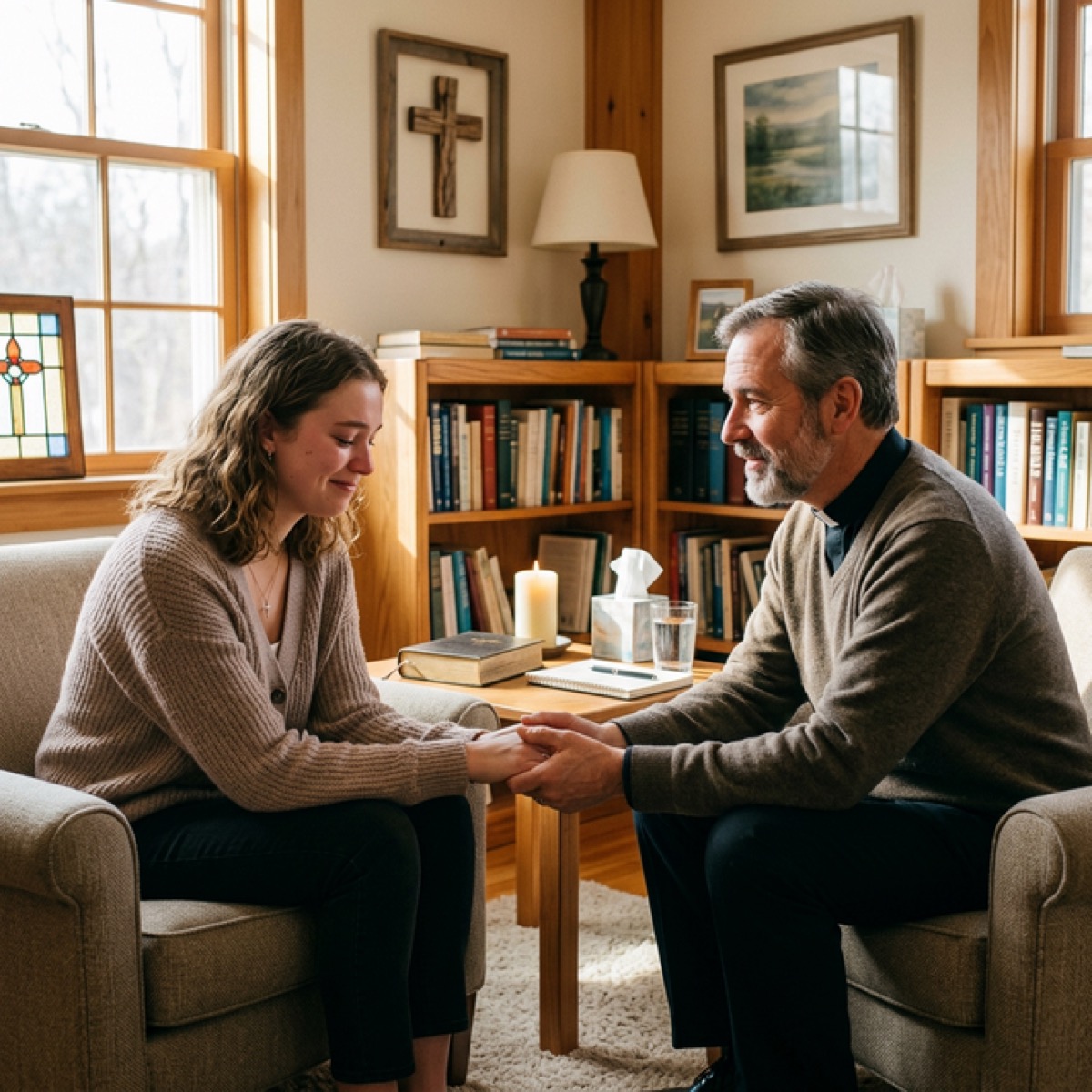
- Chaplain or pastoral counseling sessions for spiritual guidance and exploration
- Scripture study groups and spiritual literature discussions
- Prayer and meditation instruction and practice
- Community worship services and fellowship events
- Service projects and volunteer opportunities as practical expressions of faith
Faith-Based Recovery and the 12-Step Framework
The 12-step model, originally developed by Alcoholics Anonymous in 1935, is perhaps the most widely recognized recovery framework that incorporates spiritual principles. While AA and its sister fellowships such as Narcotics Anonymous describe themselves as spiritual rather than religious programs, their emphasis on a higher power, moral inventory, and spiritual awakening has made them a natural bridge between clinical treatment and faith-based recovery.
Many faith-based programs either incorporate the 12 steps directly or adapt them to align with specific religious traditions. Celebrate Recovery maps each of the 12 steps to specific Biblical passages. Similarly, programs like Millati Islami adapt the steps for the Islamic tradition, and JACS provides a Jewish interpretation of the 12-step framework.
At Trust SoCal, we recognize the enduring value of the 12-step spiritual framework while also offering alternative pathways for clients who prefer different approaches. Our treatment team works with each individual to find the recovery model that best supports their unique journey. Call (949) 280-8360 to discuss your options.
Spiritual Principles of the 12 Steps
Each of the 12 steps addresses a specific spiritual principle that supports recovery. From honesty and surrender in the early steps to service and spiritual awakening in the later steps, the framework provides a structured path for spiritual development alongside sobriety.
- Steps 1-3 focus on honesty, hope, and surrender to a power greater than oneself
- Steps 4-7 address courage, integrity, and willingness through moral inventory and character examination
- Steps 8-9 emphasize love, justice, and making amends for past harms
- Steps 10-12 center on perseverance, spiritual awareness, and service to others in recovery
How Faith Communities Adapt the 12 Steps
Different faith traditions have developed their own interpretations and adaptations of the 12-step framework, maintaining the core spiritual principles while incorporating specific religious teachings and communities.
- Christian adaptations replace "higher power" with direct references to God and Jesus Christ
- Jewish adaptations incorporate concepts of teshuvah (repentance) and tikkun olam (repairing the world)
- Buddhist-inspired programs like Refuge Recovery replace theistic language with mindfulness principles
- Secular adaptations like SMART Recovery replace spiritual steps with cognitive-behavioral strategies
Integrating 12-Step Meetings with Professional Treatment
The most effective recovery plans often combine professional clinical treatment with ongoing 12-step meeting attendance. This integration provides both the intensive therapeutic intervention needed in early recovery and the long-term community support essential for maintaining sobriety.
- Many treatment centers, including Trust SoCal, facilitate attendance at local AA and NA meetings during treatment
- Clients are encouraged to find a sponsor who can provide one-on-one guidance through the steps
- Step work can complement and deepen the insights gained in individual therapy sessions
- Continuing meeting attendance after treatment completion provides ongoing accountability and support
Choosing the Right Faith-Based Program
Selecting a faith-based recovery program requires careful consideration of multiple factors, including the program's clinical credentials, spiritual approach, treatment philosophy, and practical details such as location, duration, and cost. The right program aligns with both your clinical needs and your spiritual values.
It is important to evaluate faith-based programs with the same rigor you would apply to any medical treatment. Look for programs that are accredited by recognized organizations such as CARF or the Joint Commission, employ licensed clinical staff, and offer evidence-based therapeutic modalities alongside their spiritual programming.
Be cautious of programs that rely exclusively on spiritual practices without any clinical component, or that promise guaranteed results. Legitimate faith-based programs combine spiritual care with evidence-based medical and psychological treatment and are transparent about their approach and outcomes.
Key Questions to Ask Before Enrolling
Before committing to a faith-based program, asking the right questions can help ensure the program is a good fit for your needs.
- Is the program accredited by CARF, the Joint Commission, or another recognized accrediting body?
- Are counselors and therapists licensed by the state of California?
- Is participation in religious activities mandatory or voluntary?
- What specific evidence-based therapies are included in the treatment plan?
- Does the program accommodate individuals from different faith traditions or no faith background?
Evaluating Clinical and Spiritual Balance
The best faith-based programs strike a thoughtful balance between clinical excellence and spiritual depth. Neither component should dominate at the expense of the other.
- Look for programs that employ both licensed clinicians and trained pastoral counselors
- Treatment plans should be individualized and include measurable clinical goals
- Spiritual activities should enhance rather than replace evidence-based therapeutic interventions
- Programs should respect clients' autonomy in spiritual matters and not coerce participation
Insurance and Financial Considerations
Many faith-based programs accept insurance, including Medi-Cal and private plans, while some community-based programs such as the Salvation Army and Celebrate Recovery are offered at no cost.
- Contact programs directly to verify insurance acceptance and coverage details
- Some faith-based programs offer sliding-scale fees based on financial need
- Community-based programs like Celebrate Recovery are typically free of charge
- Trust SoCal can help verify your insurance coverage at (949) 280-8360
Faith-Based Recovery Resources in Orange County
Orange County is home to a rich network of faith-based recovery resources, from large church-based programs to intimate recovery fellowships and professional treatment centers that integrate spiritual care. The region's diverse religious landscape means that individuals of virtually any faith tradition can find supportive recovery communities nearby.
Trust SoCal, located in Fountain Valley at the heart of Orange County, serves as a bridge between clinical excellence and spiritual support. Our team works closely with local faith communities, recovery fellowships, and spiritual leaders to ensure our clients have access to comprehensive spiritual resources throughout their recovery journey.
Whether you are looking for a Christian recovery group, a meditation-based program, or a treatment center that honors your spiritual beliefs while providing top-tier clinical care, Orange County offers abundant options. Contact Trust SoCal at (949) 280-8360 for personalized guidance.
Orange County hosts over 200 weekly Celebrate Recovery meetings, hundreds of AA and NA groups, and numerous faith-based treatment programs. Trust SoCal can help connect you with the spiritual recovery resources that best match your beliefs and needs.
Local Church-Based Recovery Programs
Churches throughout Orange County offer recovery programs ranging from Celebrate Recovery to custom-designed ministry programs. Many of these programs are free and open to the public.
- Saddleback Church in Lake Forest, the birthplace of Celebrate Recovery, offers weekly meetings
- Mariners Church in Irvine operates a comprehensive recovery ministry with multiple support groups
- Calvary Chapel Costa Mesa provides recovery fellowships and Bible studies focused on addiction
- Rock Harbor in Costa Mesa offers Celebrate Recovery and family support programs
Professional Treatment Centers with Spiritual Components
Several professional treatment centers in Orange County integrate spiritual care into their clinical programs, offering the medical and therapeutic resources of a licensed treatment center combined with spiritual depth.
- Trust SoCal in Fountain Valley combines evidence-based treatment with spiritual support and community resources
- Multiple residential and outpatient programs in the county offer chaplain services and spiritual counseling
- Detox facilities in Orange County can connect patients with faith-based aftercare upon discharge
- Many local treatment centers facilitate transportation to AA, NA, and Celebrate Recovery meetings
Recovery Fellowships and Support Groups
Beyond formal treatment programs, Orange County hosts a vast network of recovery fellowships and support groups that incorporate spiritual principles for ongoing community support.
- Alcoholics Anonymous and Narcotics Anonymous hold hundreds of weekly meetings across the county
- Celebrate Recovery groups meet at churches throughout Fountain Valley, Huntington Beach, and surrounding cities
- Refuge Recovery and Recovery Dharma offer Buddhist-inspired mindfulness-based recovery meetings
- SMART Recovery provides science-based meetings for those preferring a secular but spiritually open approach
Overcoming Common Objections to Faith-Based Recovery
Despite the demonstrated effectiveness of faith-based recovery programs, some individuals hesitate to explore these options due to misconceptions, negative past experiences with religion, or concerns about coercion. Addressing these common objections openly and honestly can help individuals make informed decisions about whether a faith-based approach might benefit their recovery.
It is worth noting that modern faith-based programs have evolved significantly from their historical predecessors. Many now emphasize personal spiritual exploration over doctrinal conformity, welcome participants of all faiths, and maintain clear boundaries between spiritual encouragement and religious coercion.
I Am Not Religious — Can Faith-Based Recovery Work for Me?
Many individuals who benefit from faith-based recovery do not identify as religious when they enter treatment. The spiritual component often appeals to a broader sense of connection, meaning, and purpose that transcends specific religious beliefs.
- Spirituality and religion are related but distinct concepts; many programs focus on the former
- Higher power can be interpreted as nature, the recovery community, universal love, or personal values
- Many participants discover or deepen their spiritual life through the recovery process itself
- Programs like Trust SoCal respect individual spiritual journeys without imposing specific beliefs
I Have Had Negative Experiences with Religion
Past negative experiences with religious institutions can create understandable resistance to faith-based recovery. Quality programs acknowledge this and create safe spaces for individuals to explore spirituality at their own pace.
- Trained pastoral counselors in treatment settings are equipped to address religious trauma sensitively
- Many programs offer both faith-based and secular tracks, allowing individuals to choose their path
- Group settings provide opportunities to hear how others have navigated complicated relationships with faith
- The focus is on personal spiritual experience, not institutional religious compliance
Concerns About Scientific Validity
Some individuals worry that faith-based programs may prioritize spiritual practices over proven clinical methods. While this concern is valid for some programs, the leading faith-based treatment models integrate rigorous clinical care with spiritual support.
- Accredited faith-based programs must meet the same clinical standards as secular programs
- Peer-reviewed research supports the effectiveness of spiritual practices as a complement to clinical treatment
- The best programs employ dual-credentialed staff with both clinical licenses and pastoral training
- Trust SoCal maintains full clinical accreditation while offering spiritual support as an integrated component
Building a Lasting Recovery Through Faith and Community
Recovery from addiction is not an event but a lifelong journey, and faith-based approaches offer sustaining structures that support individuals well beyond the initial treatment period. The ongoing nature of spiritual practice, combined with the enduring community provided by faith congregations and recovery fellowships, creates a foundation for sustained sobriety.
For individuals who engage in faith-based recovery, the transition from treatment to everyday life is often supported by a network of relationships, routines, and resources established during the treatment process. Regular meeting attendance, continued spiritual practice, mentorship relationships, and service to others all contribute to a robust recovery lifestyle.
If you or a loved one is considering faith-based addiction recovery, Trust SoCal in Fountain Valley is here to help you explore your options. Our compassionate team understands the vital role that spiritual health plays in lasting recovery. Call us today at (949) 280-8360 to begin your journey.
Research from the Journal of Studies on Alcohol and Drugs found that individuals who maintained active spiritual practices after treatment were 40% more likely to remain sober at five years compared to those who did not engage in spiritual activities.
Creating a Spiritual Recovery Routine
Developing consistent spiritual practices after treatment helps maintain the spiritual growth achieved during the recovery process. These practices serve as daily anchors that reinforce sobriety.
- Establish a daily prayer or meditation practice, even if only for 10 to 15 minutes
- Regular attendance at faith-based recovery meetings such as Celebrate Recovery or AA
- Ongoing study of spiritual literature that inspires and challenges personal growth
- Journaling as a tool for spiritual reflection and self-awareness
The Role of Service in Sustained Recovery
Service to others is a cornerstone of virtually every faith-based recovery model. The 12th step of AA calls on members to carry the message to others who still suffer, and this principle is echoed across faith traditions.
- Sponsoring or mentoring newcomers in recovery strengthens both parties' sobriety
- Volunteering in faith communities provides purposeful engagement and social connection
- Service work shifts focus from self to others, counteracting the self-centeredness that fuels addiction
- Many faith-based programs encourage graduates to return as volunteers or peer counselors
Long-Term Community Support
The community dimension of faith-based recovery extends far beyond formal treatment. Faith congregations, recovery fellowships, and alumni networks provide ongoing support that can last a lifetime.
- Church communities offer consistent social support, meals, and practical assistance during early recovery
- Recovery fellowship alumni groups provide reunions, retreats, and ongoing connection
- Trust SoCal alumni programs maintain connections with graduates and provide continuing care resources
- Online faith-based recovery communities expand access to support beyond geographic limitations
Taking the First Step Toward Faith-Based Recovery
Beginning the journey of faith-based recovery can feel overwhelming, but it starts with a single step: reaching out for help. Whether you are seeking treatment for yourself or supporting a loved one, knowing that effective, compassionate, spiritually informed care is available can provide the hope needed to take that first step.
Trust SoCal in Fountain Valley, Orange County, offers a welcoming environment where clinical excellence meets spiritual care. Our experienced team is ready to help you explore faith-based recovery options, verify your insurance, and create a personalized treatment plan that honors your beliefs and addresses your unique needs.
Call Trust SoCal today at (949) 280-8360 or visit our website to learn more about our programs. Recovery is possible, and you do not have to walk this path alone.
If you are unsure whether a faith-based program is right for you, start by attending a free community meeting such as Celebrate Recovery or an AA meeting with a spiritual focus. These meetings can give you a sense of whether a spiritual approach to recovery resonates with your experience.

Rachel Handa, Clinical Director
Clinical Director & Therapist