Key Takeaways
- Reno and Washoe County offer multiple levels of addiction treatment including medical detox, inpatient residential care, partial hospitalization, and outpatient programs.
- The Nevada Division of Public and Behavioral Health licenses and regulates all treatment facilities in the Reno area, and residents should verify licensure before enrolling.
- Northern Nevada's geographic isolation and harsh winters can complicate access to specialized treatment, making out-of-state options worth considering.
- Renown Regional Medical Center and other Reno-area hospitals provide emergency detox services for individuals in acute withdrawal.
- Out-of-state treatment at facilities like Trust SoCal in Orange County, California provides geographic separation from Reno's triggers and access to a robust recovery community.
- Nevada Medicaid and most private insurance plans cover substance abuse treatment services for Washoe County residents.
The State of Addiction in Reno and Northern Nevada
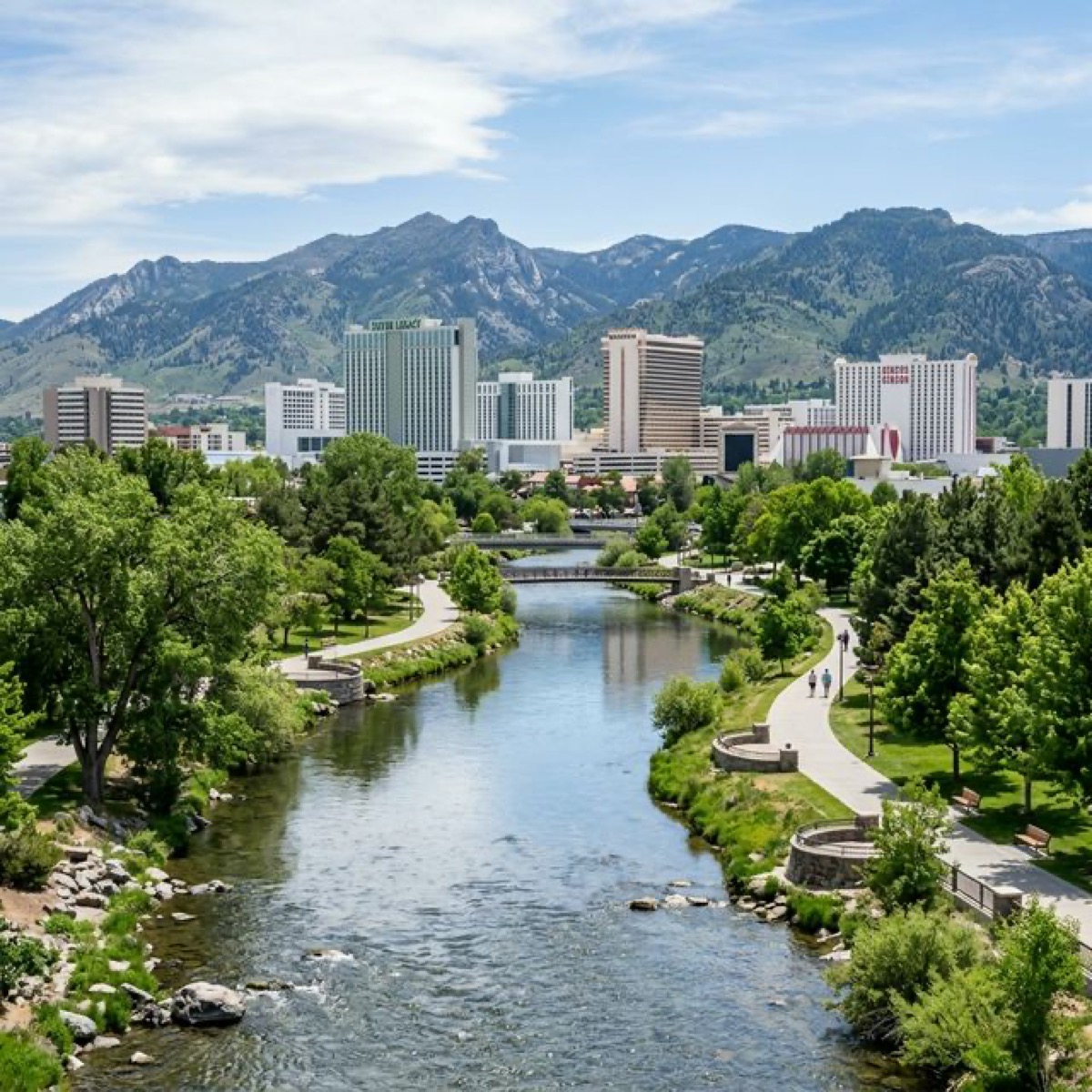
Reno, Nevada, often called "The Biggest Little City in the World," is a vibrant community of more than 270,000 residents nestled at the eastern base of the Sierra Nevada mountains along the Truckee River. While the city has diversified its economy well beyond the casino industry that once defined it, Reno and the broader Washoe County region continue to face significant challenges related to substance abuse and addiction. Methamphetamine, opioids, alcohol, and fentanyl have all taken a devastating toll on Northern Nevada families, and the demand for accessible, high-quality drug rehabilitation services has never been greater.
Data from the Nevada Division of Public and Behavioral Health paints a sobering picture. Washoe County has seen a steady increase in drug overdose deaths over the past decade, with fentanyl-related fatalities rising sharply since 2019. The region's proximity to major drug trafficking routes along Interstate 80 and Highway 395 contributes to the ready availability of illicit substances. Meanwhile, alcohol use disorder remains deeply entrenched, fueled in part by a casino culture that, while less dominant than in Las Vegas, continues to normalize heavy drinking throughout the region.
If you or someone you love is experiencing a drug or alcohol emergency in the Reno area, call 911 or go to the nearest emergency room at Renown Regional Medical Center. For non-emergency treatment guidance, contact Trust SoCal at (949) 280-8360 for a free, confidential consultation.
Most Commonly Abused Substances in Washoe County
Treatment admissions data for the Reno area reflects the specific substance abuse trends affecting Northern Nevada communities.
- Methamphetamine remains the most frequently cited substance in Washoe County treatment admissions, driven by regional trafficking networks along I-80
- Fentanyl and other synthetic opioids have emerged as leading causes of overdose death in Northern Nevada, often found mixed into counterfeit pills and other street drugs
- Alcohol use disorder is widespread across all demographics, reinforced by casino culture and the social normalization of heavy drinking
How Reno's Geography Shapes the Crisis
Northern Nevada's geographic characteristics play a meaningful role in how addiction affects the region. The area's relative isolation from major metropolitan centers means fewer specialized treatment options compared to cities like Las Vegas or those in Southern California.
- Reno is located approximately 440 miles from Las Vegas and 220 miles from Sacramento, limiting access to the density of treatment programs found in larger metro areas
- Rural communities in surrounding counties like Lyon, Churchill, and Humboldt have even fewer local treatment resources, making Reno the regional hub for addiction services
- Harsh winter weather in the Sierra Nevada can create logistical barriers to treatment access for residents of mountain communities like Truckee and Incline Village
The University of Nevada, Reno Factor
The presence of the University of Nevada, Reno (UNR) adds another dimension to the region's substance abuse landscape. College-aged populations are particularly vulnerable to binge drinking, prescription drug misuse, and experimentation with illicit substances.
- UNR's approximately 21,000 students contribute to a significant young adult population at elevated risk for substance use disorders
- The concentration of bars and nightlife in the Midtown and downtown districts near campus creates an environment where heavy drinking is normalized
- Greek life and social culture on campus can facilitate patterns of binge drinking that sometimes escalate into clinical alcohol use disorder
Types of Drug Rehab Programs Available in Reno
Drug rehabilitation in Reno and Washoe County encompasses a continuum of care designed to address varying levels of addiction severity. The most effective treatment approaches typically combine multiple levels of care, beginning with the most intensive intervention and stepping down progressively as the individual stabilizes and develops stronger coping mechanisms.
Reno is home to a number of licensed treatment facilities, including hospital-based detox programs at Renown Regional Medical Center, standalone residential treatment centers, and community outpatient clinics spread across the metropolitan area. The Nevada Division of Public and Behavioral Health maintains oversight of all licensed facilities and can help residents confirm that a program meets state standards for quality and safety.
Medical Detoxification in the Reno Area
Medical detox is the essential first step for individuals who are physically dependent on substances such as opioids, alcohol, benzodiazepines, or methamphetamine. Detox programs in the Reno area provide 24-hour medical supervision and medication management to ensure that withdrawal is as safe and comfortable as possible.
- Renown Regional Medical Center offers hospital-based detox services with full medical support for acute withdrawal management
- Dedicated detox facilities in the Reno area provide structured programs lasting 3 to 10 days depending on the substance and severity of dependence
- Medication-assisted detox protocols using buprenorphine, naltrexone, or benzodiazepines are available to manage withdrawal symptoms and reduce discomfort
Inpatient and Residential Treatment
Residential treatment programs in the Reno area typically range from 30 to 90 days and provide a structured, substance-free living environment where clients participate in daily therapy, group counseling, psychoeducation, and wellness activities. For individuals with severe addictions or co-occurring mental health disorders, residential care provides the intensity needed to build a strong recovery foundation.
- Structured daily schedules incorporating individual therapy, group counseling, and holistic wellness activities
- Removal from environmental triggers found along casino row and throughout Reno's nightlife districts
- Programs addressing co-occurring mental health conditions alongside substance use disorders
Outpatient and Intensive Outpatient Programs
Outpatient programs in the Reno area allow individuals to receive treatment while maintaining employment, attending classes at UNR or Truckee Meadows Community College, and fulfilling family responsibilities. Intensive outpatient programs typically require 9 to 15 hours of structured treatment per week.
- Flexible scheduling including evening sessions to accommodate work and school commitments
- Individual and group therapy multiple times per week using evidence-based approaches like CBT and motivational interviewing
- Step-down option for individuals transitioning from residential care back to independent living in Washoe County
Insurance Coverage and Payment Options for Reno Residents
Financial concerns remain one of the most commonly cited barriers to seeking addiction treatment in Northern Nevada. However, multiple pathways exist to make drug rehab accessible and affordable for Washoe County residents. Understanding your coverage options is an important early step in the treatment planning process.
Nevada Medicaid provides comprehensive coverage for substance abuse treatment services including medical detox, residential care, outpatient therapy, and medication-assisted treatment. Private insurance plans sold in Nevada are required under the Affordable Care Act and the Mental Health Parity and Addiction Equity Act to cover substance use disorder treatment at levels comparable to medical and surgical benefits. Major insurers operating in the Reno area, including Hometown Health, Anthem Blue Cross Blue Shield, and UnitedHealthcare, provide coverage for drug rehabilitation services.
Trust SoCal accepts most major insurance plans and offers free, no-obligation insurance verification. Call (949) 280-8360 to have your benefits reviewed and your out-of-pocket costs explained before making any treatment decisions.
Financial Assistance and Sliding-Scale Options
Washoe County residents who lack insurance or have limited coverage still have options for accessing treatment. Several pathways exist for those who cannot afford the full cost of private rehabilitation.
- The Nevada Division of Public and Behavioral Health administers federal block grant funding that supports treatment for uninsured and underinsured residents
- Community behavioral health centers in the Reno area often offer sliding-scale fees based on income
- Some residential treatment programs offer scholarships or reduced-rate beds for individuals demonstrating financial hardship
The Role of Renown Regional Medical Center and Local Hospitals
Renown Regional Medical Center, the largest hospital in Northern Nevada, plays a critical role in the region's addiction treatment infrastructure. The hospital's emergency department serves as the front line for overdose response and acute intoxication cases across Washoe County. Beyond emergency stabilization, Renown provides inpatient medical detox services and psychiatric evaluation for individuals with co-occurring mental health conditions.
The hospital's behavioral health unit offers assessment and short-term stabilization for individuals experiencing psychiatric crises related to substance use. From there, patients can be connected to residential or outpatient treatment programs throughout the Reno area. This hospital-based entry point into the treatment system is particularly important for individuals who might not otherwise seek help on their own, as an emergency room visit can serve as a wake-up call and an opportunity for clinical intervention.
Hospital-to-Treatment Pathways in Washoe County
Reno-area hospitals have developed increasingly effective systems for connecting overdose survivors and individuals in crisis to ongoing addiction treatment. These "warm handoff" protocols are designed to capitalize on the motivational window that often opens following a medical emergency.
- Emergency department-based addiction counselors provide bedside assessments and treatment referrals at Renown Regional Medical Center
- Peer recovery support specialists are available in some Reno-area emergency departments to offer lived experience and encouragement
- Hospital social workers coordinate insurance verification and placement at local treatment programs before discharge
Challenges of Recovery in Reno and Northern Nevada
While Reno offers a more subdued environment than Las Vegas, the city still presents meaningful challenges for individuals in early recovery. The casino industry, while no longer Reno's sole economic driver, maintains a visible presence along Virginia Street, in the downtown corridor, and at major resort properties like the Peppermill, the Grand Sierra Resort, and Atlantis. These establishments are not just tourist destinations but gathering places for local residents, meaning avoidance is not always practical.
Beyond the casino environment, Reno's relatively small population means that the recovery community, while growing, is more limited than what is available in larger metropolitan areas. Individuals in early recovery may find that their social circles overlap significantly with their former using networks, making it difficult to establish the clean break that supports lasting sobriety. The Truckee River corridor and downtown Reno, while beautiful, can also be associated with substance use for some residents.
Many addiction treatment professionals recommend that Reno residents consider treatment in a location outside Northern Nevada to gain geographic separation from local triggers. Trust SoCal in Fountain Valley, California is a roughly five-hour drive from Reno via I-80 and offers a completely different recovery environment in coastal Orange County.
Environmental and Social Triggers Specific to Reno
Understanding the specific triggers present in the Reno environment can help individuals in recovery develop more effective coping strategies and make informed decisions about where to seek treatment.
- Casino culture along Virginia Street and at major resort properties creates persistent exposure to alcohol and gambling triggers
- The bar and restaurant scene in Midtown Reno is heavily alcohol-centric, making social outings challenging in early recovery
- Reno's relatively small and interconnected community makes it difficult to avoid former using associates and environments
Why Reno Residents Choose Out-of-State Treatment
A growing number of Washoe County residents are recognizing the benefits of seeking addiction treatment outside of Northern Nevada. Orange County, California, located approximately five hours southwest of Reno via Interstate 80, offers a fundamentally different treatment environment characterized by mild coastal weather, an established and diverse recovery community, and a cultural landscape that naturally supports healthy living.
Trust SoCal, located in Fountain Valley in the heart of Orange County, has helped numerous Reno and Northern Nevada residents find lasting recovery by providing the geographic and cultural separation that is so valuable during the critical early stages of sobriety. The facility offers medical detox, residential treatment, partial hospitalization, and intensive outpatient programs, all delivered by a clinical team with experience serving clients from across the Western United States.
Benefits of Treatment in Orange County for Reno Residents
The advantages of traveling to Orange County for treatment extend beyond simple geographic distance from Reno. Several factors combine to create an environment that is uniquely supportive of the recovery process.
- Complete separation from Reno-based triggers, including casinos, former using associates, and familiar environments along the Truckee River corridor
- Access to one of the largest and most established recovery communities in the United States, with hundreds of AA, NA, and SMART Recovery meetings weekly
- Mild year-round coastal climate that supports outdoor therapeutic activities including surf therapy, hiking, and mindfulness practices on the beach
Travel and Logistics From Reno to Orange County
Getting from Reno to Trust SoCal in Fountain Valley is straightforward, with multiple transportation options available for both individuals entering treatment and family members planning visits.
- The drive from Reno to Fountain Valley takes approximately five hours via I-80 West to I-5 South, passing through Sacramento and the Central Valley
- Direct flights from Reno-Tahoe International Airport to John Wayne Airport in Orange County are available on multiple carriers with a flight time of about 90 minutes
- Trust SoCal's admissions team can help coordinate travel arrangements for Reno residents entering treatment
Building a Recovery Foundation in Washoe County
Whether treatment is completed locally in the Reno area or at an out-of-state facility like Trust SoCal, building a strong local recovery foundation in Washoe County is essential for long-term sobriety. Reno's recovery community has grown significantly in recent years, and resources are available for individuals at every stage of the recovery journey.
Twelve-step meetings including Alcoholics Anonymous and Narcotics Anonymous are held regularly at locations throughout Reno and Sparks. SMART Recovery and Refuge Recovery provide secular and mindfulness-based alternatives for individuals who prefer non-12-step approaches. The Reno area also has a growing number of sober social activities, recovery-focused fitness groups, and alumni organizations from regional treatment centers that provide community and accountability.
Recovery Resources in the Reno Area
Washoe County offers a range of community-based recovery support resources that can strengthen and sustain long-term sobriety for individuals who have completed treatment.
- Multiple AA, NA, and SMART Recovery meeting locations across Reno, Sparks, and surrounding communities
- Outpatient therapy and psychiatric services for ongoing mental health support through local behavioral health providers
- Sober living homes in the Reno area providing structured transitional housing with accountability and peer support
Taking the First Step Toward Recovery in Northern Nevada
If you or a loved one in the Reno area is struggling with drug addiction, effective treatment is available and recovery is genuinely possible. The hardest part is often making that initial phone call, but that single action has the power to redirect the entire course of a life. Every day of active addiction carries risks, and every day in recovery builds something lasting.
Trust SoCal is available 24 hours a day, 7 days a week to answer questions about treatment options, verify insurance coverage, and help Reno residents develop a personalized plan for entering rehab. Whether you choose local treatment in Washoe County or decide that the fresh start offered by Orange County is right for your situation, our team is here to guide you through every step. Call (949) 280-8360 today to begin.
Recovery starts with one call. Contact Trust SoCal at (949) 280-8360 for a free, confidential consultation. Our admissions team is available around the clock to help Reno and Northern Nevada residents access the treatment they need and deserve.

Rachel Handa, Clinical Director
Clinical Director & Therapist