Key Takeaways
- Music activates the brain's reward system, releasing dopamine at levels comparable to food and social interaction, providing a natural mood boost in recovery.
- Intentional playlist creation teaches emotional self-awareness and builds a personalized coping toolkit.
- The iso principle, matching music to your current emotional state before gradually shifting to a desired state, is more effective than trying to force a mood change with upbeat music.
- Music reduces perceived pain intensity by up to 21 percent and anxiety by up to 65 percent in clinical settings.
- Certain music associated with past substance use can trigger cravings; awareness and intentional curation are essential.
How Music Affects the Recovering Brain
Music is one of the few stimuli that activate virtually every region of the brain simultaneously. When you listen to music, your auditory cortex processes sound, your motor cortex tracks rhythm, your limbic system generates emotional response, your prefrontal cortex analyzes structure and meaning, and your reward system releases dopamine.
This whole-brain activation makes music uniquely powerful as a therapeutic tool. For the recovering brain, which is dealing with depleted dopamine reserves and compromised emotional regulation, music provides a natural, healthy source of neurochemical reward and emotional modulation.
At Trust SoCal in Fountain Valley, we encourage clients to develop a conscious, intentional relationship with music as part of their recovery toolkit. Music is free, portable, immediate, and endlessly varied, making it one of the most accessible therapeutic tools available.
The Iso Principle: Matching and Shifting Mood with Music
The iso principle is a foundational concept in music therapy. It involves selecting music that matches your current emotional state and then gradually transitioning to music that reflects your desired emotional state. This is more effective than the common but counterproductive approach of trying to force a good mood with upbeat music when you are feeling low.
When you are sad and you play energetic, happy music, the mismatch can intensify negative feelings because it invalidates your current experience. The iso principle honors where you are emotionally before guiding you somewhere better. The music meets you in your pain and gently leads you out.
In practice, this means creating playlists that begin with slower, more emotionally resonant music and progressively shift in tempo, key, and lyrical content toward a more positive or energized state. This gradual transition mirrors the therapeutic process itself: starting where you are and moving forward at a sustainable pace.
Create three playlists: one for low-energy moments (slow, gentle music that validates sadness without deepening it), one for building energy (gradually increasing tempo and positivity), and one for peak motivation (your most energizing, empowering songs).
Creating Therapeutic Playlists for Recovery
Intentional playlist creation is itself a therapeutic exercise. It requires you to identify your emotional needs, recall which music resonates with different states, and make deliberate choices about what you want to feel. This process builds the emotional vocabulary and self-awareness that support recovery.
Consider creating playlists for specific recovery situations and emotional needs.
- Morning motivation: energizing tracks that set a positive tone for the day ahead
- Craving surfing: calming music that supports breathing exercises and mindful observation of craving waves
- Emotional processing: music that facilitates feeling and releasing difficult emotions safely
- Physical activity: upbeat tracks that sustain energy during exercise and outdoor activities
- Sleep preparation: slow, ambient music that supports relaxation and sleep onset
- Gratitude and reflection: gentle, uplifting music for journaling, meditation, or quiet contemplation
- Social confidence: tracks that boost self-assurance before sober social events
Navigating Music Triggers in Recovery
Music is deeply entwined with memory and emotion. Certain songs, genres, or artists may be strongly associated with past substance use. Hearing a song that played during a period of heavy drinking or drug use can trigger vivid sensory memories and powerful cravings.
This does not mean you must avoid all music from your past. Awareness is the key. Identify specific tracks or genres that trigger cravings and make conscious decisions about whether and when to engage with them. Some people choose to avoid triggering music entirely in early recovery and gradually reintroduce it as their sobriety strengthens.
Discuss music triggers with your therapist. Processing the emotional associations attached to triggering music can neutralize their power over time. Some clients find that pairing previously triggering music with new, positive recovery experiences eventually overwrites the old associations.
Music as a Daily Recovery Practice
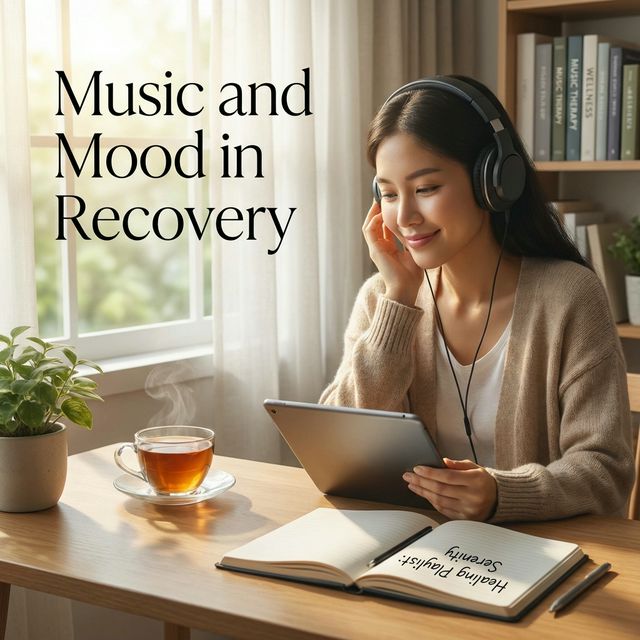
Integrating music intentionally into your daily routine transforms it from passive background noise into an active recovery tool. Like meditation or exercise, music practice becomes more effective with consistency and intentionality.
Start by paying attention to how different music affects your mood throughout the day. Notice which songs energize you, which calm you, and which evoke difficult emotions. This awareness informs your playlist creation and helps you use music as a precise emotional tool rather than a random influence.
Consider replacing passive social media scrolling with intentional music listening. Put on headphones, close your eyes, and give your full attention to a piece of music for its entire duration. This active listening is a form of mindfulness that provides many of the same benefits as seated meditation. Contact Trust SoCal at (949) 280-8360 to learn more about integrating holistic practices into your recovery plan.
A meta-analysis in the Cochrane Database of Systematic Reviews found that music-based interventions in addiction treatment improved treatment retention, reduced anxiety and depression symptoms, and increased motivation for change compared to standard treatment alone.

Kristin Stevens, LCSW
Licensed Clinical Social Worker