Key Takeaways
- PHP requires five to six hours of programming per day, five days a week, while IOP typically involves three to four hours, three to five days per week.
- PHP is best suited for individuals who need structured clinical support but do not require 24-hour residential care.
- IOP allows clients to maintain work, school, or family responsibilities while receiving treatment.
- The ASAM Criteria and your clinical assessment determine which level of care is most appropriate for your situation.
- Many clients step down from PHP to IOP as part of a continuum of care approach.
Understanding Levels of Care in Addiction Treatment
Addiction treatment is not one-size-fits-all, and the American Society of Addiction Medicine has established a continuum of care that ranges from early intervention to medically managed intensive inpatient services. Within this spectrum, Partial Hospitalization Programs and Intensive Outpatient Programs represent two distinct levels of outpatient care that provide structured treatment without requiring you to live at the facility. Understanding where each option falls on this continuum is essential for making the right treatment decision.
At Trust SoCal in Fountain Valley, clinicians use the ASAM Criteria to assess each client across six dimensions and recommend the level of care that best matches their clinical needs. This evidence-based approach ensures that you receive enough support to make meaningful progress without being placed in a more restrictive setting than necessary. Both PHP and IOP are effective treatment modalities, but they serve different populations and address different levels of clinical need.
The key distinction between these two levels of care lies in their intensity, time commitment, and the degree of structure they provide. Choosing correctly can mean the difference between a successful recovery journey and a premature return to substance use. This guide will help you understand the nuances of each program so you can have an informed conversation with your treatment team.
What Is a Partial Hospitalization Program (PHP)?
A Partial Hospitalization Program is the most intensive form of outpatient treatment available. Clients attend programming for approximately five to six hours per day, typically five days per week. The clinical schedule mirrors what you might experience in residential treatment, including individual therapy, group counseling, psychoeducation, and psychiatric services. The primary difference is that you return home or to a sober living environment at the end of each day.
PHP is designed for individuals who have completed residential treatment and need a step-down level of care, or for those whose clinical assessment indicates they need more structure than IOP can provide but do not require 24-hour supervision. Common scenarios include clients who have recently completed medical detox, individuals with co-occurring mental health disorders that require daily psychiatric monitoring, and those with limited sober support systems at home.
At Trust SoCal in Orange County, the PHP program includes evidence-based therapies such as cognitive-behavioral therapy, dialectical behavior therapy, and trauma-focused modalities. Clients also participate in relapse prevention planning, life skills training, and wellness activities. The comprehensive nature of PHP allows clinicians to address addiction and its underlying causes simultaneously while monitoring client progress on a daily basis.
PHP is sometimes called "day treatment" because clients spend most of the day in structured clinical programming but do not sleep at the facility overnight.
What Is an Intensive Outpatient Program (IOP)?
An Intensive Outpatient Program provides a lower level of clinical intensity than PHP while still offering structured, evidence-based treatment. IOP clients typically attend programming for three to four hours per day, three to five days per week. This reduced schedule allows individuals to maintain employment, attend school, care for family, or fulfill other daily responsibilities while still receiving meaningful addiction treatment.
IOP is appropriate for individuals who have a stable living environment, a moderate level of motivation for recovery, and the ability to function safely outside of a treatment setting for most of the day. It is often used as a step-down from PHP or residential treatment, but it can also serve as a primary level of care for individuals whose clinical assessment indicates a lower severity of addiction or those who have strong external support systems.
Trust SoCal offers both daytime and evening IOP sessions to accommodate various work and life schedules. Programming includes group therapy, individual counseling, family therapy sessions, and relapse prevention education. The flexibility of IOP makes it a popular option for clients in Orange County who need ongoing clinical support without the time commitment of a full-day program.
Key Differences Between IOP and PHP
While both programs share therapeutic modalities and treatment philosophies, several practical differences set them apart. The most obvious is the time commitment: PHP requires roughly 30 hours per week of clinical programming compared to approximately 9 to 15 hours for IOP. This difference in intensity affects the pace of therapeutic progress, the frequency of clinical contact, and the level of accountability built into the treatment structure.
Another important distinction is the clinical staffing model. PHP programs typically include daily access to psychiatrists or psychiatric nurse practitioners, more frequent individual therapy sessions, and a higher staff-to-client ratio. IOP programs provide psychiatric services on a less frequent basis and rely more heavily on group therapy as the primary modality. Both approaches are effective, but the right choice depends on your specific clinical needs.
- 1Time commitment: PHP requires 25-30 hours per week; IOP requires 9-15 hours per week.
- 2Clinical intensity: PHP includes daily psychiatric access; IOP provides weekly or biweekly psychiatric sessions.
- 3Structure level: PHP mirrors residential treatment scheduling; IOP offers more flexibility.
- 4Work compatibility: IOP allows continued employment; PHP may require a leave of absence or modified schedule.
- 5Step-down pathway: Most clients progress from residential to PHP to IOP before completing treatment.
How to Determine Which Program Is Right for You
The decision between IOP and PHP should be guided by a clinical assessment rather than personal preference alone. Your treatment team will evaluate several factors including the severity of your substance use disorder, the presence of co-occurring mental health conditions, your home environment stability, your history of relapse, and your current level of functioning. Individuals with higher severity scores on the ASAM Criteria are typically placed in PHP, while those with moderate scores may be appropriate for IOP.
Practical considerations also play a role in this decision. If you are the primary caregiver for children, if you cannot take extended time away from work, or if you have other obligations that prevent full-day programming, IOP may be the more realistic option even if PHP is clinically indicated. In these situations, your treatment team can implement additional safeguards such as more frequent drug testing, mandatory 12-step attendance, or sober living placement to compensate for the lower intensity of outpatient care.
At Trust SoCal, the clinical team works collaboratively with each client to find the right balance between clinical need and practical reality. If you are unsure which program is appropriate, call (949) 280-8360 for a confidential assessment. The admissions team can review your situation and provide a clear recommendation based on your unique circumstances.
If you are stepping down from residential treatment, ask your treatment team to create a detailed transition plan that includes the recommended level of care, specific therapeutic goals for the next phase, and clear criteria for when you can safely step down again.
The Continuum of Care: Moving Between Levels
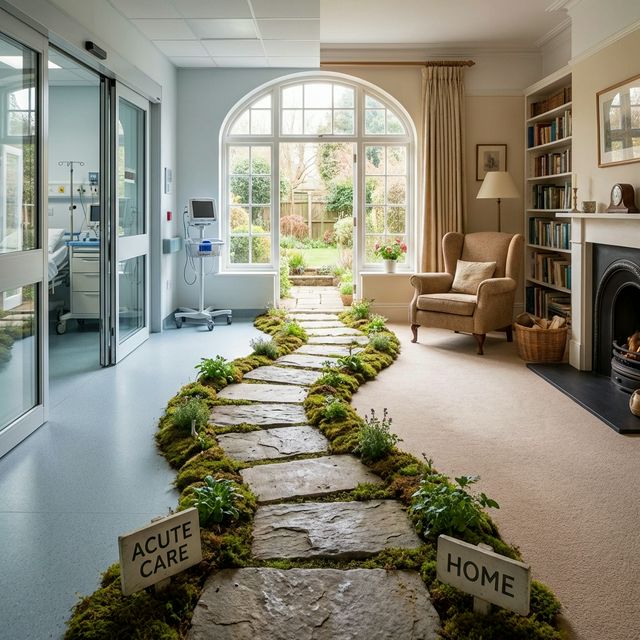
One of the strengths of modern addiction treatment is the continuum of care model, which allows clients to move fluidly between levels of care as their needs change. A typical progression might begin with medical detox, followed by residential treatment, then PHP, then IOP, and finally standard outpatient therapy or alumni programming. Each step down represents a reduction in clinical intensity paired with an increase in personal autonomy.
Movement between levels is not always linear. Some clients may need to step back up to a higher level of care if they experience a setback or if their clinical needs change. This is not a failure; it is a responsive, client-centered approach to treatment that recognizes recovery is rarely a straight line. Trust SoCal in Orange County provides all levels of outpatient care so clients can transition seamlessly without having to change providers or start over with a new treatment team.
Rachel Handa, Clinical Director
Clinical Director & Therapist