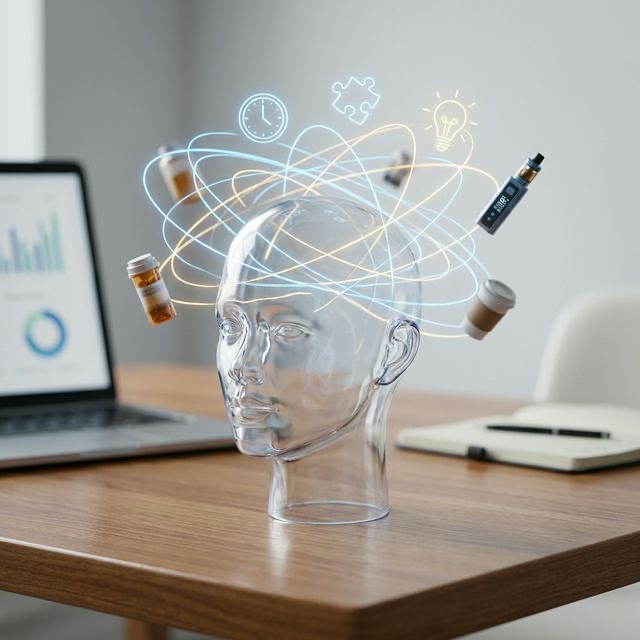
Key Takeaways
- ADHD and substance use disorders share a common neurobiological foundation in dopamine system dysregulation, with both conditions involving deficits in dopamine signaling within the prefrontal cortex and reward circuitry.
- Individuals with untreated ADHD are approximately two to three times more likely to develop a substance use disorder compared to the general population, according to meta-analytic research.
- The dopamine deficit model explains why individuals with ADHD gravitate toward substances that rapidly increase dopamine availability, including stimulants, nicotine, and alcohol.
- Properly managed stimulant medication for ADHD does not increase addiction risk and may actually reduce it by addressing the underlying dopamine deficiency that drives self-medication.
- Integrated treatment that addresses both ADHD and addiction simultaneously produces significantly better outcomes than sequential treatment of either condition alone.
- Trust SoCal in Orange County provides comprehensive neuropsychiatric evaluation and dual diagnosis treatment for individuals living with co-occurring ADHD and substance use disorders.
The Shared Neurobiology of ADHD and Addiction
Attention-deficit/hyperactivity disorder and substance use disorders appear clinically distinct, yet they converge on the same neurochemical system: the brain's dopamine pathways. Dopamine is a neurotransmitter that governs attention, motivation, reward processing, and impulse control. When dopamine signaling is disrupted, both the capacity to sustain attention and the capacity to regulate reward-seeking behavior are compromised. This shared vulnerability explains why ADHD and addiction co-occur at rates far exceeding what chance alone would predict.
Neuroimaging studies using positron emission tomography have demonstrated that individuals with ADHD show reduced dopamine transporter density and lower baseline dopamine activity in the striatum and prefrontal cortex. These same regions show altered dopamine function in individuals with substance use disorders. The overlap is not coincidental. It reflects a common neurobiological architecture in which the brain's capacity to generate adequate dopamine signals for normal attention and reward processing is fundamentally compromised.
At Trust SoCal in Orange County, understanding this shared neurobiology is central to our dual diagnosis treatment approach. Rather than treating ADHD and addiction as separate problems that happen to coexist, our clinical team addresses them as interconnected expressions of a shared dopamine dysregulation that requires coordinated pharmacological and psychotherapeutic intervention.
A 2024 meta-analysis published in the Journal of Attention Disorders found that individuals with ADHD have a 2.5-fold increased risk of developing any substance use disorder and a 3.6-fold increased risk of nicotine dependence compared to neurotypical controls.
How Dopamine Deficit Drives Self-Medication
The dopamine deficit model provides the most robust explanation for why individuals with ADHD are drawn to psychoactive substances at rates that dramatically exceed the general population. When the brain consistently underproduces dopamine or fails to transmit dopamine signals efficiently, the individual experiences a chronic state of understimulation that manifests as restlessness, boredom intolerance, difficulty sustaining motivation, and an intense drive to seek novel or stimulating experiences.
Substances of abuse are neurochemically efficient solutions to this deficit. Cocaine and amphetamines directly increase synaptic dopamine concentrations. Nicotine stimulates dopamine release in the nucleus accumbens. Alcohol, though a depressant, produces an initial dopamine surge that temporarily alleviates the ADHD brain's baseline understimulation. Even cannabis, which operates primarily through the endocannabinoid system, modulates dopamine release in ways that some individuals with ADHD experience as focusing or calming.
Stimulant Self-Medication Patterns
The most intuitive self-medication pathway involves stimulant substances. Many adults with undiagnosed ADHD report that cocaine or illicit amphetamines paradoxically made them feel calmer, more focused, and more productive rather than euphoric and wired. This paradoxical response mirrors the therapeutic effect of prescription stimulant medications and often represents an unconscious attempt to correct the underlying dopamine deficit.
Nicotine dependence is particularly prevalent among individuals with ADHD, with research suggesting that up to 40 percent of adults with ADHD smoke compared to approximately 20 percent of the general population. Nicotine's rapid delivery of dopamine to attentional circuits provides a micro-dose of the neurochemical correction that the ADHD brain requires, making smoking exceptionally difficult to quit for this population.
- Cocaine produces rapid but short-lived dopamine elevation, leading to binge patterns as the ADHD brain seeks sustained correction
- Illicit amphetamine use often begins as a performance enhancement strategy before escalating to dependency
- Nicotine provides continuous low-level dopamine supplementation that individuals with ADHD experience as focusing
- Caffeine overconsumption is a socially acceptable form of dopamine self-medication commonly seen in untreated ADHD
- Energy drinks combining caffeine with other stimulating compounds are disproportionately consumed by young adults with ADHD
Non-Stimulant Self-Medication Patterns
Not all self-medication in ADHD involves stimulants. Alcohol is the most commonly misused substance among adults with ADHD, partly because it is widely available and socially sanctioned, and partly because its anxiolytic effects address the secondary anxiety and emotional dysregulation that frequently accompany ADHD. Many individuals with ADHD describe alcohol as the only thing that slows their racing thoughts enough to experience relaxation.
Cannabis use is increasingly prevalent among young adults with ADHD who report that it helps them manage restlessness, insomnia, and emotional reactivity. While some research suggests that certain cannabinoids may have mild therapeutic effects on specific ADHD symptoms, the overall evidence indicates that regular cannabis use worsens executive function deficits, memory, and motivation in the ADHD population.
The Impulsivity Bridge
Beyond direct dopamine self-medication, impulsivity itself serves as a bridge between ADHD and addiction. Impulsivity is a core feature of ADHD, driven by insufficient dopamine-mediated inhibitory control in the prefrontal cortex. This same deficit in impulse regulation makes it harder for individuals with ADHD to resist the urge to use substances, to stop using once they start, and to maintain recovery commitments when cravings arise.
Research using delay discounting paradigms consistently demonstrates that individuals with ADHD show steeper discounting of future rewards, meaning they are neurobiologically predisposed to choose immediate gratification, including substance use, over delayed benefits like long-term health and sobriety. Treatment must directly address this impulsivity through both pharmacological dopamine correction and behavioral skill-building.
Stimulant Medication: Risk Factor or Protective Factor?
One of the most persistent and clinically damaging misconceptions about ADHD treatment is that stimulant medications increase addiction risk. This belief leads many clinicians, parents, and patients to avoid or discontinue the most effective pharmacological treatment for ADHD, inadvertently increasing the very risk they seek to prevent.
The evidence overwhelmingly supports the opposite conclusion. A landmark longitudinal study by Biederman and colleagues found that pharmacological treatment of ADHD during childhood and adolescence reduced the risk of subsequent substance use disorders by approximately 50 percent. Multiple replications and meta-analyses have confirmed this protective effect, demonstrating that when the dopamine deficit underlying ADHD is corrected pharmacologically, the drive to self-medicate with illicit substances diminishes substantially.
The critical distinction is between therapeutic dopamine correction and recreational dopamine flooding. Prescription stimulants taken orally at therapeutic doses produce a gradual, sustained increase in prefrontal dopamine that supports executive function without producing euphoria. This pharmacokinetic profile differs fundamentally from the rapid, intense dopamine surge produced by snorting or injecting stimulants, which is the pattern associated with addiction. Trust SoCal's medical team carefully manages stimulant prescribing within our dual diagnosis program to maintain this therapeutic distinction.
Abruptly discontinuing ADHD medication during addiction treatment can destabilize recovery by reintroducing the dopamine deficit that originally drove self-medication. Medication decisions should always involve a psychiatrist experienced in dual diagnosis care. Call Trust SoCal at (949) 280-8360 for expert guidance.
Diagnostic Challenges in Co-Occurring ADHD and Addiction
Accurate diagnosis of ADHD in the context of active substance use presents significant clinical challenges. Many substances produce cognitive effects that mimic ADHD symptoms, including difficulty concentrating, impulsivity, restlessness, and disorganization. Stimulant withdrawal, in particular, can produce a clinical picture that is nearly indistinguishable from ADHD. Conversely, long-standing ADHD symptoms may be attributed to substance use effects, leaving the underlying condition unrecognized and untreated.
A thorough diagnostic evaluation requires careful developmental history-taking that examines whether attention and impulse control difficulties preceded substance use. ADHD is a neurodevelopmental disorder with onset in childhood, so symptoms must have been present before age 12, even if they were not formally identified. Collateral information from family members, childhood school records, and prior psychological evaluations provides critical data points.
Trust SoCal employs structured diagnostic instruments, including the Adult ADHD Self-Report Scale, the Conners Adult ADHD Diagnostic Interview, and comprehensive neuropsychological testing when indicated. These assessments are conducted after an initial stabilization period to minimize the confounding effects of acute intoxication or withdrawal on cognitive testing results.
Red Flags Suggesting Undiagnosed ADHD in Addiction Treatment
Clinicians should maintain heightened suspicion for undiagnosed ADHD when specific patterns emerge during addiction treatment. Early identification allows for integrated treatment planning that addresses both conditions and substantially improves recovery outcomes.
- History of academic underperformance despite adequate intelligence, including frequent comments about not living up to potential
- Chronic difficulty with organization, time management, and follow-through on treatment assignments and aftercare planning
- Paradoxical calming response to stimulant substances rather than the expected euphoria and agitation
- Multiple prior treatment episodes with early relapse, particularly when relapse is associated with boredom, restlessness, or inability to maintain structure
- Tobacco or nicotine dependence that is unusually resistant to cessation interventions
- Emotional dysregulation characterized by rapid mood shifts, low frustration tolerance, and intense but short-lived emotional reactions
Integrated Treatment Strategies at Trust SoCal
Effective treatment for co-occurring ADHD and addiction requires a coordinated approach that simultaneously addresses the neurobiological dopamine deficit, the behavioral patterns that have developed around both conditions, and the psychosocial consequences of living with two chronic but highly treatable disorders.
Pharmacological management begins with careful evaluation of medication options. Non-stimulant medications such as atomoxetine (Strattera) and extended-release guanfacine (Intuniv) may be appropriate first-line options during early recovery when stimulant prescribing requires additional caution. For individuals with established sobriety and no history of stimulant misuse, long-acting stimulant formulations with low abuse potential, such as lisdexamfetamine (Vyvanse), may be introduced under close monitoring.
Regular aerobic exercise for 30 minutes or more has been shown to increase dopamine and norepinephrine availability in the brain, producing acute ADHD symptom improvement that can last several hours. Exercise is one of the most powerful adjunctive interventions for co-occurring ADHD and addiction.
Behavioral and Psychotherapeutic Approaches
Cognitive-behavioral therapy adapted for ADHD focuses on developing compensatory strategies for executive function deficits that traditional addiction-focused CBT may not address. Organizational skills training, time management systems, and external structure-building are integrated with relapse prevention techniques to create a comprehensive behavioral framework.
Dialectical behavior therapy is particularly valuable for individuals whose ADHD includes significant emotional dysregulation. The distress tolerance and emotion regulation modules provide tools for managing the intense, rapidly shifting emotional states that can trigger both ADHD-related impulsivity and substance use.
- CBT for ADHD addresses the cognitive distortions and executive function deficits specific to attention dysregulation
- DBT skills training builds distress tolerance and emotion regulation capacity that buffers against impulsive substance use
- Mindfulness-based interventions strengthen sustained attention and present-moment awareness, directly training the attentional circuits that are underactive in ADHD
- Structured daily schedules and environmental modifications reduce the cognitive demands that overwhelm ADHD executive function and trigger substance use cravings
Building a Dopamine-Healthy Lifestyle
Long-term recovery for individuals with ADHD requires developing sustainable, healthy sources of dopamine stimulation that can partially substitute for the neurochemical correction previously provided by substances. Regular high-intensity exercise has been shown to increase dopamine receptor availability and produces acute improvements in ADHD symptoms comparable to low-dose stimulant medication.
Novel and engaging activities, creative pursuits, competitive sports, and social engagement all provide natural dopamine stimulation that the ADHD brain craves. Trust SoCal's aftercare planning explicitly incorporates these dopamine-healthy lifestyle elements, recognizing that a recovery plan that does not account for the ADHD brain's elevated need for stimulation is likely to fail. Contact us at (949) 280-8360 to learn about our comprehensive dual diagnosis program.
Recovery Outcomes and Long-Term Management
Recovery from co-occurring ADHD and addiction is absolutely achievable, though it typically requires longer treatment engagement and more intensive aftercare support than addiction treatment alone. Research published in the American Journal of Psychiatry demonstrates that individuals who receive integrated treatment for both conditions show equivalent long-term sobriety rates compared to individuals without ADHD, provided that the ADHD continues to receive appropriate management.
The key insight for long-term success is that ADHD is a chronic neurodevelopmental condition that will not resolve with sobriety alone. Unlike substance-induced cognitive impairment, which typically improves over months of abstinence, ADHD symptoms persist and require ongoing management. Individuals who discontinue ADHD treatment after completing addiction rehabilitation are at significantly elevated risk for relapse because the underlying dopamine deficit reasserts its pressure toward self-medication.
Trust SoCal develops comprehensive long-term management plans that extend well beyond initial treatment, including ongoing psychiatric medication management, periodic reassessment of ADHD symptoms and treatment response, and connection with support communities that understand the unique challenges of living with both conditions. Our commitment to our clients does not end at discharge. Call (949) 280-8360 to begin your recovery journey with a team that understands the dopamine connection between ADHD and addiction.
The World Federation of ADHD International Consensus Statement (2021) recommends that all individuals entering substance use disorder treatment be screened for ADHD, and that ADHD treatment be integrated into addiction care rather than deferred until after sobriety is established.

Medical Review Board, MD, ABAM
Medical Director & Reviewer