
Trust SoCal Treatment Center

Fentanyl Withdrawal Timeline

Fentanyl withdrawal has emerged as one of the most critical clinical challenges in modern addiction medicine due to the drug's extraordinary potency and the sev...

Medically reviewed by Matt Beck, LMFT — Updated February 1, 2026

Quick answer

How long does fentanyl withdrawal last?

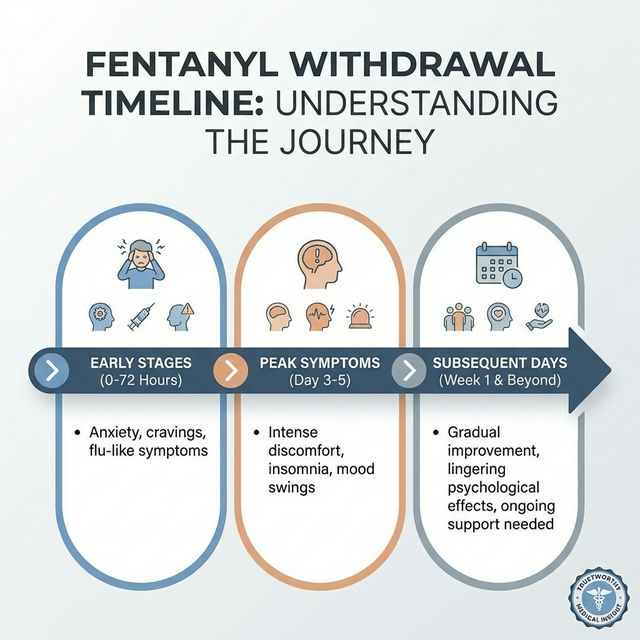
Fentanyl withdrawal symptoms can begin within 4 to 6 hours of the last dose and peak between 24 and 72 hours. Acute withdrawal often lasts 7 to 14 days or longer, and post-acute symptoms such as low mood, sleep problems and cravings may persist for months. Timing varies by person. Because withdrawal can be dangerous, medical supervision is recommended.

Overview

Fentanyl withdrawal has emerged as one of the most critical clinical challenges in modern addiction medicine due to the drug's extraordinary potency and the severity of the dependence it produces. Fentanyl is a synthetic opioid that is fifty to one hundred times more potent than morphine and has become the leading driver of opioid overdose deaths in the United States. Because of its extreme potency, fentanyl produces rapid and profound physical dependence, and withdrawal symptoms tend to be significantly more intense than those associated with heroin or prescription opioids. The illicit fentanyl supply has further complicated the clinical picture, as many users are unknowingly exposed to fentanyl analogs with unpredictable pharmacological properties, making withdrawal timelines less predictable. At Trust SoCal, our JCAHO-accredited medical detox program has developed specialized protocols for fentanyl withdrawal that account for the unique challenges this substance presents. Our medical team has extensive experience managing the intense symptomatology of fentanyl detox and uses a combination of medication-assisted treatment, symptom-targeted interventions, and compassionate clinical care to help clients navigate this difficult process safely. Understanding the fentanyl withdrawal timeline is essential for anyone contemplating recovery from fentanyl dependence. While the process is undeniably challenging, it is also entirely manageable with appropriate medical support, and it represents the critical first step toward a life free from opioid addiction. If you or a loved one is struggling with fentanyl use, please contact Trust SoCal at (949) 280-8360. Our admissions team is available twenty-four hours a day to help you take that first step.


Phase 1: Early Withdrawal (4-12 Hours)

Phase 1: Early Withdrawal (4-12 Hours)

Due to its high potency and relatively short duration of action, fentanyl withdrawal symptoms often begin remarkably quickly, sometimes within just four to six hours after the last dose. This rapid onset catches many individuals off guard and is one of the reasons fentanyl dependence is so difficult to break without medical assistance. The early symptoms are similar to those of other opioid withdrawals but often present with greater severity.

Initial symptoms include anxiety, restlessness, muscle aches, runny nose, watery eyes, excessive yawning, sweating, and the onset of cravings. Even at this early stage, the intensity of symptoms from fentanyl withdrawal often exceeds what individuals have experienced withdrawing from other opioids. Many people who have transitioned from heroin or prescription opioids to fentanyl report that fentanyl withdrawal is significantly worse.

At Trust SoCal, our medical team is prepared to begin comfort care and medication protocols immediately upon a client's arrival. For fentanyl-dependent individuals, the rapid onset of withdrawal means that pre-admission coordination is particularly important to minimize the gap between last use and the initiation of medical support.

  • Rapid symptom onset (as early as 4 hours)
  • Intense anxiety and restlessness
  • Severe muscle aches
  • Runny nose and watery eyes
  • Profuse sweating
  • Early onset of intense cravings

Phase 2: Peak Withdrawal (24-72 Hours)

Fentanyl withdrawal symptoms reach their peak intensity between twenty-four and seventy-two hours after the last dose, and this peak phase is often described by clients as the most physically and emotionally excruciating experience of their lives. The symptoms are similar to other opioid withdrawals but are amplified by fentanyl's potency and the depth of physical dependence it creates.

Peak withdrawal symptoms include severe abdominal cramping and diarrhea, persistent nausea and vomiting, intense bone and muscle pain, severe insomnia, profound restlessness, goosebumps, rapid heartbeat, elevated blood pressure, dilated pupils, and overwhelming cravings. Psychological symptoms including severe anxiety, depression, and irritability are also at their worst during this phase. Some individuals experience significant cognitive impairment and emotional dysregulation.

Managing peak fentanyl withdrawal requires aggressive medical intervention. At Trust SoCal, our physicians use carefully titrated buprenorphine protocols, often employing micro-dosing techniques that allow buprenorphine to be introduced gradually while fentanyl is still present in the system, avoiding the precipitated withdrawal that can occur with standard buprenorphine induction. Additional medications for nausea, pain, diarrhea, and sleep are provided as needed.

  • Severe gastrointestinal distress (cramping, vomiting, diarrhea)
  • Intense bone and muscle pain
  • Severe insomnia and restlessness
  • Overwhelming cravings
  • Cardiovascular stress (rapid heartbeat, high blood pressure)
  • Profound psychological distress

Phase 3: Extended Acute Withdrawal (Days 4-14)

Phase 3: Extended Acute Withdrawal (Days 4-14)

Unlike traditional opioid withdrawal, which tends to resolve substantially within five to seven days, fentanyl withdrawal often extends for a longer period. This is believed to be partly because fentanyl and its metabolites can accumulate in body fat and be released gradually, prolonging the withdrawal process. Many clients report that while the most intense symptoms begin to subside after day three or four, significant discomfort continues for seven to fourteen days or longer.

During the extended acute phase, symptoms include ongoing but gradually diminishing gastrointestinal distress, persistent body aches, fatigue, insomnia, depression, anxiety, and cravings. The protracted nature of fentanyl withdrawal can be discouraging for clients, making clinical support and psychoeducation about the expected timeline particularly important during this period.

Trust SoCal's medical team continues active medication management and symptom monitoring throughout this extended phase. Buprenorphine dosing is stabilized and adjusted based on clinical response, and clients begin to engage more actively in therapeutic programming as their acute symptoms allow.

Post-Acute Withdrawal and Long-Term Recovery

Post-Acute Withdrawal and Long-Term Recovery

Post-acute withdrawal symptoms from fentanyl can be particularly persistent and challenging. The brain's endogenous opioid system, which has been profoundly suppressed by chronic fentanyl exposure, requires an extended period to recover normal function. During this time, individuals may experience persistent low mood, anhedonia, anxiety, sleep disturbances, reduced stress tolerance, and intermittent cravings that can be triggered by environmental cues or emotional stress.

The duration of post-acute withdrawal varies widely among individuals but commonly persists for three to six months, with some symptoms continuing for up to a year or longer. Medication-assisted treatment with buprenorphine or naltrexone has been shown to significantly improve outcomes during this extended recovery phase by stabilizing brain chemistry and reducing cravings.

Trust SoCal's comprehensive continuum of care ensures that clients receive ongoing support throughout protracted recovery. Our aftercare programs include continued medication management, regular therapy sessions, peer support groups, and relapse prevention planning designed to help individuals navigate the challenges of early sobriety and build a sustainable foundation for long-term recovery.

Micro-Dosing Buprenorphine: A Breakthrough for Fentanyl Detox

Micro-Dosing Buprenorphine: A Breakthrough for Fentanyl Detox

One of the most significant challenges in fentanyl detox is the induction of buprenorphine, which is the primary medication used for opioid withdrawal management. With traditional induction protocols, buprenorphine cannot be administered until the patient is in moderate withdrawal, because starting it too early can cause precipitated withdrawal, an extremely uncomfortable and potentially dangerous condition in which withdrawal symptoms suddenly intensify dramatically. Due to fentanyl's high receptor affinity and long tissue half-life, this waiting period can be extended and unpredictable.

Micro-dosing, also known as the Bernese method, is an innovative approach that allows tiny amounts of buprenorphine to be introduced gradually while the patient may still have fentanyl in their system. By starting with extremely small doses and increasing incrementally over several days, the transition from fentanyl to buprenorphine can be achieved without precipitating withdrawal. This technique has been a significant advancement in fentanyl detox management.

At Trust SoCal, our physicians are experienced in micro-dosing protocols and use this approach when clinically indicated to provide the smoothest possible transition for clients detoxing from fentanyl. Our JCAHO accreditation ensures that all medication protocols are implemented with the highest standards of safety and clinical oversight. For more information about our fentanyl detox program, call (949) 280-8360.

Key Takeaways

  • Fentanyl withdrawal symptoms can begin within 4-6 hours of the last dose due to the drug's short duration of action.
  • Peak withdrawal is typically more severe than other opioid withdrawals due to fentanyl's extreme potency.
  • Extended acute withdrawal from fentanyl can last 7-14 days, longer than typical opioid withdrawal, due to fat-soluble metabolite storage.
  • Micro-dosing buprenorphine (Bernese method) is a breakthrough technique for managing fentanyl-to-buprenorphine transitions.
  • Trust SoCal's JCAHO-accredited program uses specialized fentanyl detox protocols with 24/7 medical monitoring.

Frequently Asked Questions

Is fentanyl withdrawal worse than heroin withdrawal?

Most individuals and clinicians report that fentanyl withdrawal is more intense and often longer-lasting than heroin withdrawal. This is primarily due to fentanyl's significantly higher potency, which creates deeper physical dependence. Additionally, fentanyl's fat-soluble properties can prolong the withdrawal timeline. Medical detox with experienced providers like Trust SoCal is particularly important for fentanyl-dependent individuals.

How long does fentanyl withdrawal last?

Acute fentanyl withdrawal typically lasts seven to fourteen days, with peak symptoms occurring between days one and three. However, post-acute withdrawal symptoms such as cravings, depression, and sleep disturbances can persist for months. The extended timeline compared to other opioids is partly due to fentanyl's accumulation in body fat and its profound impact on brain chemistry.

Can you die from fentanyl withdrawal?

While opioid withdrawal itself is rarely fatal in otherwise healthy individuals, fentanyl withdrawal can be dangerous due to severe dehydration from vomiting and diarrhea, as well as the elevated risk of fatal overdose upon relapse, since tolerance drops rapidly during withdrawal. Medical detox provides hydration support, vital sign monitoring, and a structured environment that addresses these risks.

What is precipitated withdrawal and why is it a concern with fentanyl?

Precipitated withdrawal occurs when buprenorphine is administered while fentanyl is still occupying opioid receptors in the brain. Buprenorphine displaces fentanyl but provides weaker stimulation, causing a sudden and intense onset of withdrawal symptoms. Because fentanyl has a high receptor affinity and can persist in the body for extended periods, the risk of precipitated withdrawal is higher than with other opioids. Trust SoCal uses micro-dosing protocols to minimize this risk.

Ready to Start Your Journey?

Recovery begins with a single step. Our compassionate team is here to guide you every step of the way.