Key Takeaways
- Addiction produces measurable changes in the prefrontal cortex, the brain region responsible for self-control and decision-making, fundamentally compromising the neural machinery that willpower depends on.
- Neuroimaging studies show that individuals with substance use disorders have significantly reduced activity in brain regions associated with impulse control, even when they are motivated to resist cravings.
- Relapse rates for addiction (40-60%) are comparable to relapse rates for other chronic medical conditions like hypertension (50-70%) and asthma (50-70%), according to NIDA, yet only addiction is blamed on moral failure.
- Evidence-based treatments such as CBT, MAT, and contingency management provide external support systems and neurobiological interventions that compensate for the brain changes caused by addiction.
- Trust SoCal uses neuroscience-informed treatment approaches that address the biological reality of addiction rather than relying on outdated willpower-based models.
The Willpower Myth: Why It Persists and Why It Harms
The belief that addiction is fundamentally a matter of willpower remains deeply embedded in public consciousness, despite decades of neuroscience research demonstrating otherwise. When a celebrity relapses, social media commentary invariably includes statements like "they just need to try harder" or "they clearly don't want it enough." This perspective feels intuitively correct because for most people, choosing not to drink or use drugs requires only a modest exercise of self-control. But this logic fails to account for the fact that addiction fundamentally changes the brain's capacity for self-regulation, creating a condition in which the very organ responsible for willpower has been compromised by the disease it is expected to overcome.
The willpower myth is not merely a harmless misconception. It carries profound consequences for how society treats people with substance use disorders. When addiction is framed as a choice rather than a medical condition, it justifies stigma, discourages treatment-seeking, and enables punitive rather than therapeutic responses. A 2024 survey by the Associated Press-NORC Center for Public Affairs Research found that 44% of Americans still believe addiction reflects a lack of self-discipline, a belief that correlates with opposition to expanding treatment access and support for criminalization over medicalization. Every time a celebrity's relapse is attributed to weakness rather than inadequate treatment or a chronic disease process, this harmful narrative is reinforced.
The scientific community has reached a clear consensus. The American Medical Association (AMA), the American Society of Addiction Medicine (ASAM), the World Health Organization (WHO), and the National Institute on Drug Abuse (NIDA) all classify addiction as a chronic, relapsing brain disorder. This classification is not a rhetorical gesture or an attempt to absolve individuals of responsibility. It is a statement grounded in reproducible neurobiological evidence showing that chronic substance exposure produces lasting structural and functional changes in the brain that impair volitional control over drug-seeking behavior.
What Happens to the Brain's "Willpower Center"
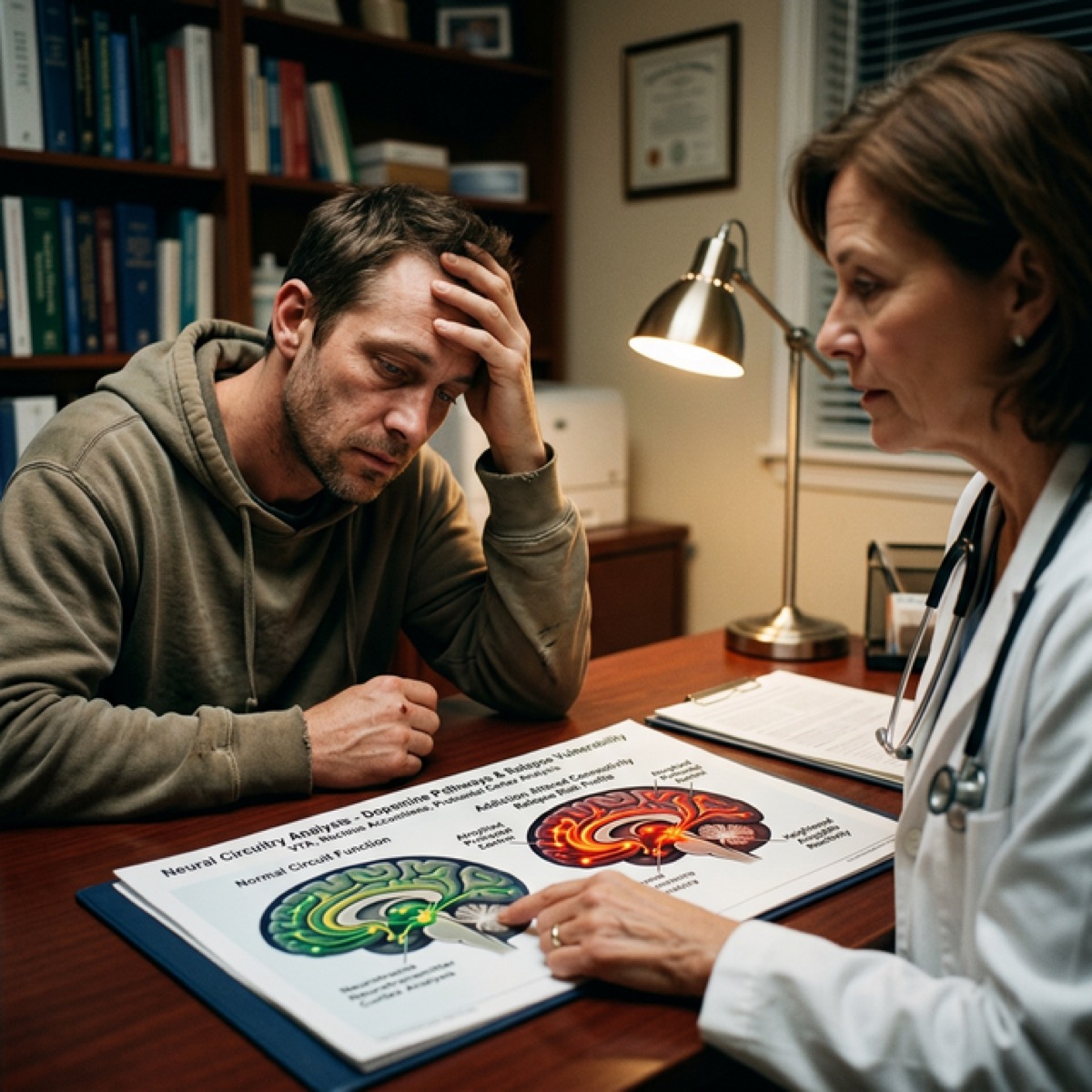
Willpower, in neurological terms, depends on the prefrontal cortex (PFC), the brain region located just behind the forehead that governs executive functions including impulse control, planning, risk assessment, and emotional regulation. The PFC acts as a top-down regulatory system that can override impulses generated by subcortical structures like the nucleus accumbens and amygdala. In a healthy brain, when the reward system signals a craving, the PFC evaluates whether acting on that craving is consistent with the individual's goals and values. This evaluation process is what we colloquially call "willpower" or "self-control."
Chronic substance use systematically degrades PFC function. Neuroimaging studies using functional MRI and PET scanning have revealed that individuals with substance use disorders show significantly reduced gray matter volume and decreased metabolic activity in the orbitofrontal cortex, dorsolateral prefrontal cortex, and anterior cingulate cortex. These changes are not subtle. A landmark study by Nora Volkow and colleagues at the National Institutes of Health demonstrated that methamphetamine users showed PFC metabolic reductions comparable to those seen in patients with frontotemporal dementia. Similar findings have been documented for alcohol, cocaine, opioids, and other substances of abuse.
The practical implication is straightforward but devastating: asking someone with a substance use disorder to use willpower to overcome their addiction is asking them to use the very brain system that their addiction has damaged. It is analogous to asking someone with a broken leg to walk off their injury. The capacity for self-regulation that willpower requires has been neurologically compromised by the disease process. This does not mean that individuals with addiction bear no responsibility for their recovery, but it does mean that willpower alone is an insufficient tool, and that effective treatment must provide external supports and neurobiological interventions to compensate for the brain's impaired self-regulatory capacity.
PET imaging studies by Dr. Nora Volkow at the NIH have shown that individuals with substance use disorders exhibit up to 20% reduction in dopamine D2 receptor availability in the prefrontal cortex, directly impairing the neural circuits responsible for self-control and decision-making.
Relapse as a Feature of Chronic Disease, Not a Character Flaw
One of the most powerful arguments against the willpower model of addiction comes from comparing relapse rates across chronic medical conditions. NIDA reports that relapse rates for substance use disorders fall between 40% and 60%, a range that is essentially identical to the relapse rates for type 1 diabetes (30-50%), hypertension (50-70%), and asthma (50-70%). Yet no one suggests that a person whose blood pressure spikes after missing their medication lacks willpower or moral character. The relapse is understood as a predictable feature of a chronic condition that requires ongoing management, not a one-time cure.
This comparison is not merely rhetorical; it reflects a genuine clinical parallel. All of these conditions share key features: they have both genetic and environmental risk factors, they involve physiological dysregulation that persists even during periods of apparent wellness, they require behavioral modification as part of management, and they benefit from pharmacological intervention. The primary difference is that addiction affects the brain, specifically the circuits involved in motivation, reward, and self-control, which makes the disease process itself undermine the patient's ability to adhere to treatment. This creates a cruel paradox in which the organ affected by the disease is the same organ required to fight it.
Understanding relapse as a feature of chronic disease rather than a personal failing has critical implications for treatment design. Effective programs anticipate relapse risk, teach patients to recognize warning signs, develop personalized relapse prevention plans, and establish protocols for rapid re-engagement with treatment if relapse occurs. At Trust SoCal, our aftercare programming in Orange County is specifically designed to provide the long-term support structure that helps individuals navigate the inevitable challenges of sustaining recovery. Rather than viewing relapse as the end of the road, we treat it as clinical information that guides adjustments to the treatment plan. Reach out at (949) 280-8360 to learn about our comprehensive approach.
If you or someone you love is experiencing a relapse, seek help immediately. Relapse does not mean treatment has failed; it means the treatment plan needs adjustment. Contact Trust SoCal at (949) 280-8360 or call SAMHSA's National Helpline at 1-800-662-4357 for free, confidential support 24/7.
Beyond Willpower: What Evidence-Based Treatment Actually Provides
If willpower is insufficient, what does work? Evidence-based addiction treatment provides a multi-layered approach that addresses the biological, psychological, and social dimensions of the disease simultaneously. At the biological level, medication-assisted treatment (MAT) can restore neurochemical balance, reduce cravings, and block the euphoric effects of certain substances. Buprenorphine and naltrexone for opioid use disorders, and naltrexone and acamprosate for alcohol use disorders, have been shown to significantly reduce relapse rates by addressing the neurobiological drivers of compulsive use that willpower cannot reach.
At the psychological level, therapies like cognitive-behavioral therapy (CBT) help individuals develop new cognitive and behavioral strategies for managing triggers, cravings, and high-risk situations. Unlike willpower, which is a finite resource that depletes under stress (a phenomenon psychologists call ego depletion), CBT-derived skills become more automatic and reliable with practice. Dialectical behavior therapy (DBT) provides additional tools for emotional regulation and distress tolerance, addressing the intense negative emotional states that frequently precipitate relapse. Contingency management provides immediate external incentives for maintaining abstinence, essentially scaffolding the reward system while the brain's natural reward circuitry heals.
At the social level, group therapy, peer support, family therapy, and structured aftercare provide the relational context that supports sustained recovery. Research has consistently demonstrated that social connection is one of the strongest protective factors against relapse. Programs that isolate treatment from the patient's social reality produce poor long-term outcomes because they fail to address the environmental factors that contribute to addiction and relapse. Trust SoCal's programs in Fountain Valley integrate family therapy, peer support groups, alumni programming, and community connection to build the social foundation that sustains recovery long after formal treatment ends.

Trust SoCal Editorial Team, Clinical Review Board
Editorial & Clinical Review