Key Takeaways
- Detroit and Wayne County experience elevated opioid overdose rates driven by fentanyl contamination and access barriers in underserved neighborhoods.
- Treatment barriers include geographic maldistribution of providers, insufficient MAT availability, transportation challenges, and systemic barriers affecting vulnerable populations.
- Community-based organizations and harm reduction providers are filling critical gaps in the formal treatment system throughout Detroit and Wayne County.
- Naloxone (Narcan) is available without a prescription in Michigan and should be kept in every household where opioids are used, whether prescribed or illicit.
- Out-of-state treatment in Southern California offers geographic distance from environmental triggers and access to specialized programming not available locally.
- Recovery support networks including 12-step groups, recovery organizations, and peer support are essential for sustained sobriety in Detroit.
The Scope of the Opioid Crisis in Detroit and Wayne County
The opioid crisis in Detroit and Wayne County represents one of the most significant public health challenges facing Michigan. From the urban core of Detroit to surrounding suburban communities, substance use disorders affect families across socioeconomic strata. The Michigan Department of Health and Human Services reports alarming rates of opioid-related overdose deaths, with fentanyl driving a significant and growing share of fatalities. Understanding the scope and dynamics of this crisis is essential for individuals, families, and communities seeking effective solutions.
Detroit's position as a major transportation hub along interstate corridors including I-75, I-94, and I-96 has made it a significant market for illicitly manufactured fentanyl and heroin. The city's economic challenges and persistent poverty in certain neighborhoods have created conditions in which substance use disorders flourish. Unlike some emerging drug epidemics, Detroit's opioid crisis has roots extending back decades, with the city's communities adapted to ongoing cycles of addiction and recovery.
Fentanyl's introduction into Detroit's heroin supply beginning around 2014-2015 dramatically transformed the overdose landscape. Users who had maintained stability on heroin found themselves at sudden risk of fatal overdose from even small amounts of fentanyl-contaminated product. The unpredictability of street drug potency means that overdose can occur to individuals with significant tolerance. The result has been a public health emergency that demands urgent, coordinated response.
Fentanyl is now involved in the majority of opioid overdose deaths in Michigan. The drug is often mixed into heroin without the user's knowledge, making every dose potentially lethal. Fentanyl test strips, which can detect the presence of fentanyl in drugs before use, are legal in Michigan and are distributed free of charge by harm reduction organizations throughout Detroit.
Treatment Options and Access in Detroit
Despite the severity of the opioid crisis, a range of treatment options exists for Detroit residents. Medical detoxification is available through major hospital systems, providing medically supervised withdrawal management that reduces discomfort and medical risk during the first critical days of recovery. Residential treatment programs range from short-term 28-day intensive experiences to extended care models that provide longer-term stability.
Medication-assisted treatment (MAT) is the gold standard for opioid use disorder and is increasingly available throughout Detroit and Wayne County, though availability remains limited in some areas. Buprenorphine (Suboxone) and methadone programs provide evidence-based pharmacological treatment combined with counseling and behavioral support. Outpatient programs allow individuals to maintain employment and family responsibilities while receiving treatment.
Finding the Right Treatment Level
Different individuals need different levels of care depending on the severity of their addiction, presence of co-occurring conditions, social stability, and personal circumstances. Understanding these levels helps guide individuals and families toward appropriate treatment.
- Medical detoxification (3-10 days) for individuals experiencing physiological dependence on opioids, alcohol, or benzodiazepines
- Residential treatment (28-90 days) for individuals requiring intensive supervision, therapeutic programming, and environmental structure
- Intensive outpatient programs (IOPs) allowing individuals to live at home while attending treatment sessions three to five times weekly
- Standard outpatient programs (one to two sessions weekly) for individuals with stable housing, employment, and family support
- Medication-assisted treatment (ongoing) providing pharmacological support for opioid use disorder combined with counseling and peer support
Harm Reduction and Community Response
In the absence of treatment access sufficient to meet all need, harm reduction services play a critical role in keeping people alive and connected to systems of care. Naloxone distribution programs throughout Detroit provide lifesaving access to overdose reversal medication. Syringe exchange services, wound care, and connection to treatment are part of a comprehensive harm reduction approach.
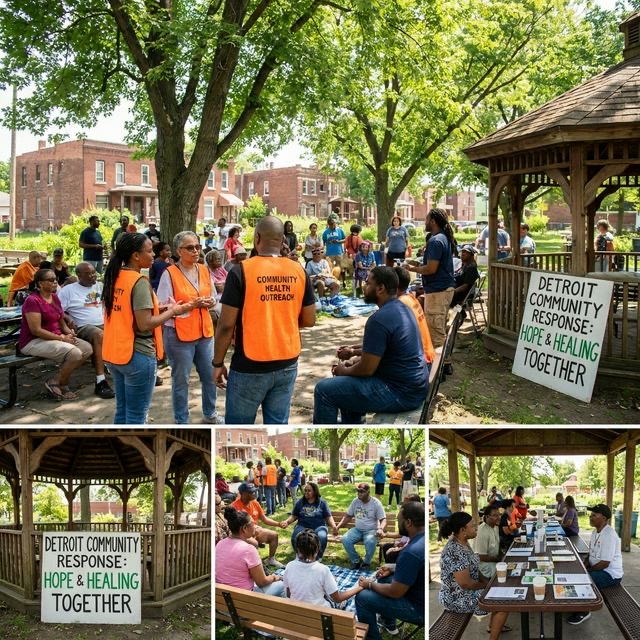
Community-based organizations throughout Detroit and Wayne County are increasingly integrating harm reduction into their work. Faith-based organizations, peer-led groups, and public health agencies work together to ensure that individuals in active use have access to overdose prevention supplies, information about safer use practices, and pathways into formal treatment when ready.
Naloxone (Narcan) can reverse an opioid overdose within minutes and is available without a prescription at Michigan pharmacies. Every household in which someone uses opioids should keep naloxone on hand. Free naloxone is available from community health centers and harm reduction organizations throughout Detroit. Learn how to use it before an emergency occurs.
Recovery Support and Long-Term Stability
Long-term recovery requires ongoing support beyond the formal treatment episode. Recovery community organizations, peer support groups, and sober living residences provide the structure and connection essential for sustained sobriety. Detroit has an active recovery community that welcomes individuals at all stages of the recovery journey.
For individuals completing treatment locally or returning to Detroit after out-of-state treatment, connection to recovery resources is essential. Whether through 12-step groups, SMART Recovery, or informal peer networks, the transition from structured treatment to community-based recovery support is a critical juncture. Trust SoCal at (949) 280-8360 can help coordinate this transition for individuals returning to Detroit from California treatment.
Recovery Resources Available in Detroit
A comprehensive network of recovery support organizations operates throughout Detroit and Wayne County, providing the ongoing community connections that research shows are essential for sustained sobriety.
- Alcoholics Anonymous and Narcotics Anonymous meetings held throughout Detroit, with hundreds of weekly meetings in diverse neighborhoods
- SMART Recovery and other mutual aid organizations offering non-12-step approaches to recovery support
- Oxford Houses and other sober living residences providing affordable, recovery-focused housing
- Recovery Empowerment Network and other peer-led organizations offering employment support, mentorship, and community building
- Michigan Association of Recovery Residences connecting individuals with certified, quality recovery housing
Why Some Detroit Residents Seek Treatment in California
For many Detroit residents struggling with opioid addiction, the decision to pursue treatment in Southern California represents a strategic choice to change environment and interrupt patterns of use. Detroit's harsh winters, familiar triggers, and established drug networks create ongoing challenges for early recovery. Geographic distance, a healing climate, and access to specialized programming make Southern California an attractive option.
Trust SoCal in Fountain Valley, CA has helped numerous Detroit-area residents find lasting recovery. The program provides comprehensive addiction treatment that combines evidence-based clinical care with holistic wellness practices in a therapeutic community. Detroit residents considering out-of-state treatment can reach Trust SoCal's admissions team at (949) 280-8360 for confidential discussion of treatment options and insurance coverage.

Rachel Handa, Clinical Director
Clinical Director & Therapist