Key Takeaways
- Los Angeles County, with nearly 10 million residents, has one of the highest rates of substance abuse in California and faces significant challenges with fentanyl, methamphetamine, alcohol, and polysubstance use.
- LA County offers extensive treatment options through the Department of Public Health Substance Abuse Prevention and Control division, Medi-Cal providers, and hundreds of private treatment centers.
- The challenges of getting sober in Los Angeles include pervasive drug availability, a large homeless population with co-occurring substance use, environmental triggers, and limited public treatment capacity relative to demand.
- Many LA County residents choose to travel to Orange County for rehab, gaining distance from triggers while remaining close enough for family involvement.
- Trust SoCal in Fountain Valley is located just 30 miles from downtown Los Angeles, offering an accessible change-of-environment option for LA residents seeking quality addiction treatment.
- Regardless of where you seek treatment, prioritize accreditation, licensed clinical staff, evidence-based approaches, and comprehensive aftercare planning.
Understanding LA County Rehab Options
Los Angeles County is home to nearly 10 million people, making it the most populous county in the United States. With that population comes a proportionally massive addiction treatment need. Understanding the full range of LA County rehab options available helps residents and families navigate a complex landscape and make informed decisions about care.
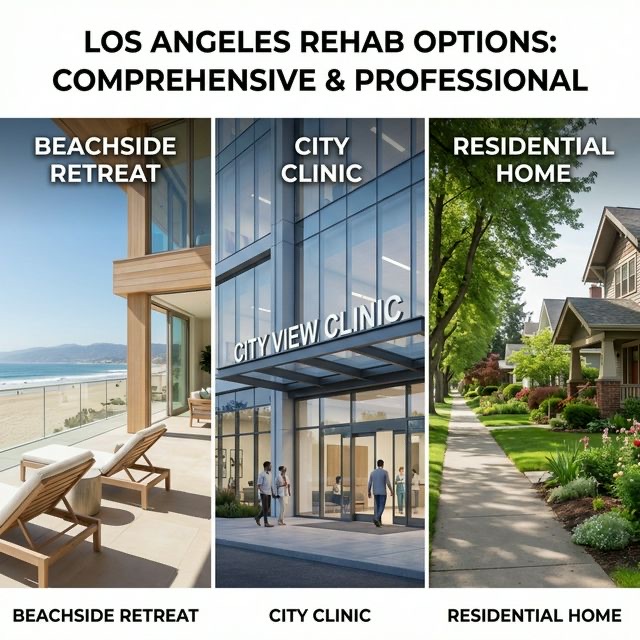
LA County's treatment infrastructure includes everything from county-funded programs serving uninsured residents to world-renowned luxury facilities in Malibu. Between these extremes lies a broad spectrum of private, nonprofit, and insurance-funded programs offering every level of care from medical detox through long-term sober living.
Despite the abundance of options, many LA County residents struggle to find the right fit. Long wait times for publicly funded programs, high costs for premium private facilities, and the challenge of distinguishing quality providers from predatory operators all complicate the search. This guide aims to simplify that process and help you identify the treatment pathway most likely to lead to lasting recovery.
The Los Angeles County Department of Public Health estimates that over 500,000 LA County residents have a substance use disorder, yet only a fraction receive formal treatment in any given year. Closing this treatment gap remains one of the county's most pressing public health priorities.
LA County Addiction Statistics and Substance Trends
Los Angeles County faces addiction challenges that reflect national trends while also exhibiting unique local dynamics. Understanding these patterns helps contextualize the treatment options available and the clinical needs of the LA population.
Fentanyl has become the leading cause of accidental drug overdose death in LA County, with fatalities increasing dramatically over the past several years. The synthetic opioid is now found in counterfeit pills, heroin, methamphetamine, and cocaine, making virtually all illicit substance use in LA County potentially life-threatening.
Methamphetamine remains a significant challenge throughout the county, with particular prevalence in South LA, the San Fernando Valley, and the Antelope Valley. Alcohol use disorder affects hundreds of thousands of county residents across all demographics. Polysubstance use, the simultaneous use of multiple substances, is increasingly common and complicates treatment planning.
- Fentanyl-related overdose deaths have increased over 1,000 percent in LA County over the past five years
- Methamphetamine is the most common substance cited in treatment admissions countywide
- Alcohol remains the most widely abused substance overall, affecting every demographic group
- Polysubstance use involving fentanyl and methamphetamine is a growing clinical challenge
- Homelessness and substance use are deeply interconnected, with an estimated 30 to 40 percent of the county's unhoused population having a substance use disorder
County-Funded vs. Private Treatment in LA County
LA County rehab options fall into two broad categories: publicly funded programs administered through the county system and private treatment centers funded through insurance or self-pay. Each pathway has distinct advantages and limitations.
County-Funded Programs Through SAPC
The Los Angeles County Department of Public Health's Substance Abuse Prevention and Control division administers publicly funded addiction treatment through a network of contracted community-based providers. Residents can access services by calling the SAPC helpline at (800) 564-6600 for assessment and referral.
County-funded programs cover detox, residential treatment, outpatient counseling, IOP, medication-assisted treatment, and recovery support services at no cost for eligible residents. Eligibility is based on income, insurance status, and clinical need. Medi-Cal beneficiaries can access these services through their managed care plan, typically LA Care Health Plan or Health Net.
The primary limitation of county-funded programs is capacity. With over 500,000 LA residents estimated to have substance use disorders, demand significantly exceeds supply. Wait times for residential treatment can range from days to weeks, and some programs operate waiting lists for intake assessments.
Private Treatment Centers
Los Angeles County is home to hundreds of private treatment centers ranging from modest outpatient clinics to world-famous residential facilities. Private programs generally offer shorter wait times, lower client-to-staff ratios, more comfortable accommodations, and a wider range of therapeutic modalities compared to publicly funded options.
Most private treatment centers accept commercial insurance, particularly PPO plans. With insurance coverage, out-of-pocket costs for a 30-day residential program typically range from $500 to $10,000 depending on the plan's deductible, copayments, and out-of-pocket maximum. Some facilities also offer payment plans and financial assistance for those without insurance.
Challenges of Getting Sober in Los Angeles
While LA County has extensive treatment resources, the environment itself presents unique challenges for recovery. Understanding these challenges is important for developing realistic expectations and effective recovery strategies.
Los Angeles is a city of immense social pressure, constant stimulation, and pervasive substance availability. The entertainment industry, nightlife culture, and widespread social normalization of drug and alcohol use create an environment where avoiding triggers requires extraordinary vigilance. For individuals in early recovery, the constant exposure to substance-related cues can feel overwhelming.
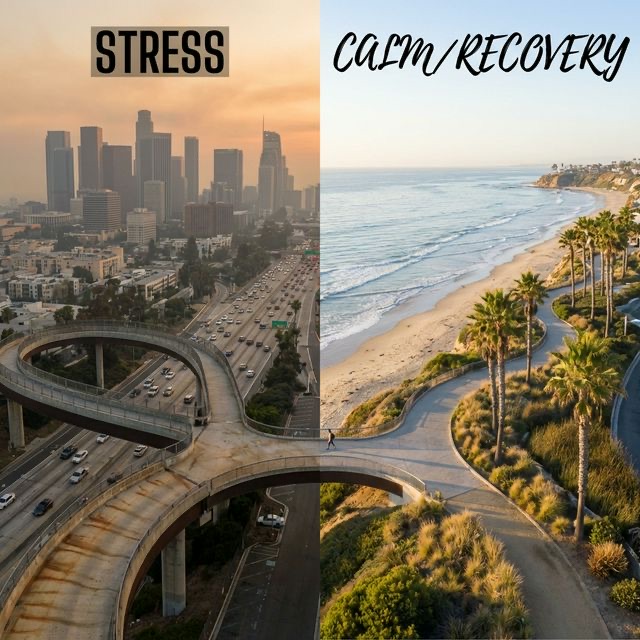
The geographic sprawl of LA County also impacts recovery logistics. Commuting to treatment appointments, support group meetings, and work can consume hours each day, reducing the time and energy available for recovery-focused activities. Traffic-related stress is itself a relapse trigger for many individuals in early recovery.
Additionally, the large unhoused population in LA, many of whom have co-occurring substance use disorders, creates visible reminders of the devastating trajectory of addiction. For individuals in recovery, proximity to open-air drug markets and visible substance use can be deeply triggering.
If you are struggling with active addiction in LA County and need immediate help, call the LA County Substance Abuse Service Helpline at (800) 564-6600. This 24-hour line provides free assessment, referral, and crisis support.
Why Many LA Residents Choose Orange County for Rehab
A significant number of Los Angeles County residents choose to attend addiction treatment in Orange County, located just 30 to 40 miles south of downtown LA. This proximity makes OC one of the most accessible change-of-environment options for LA residents who want geographic distance from triggers without traveling far from family.
The benefits of traveling to Orange County for treatment mirror those experienced by San Diego residents: distance from the using environment, access to a concentrated recovery community, a less hectic pace of life, and a treatment market that attracts top clinical professionals. For LA residents specifically, Orange County offers an escape from the frenetic energy, entertainment industry pressures, and pervasive substance culture that characterize life in Los Angeles.
Orange County's recovery infrastructure is among the most developed in the world. Cities like Costa Mesa, Huntington Beach, Newport Beach, and Fountain Valley host extensive networks of treatment centers, sober living homes, recovery meetings, and alumni communities. This ecosystem supports the entire recovery journey from initial treatment through long-term independent sobriety.
The commute from LA to Orange County is manageable for family visits, allowing loved ones to participate in family therapy, visit during designated hours, and attend family programming without requiring air travel or significant time away from their own responsibilities.
Trust SoCal in Fountain Valley is located approximately 30 miles from downtown Los Angeles, 25 miles from LAX, and is easily accessible from the 405 and 5 freeways. Many LA residents describe the drive to Orange County as the first step in leaving their old life behind.
Trust SoCal: Addiction Treatment for Los Angeles Residents
Trust SoCal provides comprehensive, evidence-based addiction treatment in Fountain Valley, Orange County, serving clients from throughout Los Angeles County and greater Southern California. Our location offers LA residents the geographic and psychological distance needed for early recovery while remaining accessible for family involvement.
Our clinical team includes board-certified addiction medicine physicians, licensed marriage and family therapists, licensed clinical social workers, certified addiction counselors, and psychiatric providers who specialize in dual diagnosis treatment. We offer medical detox, residential treatment, partial hospitalization programs, intensive outpatient programs, and comprehensive aftercare planning.
We accept most major PPO insurance plans and provide free, confidential insurance verification. Our admissions team understands the unique challenges that LA County residents face in accessing quality treatment and is prepared to help you navigate the process from initial phone call through admission.
If you or a loved one in Los Angeles County is ready to explore addiction treatment options, call Trust SoCal at (949) 280-8360. Our admissions counselors are available 24 hours a day, 7 days a week, to provide the guidance and support you need to take the first step toward recovery.

Madeline Villarreal, Counselor
Counselor