Key Takeaways
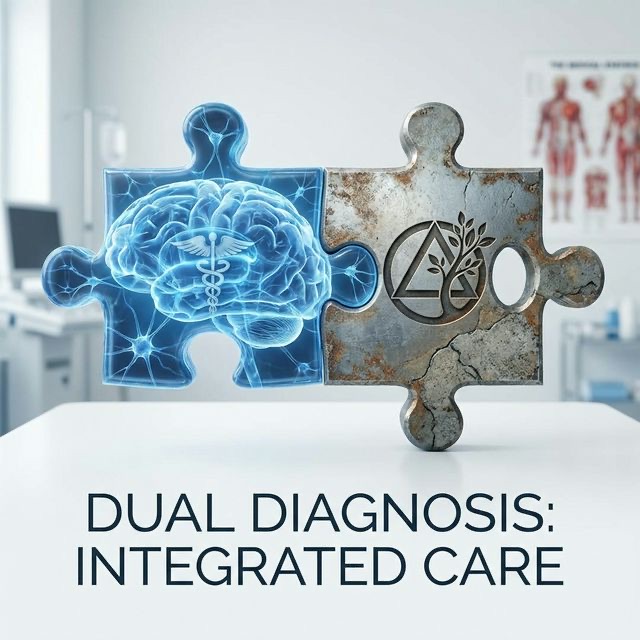
- Dual diagnosis means a substance use disorder and a mental health condition exist at the same time, each worsening the other.
- Integrated treatment that addresses both disorders simultaneously produces significantly better outcomes than treating each condition separately.
- Roughly half of all individuals with a severe mental health disorder also experience a substance use disorder during their lifetime.
- Trust SoCal in Orange County provides evidence-based dual diagnosis programs combining therapy, medication management, and holistic support.
What Is Dual Diagnosis?
Dual diagnosis, also called co-occurring disorders, refers to the simultaneous presence of a substance use disorder and at least one mental health condition. The term was introduced in the 1980s when clinicians began recognizing that many patients seeking addiction treatment also met diagnostic criteria for depression, anxiety, PTSD, or other psychiatric illnesses.
The relationship between these conditions is rarely simple cause-and-effect. In many cases, mental health symptoms drive a person toward substances as a coping mechanism, while in others prolonged substance use triggers or unmasks a latent psychiatric disorder. Understanding this bidirectional relationship is the first step toward effective dual diagnosis treatment.
At Trust SoCal in Orange County, our clinical team evaluates every client for co-occurring conditions during intake. This comprehensive assessment ensures that both the addiction and the underlying mental health disorder receive targeted, simultaneous attention from day one of treatment.
According to the Substance Abuse and Mental Health Services Administration, approximately 9.2 million adults in the United States live with co-occurring mental health and substance use disorders.
How Addiction and Mental Health Disorders Interact
Mental health disorders and addiction share overlapping neurobiological pathways, particularly those involving dopamine, serotonin, and the brain's stress-response systems. When one condition disrupts these pathways, the other is likely to worsen. This shared biology explains why treating only one condition often leads to relapse or worsening psychiatric symptoms.
Chronic substance use alters brain chemistry in ways that can produce or intensify anxiety, depression, and psychosis. Conversely, untreated mental health symptoms such as persistent sadness, panic attacks, or intrusive memories create powerful motivations to self-medicate with alcohol or drugs.
The Self-Medication Cycle
Many individuals with undiagnosed mental health conditions discover that substances temporarily relieve their symptoms. A person with social anxiety may find that alcohol quiets their racing thoughts, while someone with chronic depression may feel momentarily energized by stimulants. This relief is short-lived and ultimately deepens both conditions.
Over time, the brain adapts to the presence of the substance, requiring higher doses to achieve the same effect. Meanwhile, the underlying mental health disorder progresses without proper treatment. Breaking this self-medication cycle requires professional intervention that addresses the root psychiatric condition alongside the addiction.
Substance-Induced Mental Health Symptoms
Prolonged use of certain substances can directly cause psychiatric symptoms. Methamphetamine frequently produces paranoia and psychosis, chronic alcohol use is associated with depressive episodes, and long-term opioid use can blunt emotional processing and worsen anxiety disorders.
Distinguishing between a substance-induced mental health condition and an independent co-occurring disorder is critical for treatment planning. Clinicians at Trust SoCal use structured diagnostic interviews and observation during early recovery to make this determination accurately.
Prevalence of Co-Occurring Disorders
Research consistently shows that co-occurring disorders are the rule rather than the exception in addiction treatment settings. The National Institute on Drug Abuse reports that approximately half of individuals who experience a mental illness will also experience a substance use disorder at some point, and vice versa.
Certain mental health conditions carry particularly high rates of co-occurrence. People with antisocial personality disorder have the highest risk, followed by those with bipolar disorder, schizophrenia, and major depressive disorder. Anxiety disorders, including generalized anxiety and PTSD, also show strong associations with substance misuse.
In Southern California, where access to substances and social pressures can be pronounced, these statistics underscore the critical importance of treatment centers that are equipped to handle both conditions. Orange County providers like Trust SoCal are specifically designed to meet this dual need.
Why Integrated Treatment Is Essential
Historically, mental health and addiction were treated in separate systems by separate providers, an approach now recognized as inadequate for co-occurring disorders. Patients would be told to achieve sobriety before their psychiatric condition could be addressed, or vice versa, creating a frustrating loop where neither condition improved.
Integrated treatment combines psychiatric care and addiction treatment within a single, coordinated program. This approach ensures that therapists, psychiatrists, and counselors collaborate on a unified treatment plan. Research published in the Journal of Substance Abuse Treatment shows that integrated programs produce higher rates of sustained sobriety and better mental health outcomes.
At Trust SoCal, our integrated model means that your addiction counselor and your psychiatrist communicate daily, adjusting medications and therapeutic strategies in real time as you progress through recovery.
When evaluating treatment centers, ask whether they provide integrated dual diagnosis care with a single treatment team rather than referring mental health concerns to outside providers.
Components of Dual Diagnosis Treatment
Effective dual diagnosis programs combine several evidence-based modalities tailored to each client's unique combination of disorders. No two treatment plans look identical because the interplay between each person's mental health condition and substance use disorder is highly individual.
Comprehensive Assessment and Diagnosis
Treatment begins with a thorough biopsychosocial assessment that examines medical history, psychiatric symptoms, substance use patterns, trauma exposure, family dynamics, and social determinants of health. Standardized screening tools help clinicians identify conditions that may have been previously undiagnosed.
This assessment phase typically spans the first several days of treatment. As substances clear the body, clinicians can more accurately distinguish between substance-induced symptoms and independent psychiatric disorders, allowing for more precise treatment planning.
Medication Management
Psychiatric medications play a vital role in stabilizing mood, reducing anxiety, and managing psychotic symptoms so that clients can fully engage in therapy. Medication-assisted treatment for addiction, including options like buprenorphine or naltrexone, may also be incorporated.
Our medical director works closely with each client to find the right medication regimen, carefully monitoring for interactions between psychiatric medications and any substances still clearing the system during early recovery.
Evidence-Based Psychotherapy
Cognitive behavioral therapy, dialectical behavior therapy, and eye movement desensitization and reprocessing are among the most effective therapies for co-occurring disorders. These modalities help clients identify distorted thought patterns, develop emotional regulation skills, and process traumatic memories without relying on substances.
Group therapy provides additional benefits by connecting clients with peers who share similar experiences. The sense of community and mutual understanding that develops in group settings is a powerful motivator for sustained recovery.
Challenges in Dual Diagnosis Recovery
Recovery from co-occurring disorders often takes longer and involves more setbacks than recovery from a single condition. Clients may experience periods where psychiatric symptoms flare even as their sobriety strengthens, or moments where cravings intensify in response to emotional distress.
Stigma presents another significant barrier. Individuals with dual diagnosis often face judgment from multiple directions, being seen as having a character flaw by those who misunderstand addiction and a weakness by those who dismiss mental illness. Compassionate, nonjudgmental care is essential for overcoming this stigma.
Continuity of care after the initial treatment phase is equally important. Dual diagnosis recovery benefits from ongoing outpatient therapy, medication monitoring, support group participation, and relapse prevention planning that extends well beyond the initial residential or intensive outpatient stay.
Abruptly discontinuing psychiatric medications during recovery can trigger severe withdrawal symptoms and increase relapse risk. Always consult your treatment team before making changes to any prescribed medication.
Dual Diagnosis Treatment at Trust SoCal
Trust SoCal provides specialized dual diagnosis treatment from our Fountain Valley facility in Orange County. Our clinical team includes board-certified addiction psychiatrists, licensed marriage and family therapists, clinical social workers, and certified addiction counselors, all working within a single integrated program.
Each client receives a personalized treatment plan that addresses their specific combination of disorders. From medically supervised detox through residential treatment, intensive outpatient programming, and aftercare planning, every phase is designed to support both mental health stabilization and lasting sobriety.
Our location in Southern California offers access to a robust recovery community, sober living options, and year-round outdoor activities that support holistic wellness. We accept most major insurance plans and offer flexible payment options to make treatment accessible.
Taking the First Step Toward Integrated Recovery
If you or someone you love is struggling with both addiction and a mental health condition, seeking treatment that addresses both disorders is the most important decision you can make. Attempting to manage one condition while ignoring the other rarely produces lasting results.
Contact Trust SoCal today to speak with our admissions team about our dual diagnosis program. A confidential assessment can help clarify your needs and match you with the right level of care. Recovery from co-occurring disorders is absolutely possible with the right support and an integrated treatment approach.

Rachel Handa, Clinical Director
Clinical Director & Therapist