Key Takeaways
- College environment presents unique substance abuse challenges including peer pressure, academic stress, social drinking culture, and developmental factors during critical brain maturation years
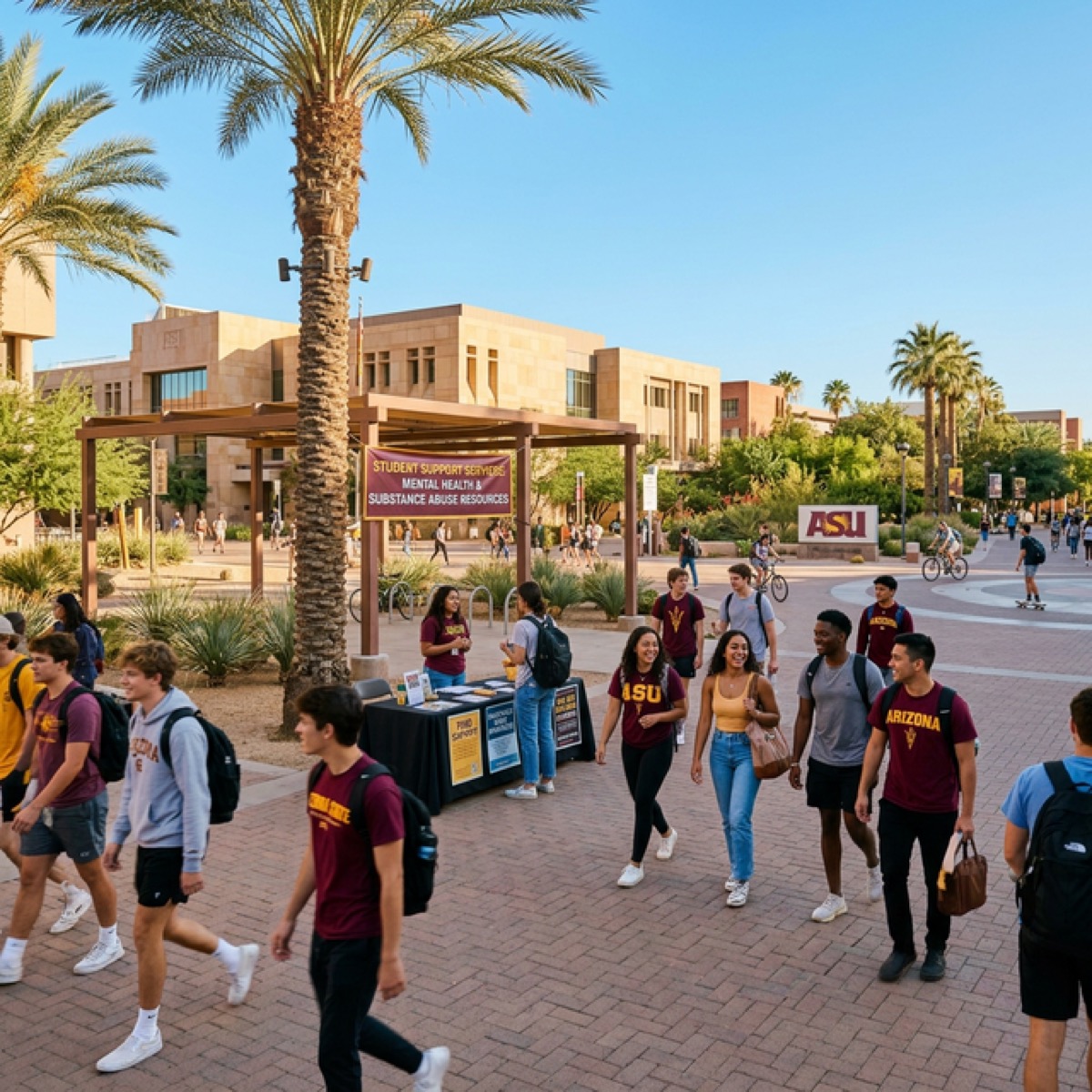
- ASU provides campus-based resources including health services, counseling, academic support, and recovery communities helping students access help and remain engaged in education
- Student substance abuse significantly impacts academic performance, graduation rates, and long-term health; early intervention prevents serious consequences and preserves educational opportunity
- Recovery communities at ASU and in Tempe provide peer support specifically for college students, addressing educational, social, and developmental dimensions of recovery
- Coordinated care between ASU health services, campus counseling, and community treatment providers offers seamless support for students requiring more intensive treatment while maintaining educational engagement
Substance Abuse Challenges Unique to College Students at ASU
Arizona State University, with over 70,000 students across multiple Tempe and Phoenix campuses, represents diverse student population facing varied substance abuse risks and opportunities. College environment presents unique challenges including peer pressure to drink and use drugs, academic stress and performance anxiety, newfound independence with reduced parental monitoring, and social cultures normalizing or even celebrating heavy substance use. Additionally, the ages 18-25 represent critical brain development period when substance abuse causes particular neurological damage affecting executive function, decision-making, and memory. For many ASU students, college is first time living independently with access to substances and social environments encouraging use.
ASU students face additional stressors including tuition and financial pressure, competition for grades and opportunities, relationship transitions away from family and high school friends, and identity development during formative years. Some students self-medicate stress, anxiety, depression, or untreated ADHD with alcohol or drugs. Others use substances to cope with loneliness, identity questions, or adjustment challenges. Athletes face additional pressures including performance expectations, body image concerns, and team culture sometimes normalizing substance use. Recognizing these unique vulnerabilities allows targeted prevention and intervention specific to student population.
Approximately 80% of ASU students report alcohol use, with 35-40% reporting binge drinking. Substance abuse significantly impacts 2-year graduation rates and long-term health outcomes. Early intervention preserves educational and life opportunities.
Peer Pressure and Social Drinking Culture
College social culture often centers on alcohol and substance use. Greek life, parties, social events, and nightlife in Tempe frequently involve substance use. Peers encourage drinking as sign of maturity, belonging, and fun. Students wanting to be social but uncomfortable with substance use face social tension. Some students abstain or moderate use successfully; others progress to problematic use. Understanding peer influence and learning to navigate social situations supporting personal values is critical skill for college students.
- Social events and nightlife culture centering on alcohol and drugs
- Peer pressure and status associated with drinking and drug use
- Balance between social connection and personal substance use values
Academic Stress and Performance Pressure
ASU students face significant academic pressure competing for grades, scholarships, internships, and postgraduation opportunities. Some students use stimulants (prescription or illicit) to enhance focus and performance. Alcohol becomes stress relief mechanism. Academic failure creates devastating emotion, sometimes triggering increased substance use. Sleep deprivation from substance use exacerbates academic problems. Vicious cycle develops where substance use interferes with academics, academic failure increases stress, and stress intensifies substance use.
- Academic performance pressure and competitive environment
- Stimulant use for cognitive enhancement and focus
- Alcohol and drugs as stress management and coping mechanism
Independence and Brain Development
College represents significant developmental transition from parental guidance to self-direction. Many students lack experience making independent decisions about substance use. Simultaneously, brain development continues through early 20s, with prefrontal cortex (responsible for judgment, impulse control, consequence consideration) still maturing. Substance abuse during college years disrupts normal brain development, affecting decision-making and self-control long-term. Early intervention protects developing brain and prevents lasting neurological impacts.
- Transition from parental monitoring to self-directed decision-making
- Brain development continuing through college years
- Substance abuse during development causing lasting neurological effects
ASU Campus Health and Counseling Services
Arizona State University provides comprehensive health and mental health services to students through Counseling Services, University Health Services, and Student Wellbeing programs. These services include substance abuse screening, brief interventions, counseling, psychiatry, support groups, and resource referrals. Services are low-cost or free to enrolled students, removing financial barriers to access. Campus health providers understand college-specific issues and work collaboratively with students to develop appropriate interventions. ASU also provides academic accommodations, coaching, and support helping students succeed in recovery while continuing education.
Campus-based services offer significant advantages including convenience, confidentiality protections, understanding of student culture and pressures, and integration with academic supports. Many students find it easier to access help on campus rather than navigating external system. Campus health providers can coordinate with community treatment if more intensive care is needed. Students benefit from understanding available resources and accessing help early before problematic use escalates.
ASU students needing substance abuse support can contact Counseling Services at (480) 965-6146, University Health Services, or Student Wellbeing. Services are confidential and available to all enrolled students. For additional guidance, contact Trust SoCal at (949) 280-8360.
Counseling Services and Mental Health Support
ASU Counseling Services provides individual therapy, group counseling, psychiatric evaluation and medication management, and crisis intervention. Counselors trained in college mental health and substance abuse help students address underlying mental health conditions (depression, anxiety, trauma) contributing to substance use. Services include substance abuse screening and brief interventions educating students about use patterns and risks. Initial appointments are typically available within 1-2 weeks. Ongoing counseling supports recovery while managing academic responsibilities.
- Individual and group counseling addressing mental health and substance use
- Psychiatric evaluation and medication management as needed
- Brief interventions and motivational interviewing for substance abuse concerns
Substance Abuse Specific Programs
Some ASU locations offer specialized substance abuse groups and programming beyond general counseling. These programs provide peer support, psychoeducation about substance abuse, skill development for recovery, and connection to recovery community. Groups may specifically address college student issues like managing social situations, academic recovery, and identity development in sobriety. Specialized groups provide community of others with similar experiences reducing isolation and shame.
- Substance abuse specific support groups and recovery communities
- Psychoeducation about substance abuse and college-specific issues
- Skill development for recovery and managing triggers on campus
Academic Support and Accommodations
ASU Disability Resource Center and Academic Success Programs provide accommodations and support for students affected by substance abuse and recovery. Accommodations may include course substitutions for failed classes, reduced course loads during treatment or early recovery, flexible deadlines, and makeup opportunities. Academic coaching helps students develop study skills and organization. Ability to adjust academic expectations while in treatment preserves educational progress and prevents catastrophic academic consequences complicating recovery.
- Course substitutions and makeup options for failed classes
- Reduced course loads during treatment supporting recovery
- Academic coaching and study skill development
Off-Campus Treatment Options in Tempe and Surrounding Area
For students requiring more intensive treatment than campus services provide, multiple treatment facilities operate in Tempe and surrounding East Valley. Intensive outpatient programs allow students to live on campus or nearby while attending therapy 9+ hours weekly. Some facilities offer student-specific programming with peers similar in age and educational status. Residential treatment in regional centers in Phoenix or Scottsdale is available for students requiring 24-hour care, though this removes students from campus during treatment. Coordination between treatment facilities and ASU ensures smooth transition back to campus after treatment.
Treatment selection for ASU students should consider impact on academic progress and educational goals. Some students take semester leave or reduce course load while in treatment, returning to full enrollment after recovery stabilization. Others manage outpatient treatment while in school, requiring careful time management. Treatment providers experienced with student population understand educational impact and work collaboratively with students and university to minimize disruption while prioritizing recovery. Early, appropriate treatment often allows continuation of education and graduation on schedule despite treatment interruption.
ASU students requiring residential treatment should contact treatment facilities about coordinating academic accommodations, course leaves, and transition planning ensuring educational continuity. Many facilities have relationships with universities facilitating smooth process.
Intensive Outpatient Programs (IOP) for Students
IOP programs in Tempe and East Valley offer 9-20 hours weekly treatment allowing students to maintain on-campus or near-campus housing. Evening and weekend session availability accommodates class schedules. Some programs specifically market to students with flexible scheduling and peer support groups for college-age individuals. IOP provides structure and intensive treatment without removing students from campus environment and academic pursuits. Many students successfully balance IOP attendance with course load, allowing graduation while receiving treatment.
- Flexible scheduling accommodating class times
- Student-specific groups and support communities
- Evening and weekend sessions allowing campus engagement
Student Recovery Homes and Housing
Recovery housing specifically designed for students provides structured sober living environment with peer support and accountability. Student recovery homes may be operated by universities, nonprofit organizations, or private entities. Housing supports recovery through sobriety expectations, community engagement, peer mentoring, and reduced access to substances. Some students transition to recovery housing temporarily while stabilizing recovery, then move to independent or traditional housing. Student recovery housing provides bridge between treatment and independent living.
- Dedicated student recovery housing with sobriety expectations
- Peer support and mentoring among residents in recovery
- Community-based living supporting accountability and connection
Residential Treatment with Educational Continuity
For students requiring residential treatment, some facilities coordinate course accommodations allowing continuation of education or schedule semester leave and reenrollment. Treatment takes priority, but many programs work with universities to minimize educational disruption. Students complete treatment then return to campus for final semester or following semester. Course leaves allow students to focus on recovery without academic pressure. Coordination at beginning of treatment ensures practical planning supporting both recovery and educational goals.
- Coordination with universities for course accommodations
- Official course leave allowing return without academic penalty
- Transition planning for return to campus after treatment
Student Recovery Communities and Peer Support
ASU and Tempe host diverse recovery communities specifically designed for students. Student recovery groups meet on campus and in community, providing peer support from others in similar life stage and circumstance. These groups normalize sobriety in college culture, combat isolation and shame, provide practical support navigating college while sober, and create identity and community beyond substance use. Some groups are 12-step based (AA, NA meetings for students); others are secular or faith-based. Participation in recovery community dramatically improves student outcomes and retention through graduation.
Beyond peer support meetings, many communities host social events, recreational activities, and volunteer opportunities creating sober social life. Some universities have residence halls or housing communities dedicated to recovery, creating safe social environment with built-in support. Peer mentoring connects new students in recovery with experienced peers. Alumni networks support students and graduates in sustained recovery. Building recovery identity and community on campus creates belonging and purpose supporting long-term recovery.
Students engaged in campus recovery communities have 70-80% sustained recovery rates compared to 40-50% for students without community support. Building strong recovery community on campus is protective factor dramatically improving outcomes.
Peer Support Groups and Meetings on Campus
ASU hosts multiple peer support meetings including Alcoholics Anonymous, Narcotics Anonymous, SMART Recovery, and other groups. Meetings occur throughout week at various times accommodating class schedules. Some meetings specifically designate time for students or young adults. Campus location reduces barrier to attendance. Peer support provides ongoing community, accountability, and shared experience supporting sustained recovery. New students in recovery are welcomed and supported by experienced peer members.
- Multiple peer support meeting options with student-focused times
- On-campus accessibility removing transportation barriers
- Peer sponsorship and mentoring relationships
Student Recovery Housing and Communities
Some ASU locations have dedicated student recovery housing or recovery communities providing structured sober environment with peer support. These communities have clear sobriety expectations, community agreements, peer accountability, and built-in support network. Living among peers in recovery provides constant reminders of commitment, protection from substance use environment, and immediate support during difficult moments. Some recovery communities restrict visitors, host sober social events, and facilitate peer mentoring.
- Dedicated student recovery housing with sobriety expectations
- Community-based accountability and mutual support
- Sober social events and peer mentoring
Identity and Community Building in Sobriety
College students in recovery often struggle with identity shifting from "partying college student" to "student in recovery." Recovery communities provide new identity framework and community connection beyond substance use. Leadership opportunities, volunteer work, mentoring others, and engagement in recovery activities build positive identity and self-worth. As recovery solidifies, students develop multidimensional identity including student, athlete, artist, leader, based on values beyond substances.
- Identity development around values, goals, and relationships
- Leadership and volunteer opportunities building competence and purpose
- Community connection and belonging within recovery groups
Behavioral and Academic Consequences
Student substance abuse has significant consequences on academic performance and university standing. Heavy drinking and drug use correlate with lower GPAs, failed courses, academic probation, and dismissal. Substance use impairs concentration, memory, and cognitive function necessary for academic success. Many students abuse substances to cope with anxiety or depression around academics, creating cycle where substance use worsens academic problems, which intensifies stress and substance use. Behavioral consequences include violation of student conduct codes, disciplinary action, suspension, or expulsion. Criminal consequences (DUI, drug possession) affect permanent record and future opportunities.
Understanding potential consequences helps motivate change and treatment. Many students genuinely did not anticipate severity of academic impact until problems accumulated. Student conduct processes often include referral to counseling or substance abuse treatment. Some universities implement amnesty policies encouraging students to seek help without punitive consequences. Educating students about realistic impacts of substance use—academic failure, discipline, criminal record—during prevention efforts may prevent development of serious problems requiring treatment intervention.
Student substance abuse significantly impacts academic success, graduation rates, and future opportunities. DUI, drug arrests, and academic dismissal create permanent consequences affecting career prospects and graduate school admission.
Academic Performance Impact
Substance abuse significantly impacts academic performance through multiple mechanisms. Alcohol and drugs impair concentration, memory, and cognitive function necessary for learning. Sleep disruption from substance use impairs learning and memory consolidation. Class absences due to intoxication or hangovers result in missed lectures and assignments. Motivation and priority shifting result in incomplete assignments and poor exam preparation. Students often underestimate substance abuse impact until grades decline significantly.
- Impaired concentration, memory, and cognitive function
- Class absences and missed assignments
- Poor exam performance and declining GPA
Student Conduct and University Discipline
University alcohol and drug policies prohibit substance use on campus and at university events. Violations result in conduct proceedings, sanctions (warnings, fines, community service), probation, or dismissal. Campus conduct offices typically refer students to counseling or treatment programs. Some universities implement amnesty or restorative justice approaches encouraging help-seeking. Understanding conduct policies and consequences may motivate students to address problems early before more serious infractions occur.
- Conduct code violations for alcohol and drug use
- Range of sanctions from warnings to dismissal
- Referral to treatment through conduct process
Criminal Consequences
Substance-related criminal charges (underage drinking, DUI, drug possession, distribution) create permanent consequences affecting future employment, housing, graduate school admission, professional licensing, and student financial aid eligibility. Young adults often underestimate severity of criminal record impact. Early intervention preventing criminal justice involvement protects future opportunities. Students already facing criminal charges benefit from treatment demonstration of commitment to rehabilitation.
- DUI arrests creating long-term professional and financial consequences
- Drug possession charges affecting employment and housing
- Loss of financial aid and graduate school eligibility
Pathways to Recovery: Starting Support at ASU
ASU students concerned about substance use or recognizing problematic patterns can begin recovery journey through multiple entry points. Self-referral to Counseling Services or health services initiates confidential assessment and support. Peer referral from friends concerned about substance use provides external motivation. Some students respond to University-mandated counseling referrals from student conduct process, using external accountability as motivation. Family members can encourage help-seeking through supportive conversation. Regardless of entry point, early help-seeking prevents problems and creates opportunity for sustained recovery.
Recovery journey involves honest self-assessment, commitment to change, engagement with treatment and support services, and gradual lifestyle rebuilding around values beyond substances. Early recovery is challenging as students navigate triggers, social situations, identity shifts, and academic pressures without substance reliance. Building recovery community, developing healthy coping skills, addressing underlying mental health concerns, and creating sober identity help students succeed. Many students discover that recovery supports rather than interferes with educational success as focus, motivation, and mental clarity improve.
ASU student needing substance abuse support can contact Counseling Services at (480) 965-6146, visit ASU.edu for resource information, or reach out to trusted campus staff. Recovery is possible, and help is available. Contact Trust SoCal at (949) 280-8360 for additional guidance.
Recognizing Problem Substance Use
Warning signs that substance use has become problematic include using more or longer than intended, failed attempts to cut down, continued use despite negative consequences, developing tolerance, experiencing withdrawal symptoms, neglecting activities, and continuing despite relationship problems. Students noticing these patterns can complete self-assessment screening tools at Counseling Services. Honest self-reflection about consequences—academic, relational, health, legal—helps motivate change. Many students benefit from discussing concerns with trusted friend, RA, or counselor providing outside perspective.
- Using more or longer than intended
- Unsuccessful quit or reduction attempts
- Continued use despite negative consequences
Reaching Out for Help
ASU students can access help through Counseling Services, health services, trusted RAs, faculty advisors, or peer support contacts. Counseling Services provides free, confidential initial assessment and can recommend appropriate next steps. Student health services screen for substance use and provide brief interventions. Peer support meetings connect students with others in recovery. Family members or close friends can encourage help-seeking through supportive conversation. Multiple pathways to help exist reducing barriers to access.
- Counseling Services: (480) 965-6146 or ASU.edu
- University Health Services for medical screening and support
- Resident Advisor (RA) for on-campus support and resources
Treatment Engagement and Recovery Commitment
Beginning treatment and committing to recovery are significant decisions requiring courage and persistence. First treatment sessions often involve assessment and planning rather than intensive therapeutic work. Many students feel initial anxiety, grief about lifestyle changes, or ambivalence about commitment. These feelings are normal and shared by many in early recovery. Working collaboratively with treatment team, maintaining open communication about struggles and progress, and engaging fully in recovery activities dramatically improves outcomes. Recovery is possible and leads to better health, academics, relationships, and future.
- Regular counseling engagement supporting recovery
- Participation in peer support meetings for community
- Development of sober identity and healthy activities

Kristin Stevens, LCSW
Licensed Clinical Social Worker