
Key Takeaways
- Long Beach residents have access to treatment programs within the city, across LA County, and in neighboring Orange County.
- The city operates publicly funded programs through the Long Beach Department of Health and Human Services.
- Orange County facilities in cities like Fountain Valley, Huntington Beach, and Costa Mesa are 15 to 30 minutes south via the 405 or PCH.
- Trust SoCal in Fountain Valley offers a full continuum of care for Long Beach area residents.
Addiction Treatment Near Long Beach: An Overview
Addiction treatment near Long Beach provides residents of California's seventh-largest city with a broad spectrum of recovery options. Long Beach sits at the southern edge of Los Angeles County, bordered by the Pacific Ocean to the south and Orange County to the southeast. This geography gives residents unique access to treatment resources in two major counties.
The city itself is home to several community-based treatment providers, hospital-affiliated programs, and private counseling practices. However, the concentration of specialized residential and detox facilities increases significantly in neighboring Orange County, where cities like Fountain Valley, Huntington Beach, and Costa Mesa have become well-known treatment destinations.
Whether seeking publicly funded services or private residential care, Long Beach residents benefit from understanding the full landscape of nearby options. Making an informed decision can mean the difference between a program that fits and one that falls short.
Long Beach-Based Treatment Resources
The Long Beach Department of Health and Human Services oversees substance use disorder services within the city. These include community-based outpatient programs, prevention services, and referrals to residential treatment. The city also partners with nonprofit organizations to provide counseling, case management, and peer support.
Several private treatment providers operate outpatient clinics in Long Beach, offering individual therapy, group counseling, and medication-assisted treatment. Hospital emergency departments at facilities like Long Beach Memorial and St. Mary Medical Center serve as entry points for individuals in acute crisis.
Publicly Funded Programs
Los Angeles County's Department of Public Health Substance Abuse Prevention and Control division funds treatment programs accessible to Long Beach residents. These programs serve individuals with Medi-Cal or those who are uninsured. Wait times for publicly funded residential beds can range from days to several weeks depending on demand.
The Substance Abuse and Mental Health Services Administration (SAMHSA) maintains a national helpline and online treatment locator that includes Long Beach-area programs. Calling 1-800-662-4357 connects individuals with referral specialists who can identify available beds and appointment slots.
Private Treatment Providers
Private outpatient clinics in Long Beach offer flexible scheduling for individuals balancing work, school, or family obligations. Many accept PPO insurance and provide services including cognitive behavioral therapy, trauma processing, and relapse prevention planning.
For residential treatment, Long Beach residents often look beyond city limits. The highest concentrations of licensed residential facilities in the greater area are found in Orange County and the western LA basin. The short commute south on the 405 or along Pacific Coast Highway makes these options practical.
Why Long Beach Residents Look to Orange County
Orange County has developed a reputation as a hub for addiction treatment, with dozens of licensed residential and outpatient facilities concentrated in its coastal and central cities. For Long Beach residents, the border between LA and Orange County is barely noticeable, with Seal Beach and Huntington Beach just minutes away.
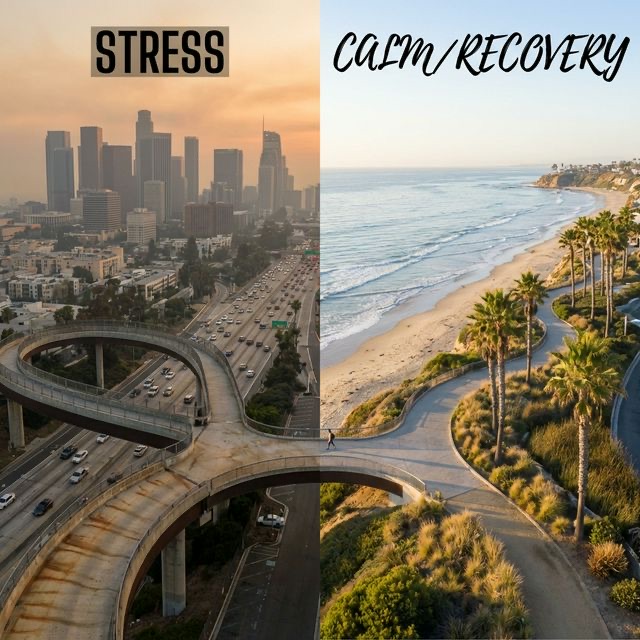
The appeal of Orange County treatment extends beyond proximity. Many individuals in early recovery benefit from a change of environment that separates them from familiar triggers, dealers, and social circles. Moving just fifteen to thirty minutes south provides that geographic reset without isolating patients from family and support systems.
Trust SoCal, located at 16537 Elm Cir in Fountain Valley, is approximately twenty minutes from downtown Long Beach via the 405 south. The center offers medical detox, residential treatment, and intensive outpatient programming in a quiet neighborhood setting that contrasts with the density and distractions of urban Long Beach.
Long Beach to Trust SoCal in Fountain Valley is approximately 15 miles via the 405 south, typically a 20-to-30-minute drive outside of peak traffic hours.
Types of Treatment Available Near Long Beach
The full continuum of addiction treatment is available within a short distance of Long Beach. Understanding each level helps individuals and families identify the most appropriate starting point based on clinical need, substance history, and personal circumstances.
Medical Detox and Stabilization
Medical detox is the first step for individuals who are physically dependent on alcohol, opioids, benzodiazepines, or other substances. Detox programs near Long Beach include hospital-based units and standalone detox centers in both LA and Orange counties. Trust SoCal provides medically supervised detox with 24-hour nursing care.
Attempting to detox without medical supervision can be dangerous and even life-threatening for certain substances. A professional detox program ensures safety, manages symptoms with appropriate medications, and plans the transition to ongoing treatment.
Residential Treatment Programs
Residential rehab provides an immersive therapeutic environment for 30 to 90 days. Clients participate in daily therapy sessions, group work, wellness activities, and psychoeducation. Residential care is recommended for individuals with severe substance use disorders, co-occurring mental health conditions, or unstable living situations.
Several residential programs within a thirty-minute radius of Long Beach accept private insurance, Medi-Cal, or offer payment plans. Touring facilities in person whenever possible helps individuals assess the environment, meet staff, and determine whether the program feels like a good fit.
Co-Occurring Mental Health Treatment
Many individuals seeking addiction treatment near Long Beach also struggle with mental health conditions such as depression, anxiety, PTSD, or bipolar disorder. Dual-diagnosis treatment addresses both conditions simultaneously, recognizing that untreated mental health issues significantly increase relapse risk.
Long Beach is home to a diverse population with varied cultural backgrounds and life experiences. Quality treatment programs provide culturally responsive care that acknowledges these differences and tailors therapeutic approaches accordingly. Trust SoCal's clinical team includes bilingual counselors and therapists trained in culturally sensitive modalities.
Integrated treatment that combines psychiatric medication management with evidence-based therapy produces the best outcomes for individuals with co-occurring disorders. Look for programs with licensed psychiatrists or psychiatric nurse practitioners on staff.
If you or someone you know is experiencing a mental health crisis alongside substance use, call 988 (Suicide and Crisis Lifeline) or go to the nearest emergency room immediately.
Building a Recovery Support Network in Long Beach
Sustained recovery depends on more than formal treatment. Building a local support network provides ongoing accountability, fellowship, and resources for navigating challenges after rehab. Long Beach offers a robust recovery community with meetings, events, and service opportunities.
Twelve-step meetings, including Alcoholics Anonymous and Narcotics Anonymous, are held daily at dozens of locations throughout Long Beach. Alternative recovery support groups such as SMART Recovery and Refuge Recovery provide non-twelve-step options for those who prefer a different framework.
Recovery community organizations in Long Beach host sober social events, volunteer projects, and mentorship programs. These organizations help individuals build meaningful connections and find purpose in sobriety, which are critical factors in preventing relapse.
Getting Started with Treatment
If you or a loved one in the Long Beach area is ready to explore treatment options, the most productive first step is a confidential phone assessment with a qualified admissions team. This conversation helps determine the appropriate level of care, verifies insurance benefits, and answers logistical questions about program details.
Trust SoCal's admissions coordinators are available 24 hours a day at (949) 280-8360. Our team specializes in helping Long Beach and greater LA County residents navigate the treatment landscape and find a program that matches their clinical needs and personal preferences.
Recovery is possible, and it starts with reaching out. Whether you choose a program in Long Beach, Orange County, or elsewhere in Southern California, the important thing is to take that first step today.

Kristin Stevens, LCSW
Licensed Clinical Social Worker