Overview
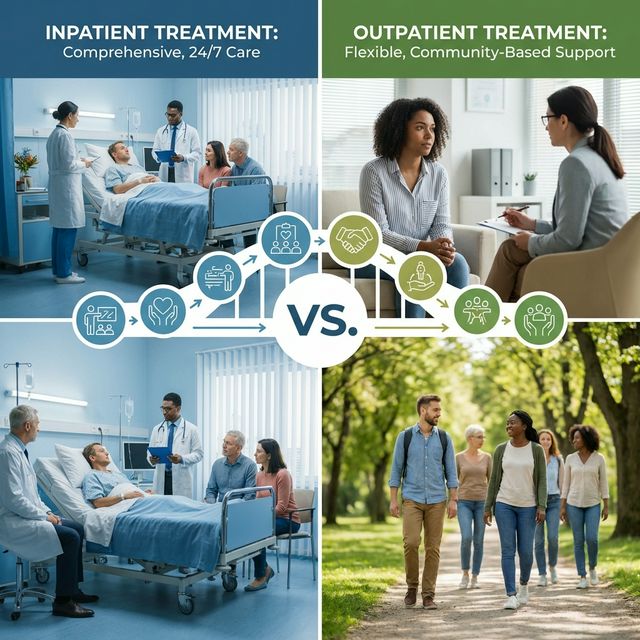
One of the most fundamental decisions in addiction treatment is whether to pursue inpatient (residential) or outpatient care. Both models have demonstrated effectiveness for substance use disorders, but they serve different clinical needs, accommodate different life circumstances, and provide different levels of structure and support. Inpatient treatment involves living at a treatment facility full-time, typically for 30 to 90 days, and provides an immersive therapeutic environment free from the triggers and stressors of daily life. Outpatient treatment allows individuals to live at home while attending therapy sessions and groups at a treatment center on a scheduled basis, making it possible to maintain work, school, and family responsibilities during recovery. At Trust SoCal, our JCAHO-accredited program offers both inpatient and outpatient levels of care, and our clinical team uses the American Society of Addiction Medicine (ASAM) criteria to determine the most appropriate placement for each individual. This decision is based on a comprehensive assessment that considers the severity of addiction, medical and psychiatric stability, motivation for change, relapse history, and the strength of the individual's external support system. Understanding the strengths and limitations of each treatment model is essential for making an informed decision, and this guide provides an honest, detailed comparison to help you evaluate which option best fits your situation. Whether you are researching options for yourself or helping a loved one navigate this decision, we encourage you to call (949) 280-8360 for a confidential assessment that can clarify which level of care is most appropriate.