Overview
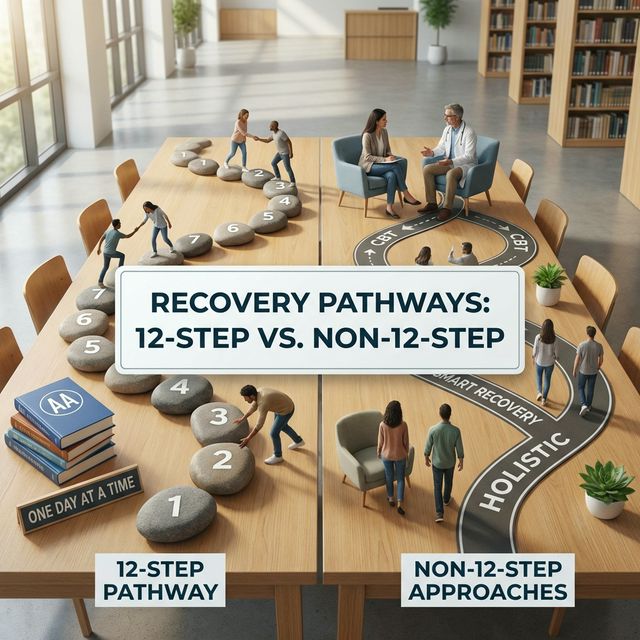
The question of whether to pursue a 12-step or non-12-step approach to addiction recovery is one that many individuals and families encounter when researching treatment options. The 12-step model, originally developed by Alcoholics Anonymous in the 1930s, has been the dominant framework for addiction recovery in the United States for decades and remains the most widely available form of peer support worldwide. However, the past several decades have seen the emergence of numerous evidence-based alternatives that take different philosophical and therapeutic approaches to recovery. At Trust SoCal, our JCAHO-accredited treatment program incorporates elements from both traditions, recognizing that effective recovery is not one-size-fits-all and that different individuals respond to different approaches. Our clinical team works with each client to develop a personalized recovery plan that draws on the strategies and support systems most likely to sustain their long-term sobriety. This guide provides an honest, balanced comparison of 12-step and non-12-step approaches, examining their philosophies, methodologies, evidence bases, and practical differences to help you make an informed decision about which path resonates with your values and recovery goals. Neither approach is inherently superior; what matters most is finding a framework that you can genuinely engage with and sustain over time. If you would like to discuss how Trust SoCal integrates multiple recovery approaches into individualized treatment, call (949) 280-8360.