Key Takeaways
- Signs of opioid withdrawal include anxiety, muscle aches, sweating, insomnia, nausea, vomiting, diarrhea, and abdominal cramps, with symptoms ranging from uncomfortable to severe.
- The withdrawal timeline varies by opioid type: heroin onset at 8-24 hours, fentanyl at 12-30 hours, prescription opioids at 8-24 hours, and methadone at 24-48 hours.
- Opioid withdrawal is rarely life-threatening in itself but can be dangerous due to dehydration, and the risk of overdose is dramatically increased if relapse occurs after tolerance has decreased.
- Medication-assisted treatment (MAT) with Suboxone (buprenorphine/naloxone), methadone, or naltrexone (Vivitrol) is the gold standard for opioid addiction treatment.
- Medical detox provides symptom management, safety monitoring, and a bridge to ongoing addiction treatment that dramatically improves outcomes compared to self-detox.
- Self-detox from opioids is strongly discouraged because the discomfort almost always leads to relapse, and relapse after a period of abstinence significantly increases overdose risk.
Recognizing the Signs of Opioid Withdrawal
The signs of opioid withdrawal are among the most dreaded experiences for anyone dependent on opioids, and the fear of withdrawal is one of the most powerful forces that keeps people trapped in the cycle of addiction. Whether the opioid is heroin, fentanyl, oxycodone, hydrocodone, morphine, or methadone, the withdrawal syndrome shares a common set of symptoms that range from deeply uncomfortable to temporarily debilitating.
Opioid withdrawal occurs because the brain has adapted to the constant presence of opioids by downregulating its own natural opioid production (endorphins) and altering receptor sensitivity. When opioids are removed, the brain is left in a state of neurochemical imbalance that produces the physical and psychological symptoms of withdrawal. The body is essentially recalibrating its chemistry, and this process takes time.
Understanding the signs of opioid withdrawal serves two critical purposes. For the person considering treatment, it demystifies the process and reduces fear. For family members and loved ones, it helps them recognize when someone may be in withdrawal and encourage them to seek medical help. At Trust SoCal, our medical team manages opioid withdrawal with evidence-based medications and protocols that significantly reduce discomfort and ensure safety.
According to the CDC, more than 75% of drug overdose deaths in 2022 involved opioids. The risk of fatal overdose is significantly higher when a person relapses after a period of abstinence because their tolerance has decreased. This is why medical detox with a transition to ongoing treatment is so critical.
Early Signs of Opioid Withdrawal (First 24-48 Hours)
The early signs of opioid withdrawal typically appear within hours of the last dose and represent the body's initial response to the absence of the drug. These early symptoms are often described as feeling like a severe flu, though the psychological distress they cause is far beyond what a typical illness produces.
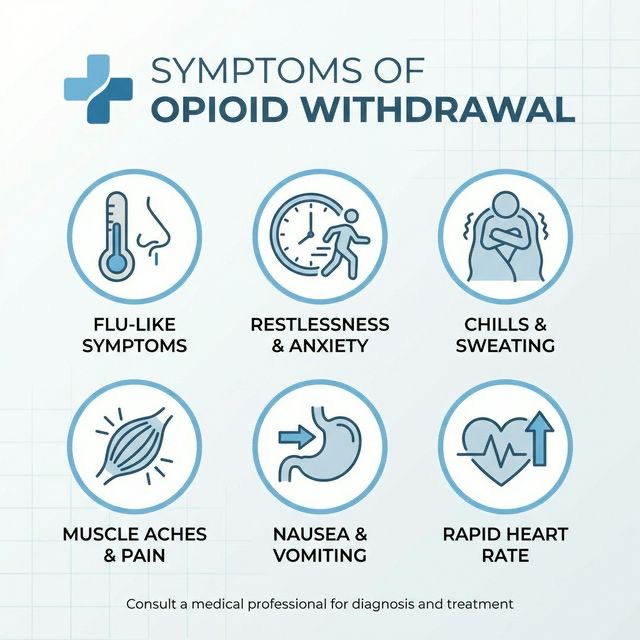
Anxiety is usually the first symptom to appear, often accompanied by a sense of restlessness that makes it impossible to sit still or feel comfortable in any position. Muscle aches and pains, particularly in the back and legs, develop as the body's pain signaling system rebounds from opioid suppression. Sweating, even in cool environments, is common, along with frequent yawning that occurs despite the inability to sleep.
Insomnia during early opioid withdrawal is particularly distressing because the individual is exhausted but completely unable to sleep. Other early signs include watery eyes, runny nose, dilated pupils, goosebumps (the origin of the phrase "cold turkey," referring to the skin's goose-pimpled appearance), and a general sense of malaise. These symptoms are uncomfortable but not yet at their peak intensity.
Early Withdrawal Symptoms Checklist
The following symptoms typically appear within the first 12-24 hours for short-acting opioids and 24-48 hours for longer-acting opioids like methadone.
- Anxiety, agitation, and restlessness
- Muscle aches and body pains, especially in the back and legs
- Increased tearing and runny nose (lacrimation and rhinorrhea)
- Excessive sweating
- Frequent yawning despite inability to sleep
- Dilated pupils
- Goosebumps and chills
- Insomnia
- Low-grade fever
- Increased heart rate
Late Signs of Opioid Withdrawal (48-72 Hours)
The late phase of opioid withdrawal is when symptoms reach their peak intensity, typically between 48 and 72 hours after the last dose for short-acting opioids. This is the period that most people dread and the phase during which relapse is most likely if the individual is attempting to withdraw without medical support.
Gastrointestinal symptoms dominate the late withdrawal phase. Nausea progresses to vomiting, and severe diarrhea develops, creating a dual risk of dehydration and electrolyte imbalances that can become medically dangerous if not monitored. Abdominal cramps range from uncomfortable to excruciating, further compounding the GI distress. These symptoms can be so severe that they mimic a serious medical emergency.
The psychological signs of opioid withdrawal also intensify during this phase. Cravings for opioids become overwhelming as the brain desperately seeks the substance it has become dependent upon. Depression and irritability deepen, and some individuals experience panic attacks. The combination of severe physical discomfort and intense psychological distress is what makes unassisted opioid withdrawal so difficult to endure and why the relapse rate for self-detox is extremely high.
The greatest danger of opioid withdrawal is not the withdrawal itself but the relapse that often follows. When a person relapses after even a few days of abstinence, their tolerance has already begun to decrease. Taking the same dose they previously tolerated can result in fatal overdose. This is why medical detox with MAT is strongly recommended.
Opioid Withdrawal Timeline by Substance Type
The timeline of opioid withdrawal varies significantly depending on the specific opioid used. Short-acting opioids produce earlier onset but shorter duration of withdrawal, while long-acting opioids have delayed onset but more prolonged symptoms. Understanding these timelines helps both clients and medical teams prepare appropriate treatment protocols.
Heroin, one of the most rapidly acting opioids, produces withdrawal symptoms within 8 to 24 hours of the last use, with peak symptoms occurring at 36 to 72 hours. The acute phase typically resolves within 5 to 7 days, though post-acute symptoms may persist for weeks. Fentanyl, which has become the dominant opioid in the illicit drug supply, produces withdrawal onset within 12 to 30 hours, with peak symptoms at 36 to 72 hours and acute withdrawal lasting 5 to 10 days.
Prescription opioids like oxycodone and hydrocodone typically produce withdrawal symptoms within 8 to 24 hours, peaking at 36 to 72 hours and resolving within 5 to 7 days. Methadone, a long-acting opioid, has a delayed withdrawal onset of 24 to 48 hours after the last dose, with peak symptoms occurring between days 3 and 5. Methadone withdrawal is often considered the most prolonged, with acute symptoms lasting 10 to 21 days and post-acute symptoms potentially persisting for months.
Withdrawal Timeline Comparison
The following timeline comparison illustrates how withdrawal presentation varies across opioid types.
- Heroin: Onset 8-24 hours, peak 36-72 hours, acute phase 5-7 days
- Fentanyl: Onset 12-30 hours, peak 36-72 hours, acute phase 5-10 days
- Oxycodone/Hydrocodone: Onset 8-24 hours, peak 36-72 hours, acute phase 5-7 days
- Methadone: Onset 24-48 hours, peak days 3-5, acute phase 10-21 days
- Morphine: Onset 8-24 hours, peak 36-72 hours, acute phase 5-7 days
Medication-Assisted Treatment (MAT) for Opioid Withdrawal
Medication-assisted treatment is the gold standard for managing signs of opioid withdrawal and supporting long-term recovery from opioid use disorder. MAT combines FDA-approved medications with counseling and behavioral therapies to provide a comprehensive approach that addresses both the physical and psychological dimensions of opioid addiction.
Buprenorphine, most commonly prescribed as Suboxone (a combination of buprenorphine and naloxone), is a partial opioid agonist that activates opioid receptors enough to prevent withdrawal symptoms and reduce cravings without producing the euphoria of full agonists like heroin or fentanyl. Suboxone can be initiated during the withdrawal process and continued as a maintenance medication for months or years, significantly reducing relapse rates and overdose risk.
Methadone is a full opioid agonist prescribed through federally regulated clinics for individuals with severe opioid use disorders who may not respond adequately to buprenorphine. Naltrexone (Vivitrol), an opioid antagonist, completely blocks opioid receptors and is administered as a monthly injection after the individual has completed detox. Each of these medications has specific indications, advantages, and considerations that should be discussed with a physician experienced in addiction medicine.
Research from the National Institute on Drug Abuse shows that patients who receive MAT are 50% more likely to remain in treatment and have significantly lower rates of overdose, criminal activity, and infectious disease transmission compared to those treated without medication.
Medical Detox vs. Self-Detox: Why Professional Help Matters
The desire to handle opioid withdrawal independently is understandable but misguided. Self-detox, sometimes called "cold turkey" withdrawal, subjects the individual to the full unmediated force of withdrawal symptoms without medical support, symptom management, or safety monitoring. The result is almost always either relapse within hours to days or a traumatic experience that creates lasting aversion to seeking help.
Medical detox at a facility like Trust SoCal provides comprehensive symptom management using evidence-based medications, 24-hour monitoring of vital signs and hydration status, intervention for complications including dehydration, electrolyte imbalances, or severe GI distress, psychological support and reassurance throughout the process, and a direct pathway to ongoing addiction treatment following detox completion.
The statistics make the case clearly. Self-detox from opioids has a relapse rate approaching 90% within the first week. Medical detox combined with a transition to MAT and ongoing therapy reduces this dramatically. For individuals with opioid use disorder, medical detox is not a luxury but a medical necessity. If you or someone you know is struggling with opioid dependence, contact Trust SoCal at (949) 280-8360 to discuss medical detox options.
Post-Acute Withdrawal Syndrome (PAWS) After Opioid Detox
Even after the acute signs of opioid withdrawal have resolved, many individuals experience a prolonged period of post-acute withdrawal syndrome (PAWS) that can last weeks to months. PAWS symptoms are less severe than acute withdrawal but can significantly impact quality of life and represent a persistent relapse risk if not properly managed.
Common PAWS symptoms include persistent insomnia and sleep disturbances, low energy and chronic fatigue, anxiety and depression, difficulty concentrating and making decisions, mood swings and emotional volatility, and intermittent cravings triggered by environmental cues. These symptoms reflect the ongoing process of neurological healing as the brain gradually restores its natural opioid production and receptor sensitivity.
Managing PAWS effectively requires a combination of ongoing therapy, support group participation, healthy lifestyle practices including exercise, nutrition, and sleep hygiene, and potentially continued medication-assisted treatment. Understanding that PAWS is a normal part of recovery, not a sign of failure, helps individuals maintain perspective and motivation during this challenging phase.

Rachel Handa, Clinical Director
Clinical Director & Therapist