Key Takeaways
- Chicago's South and West Sides experience disproportionately high opioid overdose rates driven by fentanyl contamination and decades of systemic disinvestment in predominantly Black communities.
- Treatment barriers include geographic maldistribution of providers, insufficient MAT availability, transportation challenges, and historically justified medical mistrust in Black communities.
- Community-based organizations, faith institutions, and harm reduction providers are filling critical gaps in the formal treatment system on the South and West Sides.
- Naloxone (Narcan) is available without a prescription in Illinois and should be kept in every household where opioids are used, whether prescribed or illicit.
- Out-of-state treatment in Southern California offers geographic distance from environmental triggers and access to specialized programming not available locally.
- Addressing racial disparities in treatment access and outcomes requires culturally responsive care models, policy reform, and investment in the communities most affected by the crisis.
Historical Roots of the Opioid Crisis on the South and West Sides
The opioid crisis in Chicago is not a single, monolithic emergency. It is a patchwork of overlapping epidemics that vary dramatically from one neighborhood to the next, shaped by decades of structural inequality, disinvestment, and uneven access to healthcare. Nowhere is this disparity more starkly visible than on Chicago's South and West Sides, where predominantly Black communities in neighborhoods like Englewood, Austin, North Lawndale, Garfield Park, and Roseland have experienced opioid overdose death rates far exceeding those in wealthier, whiter parts of the city.
The opioid crisis on Chicago's South and West Sides did not emerge in a vacuum. These neighborhoods have endured generations of systemic racism, from redlining and restrictive covenants that prevented Black homeownership to the destruction wrought by urban renewal programs and the construction of expressways like the Dan Ryan (I-90/94) and Eisenhower (I-290) that bisected and isolated communities. The resulting concentration of poverty, unemployment, and disinvestment created conditions in which substance use became both a coping mechanism for pervasive trauma and an economic activity in underground markets where legal employment opportunities had evaporated.
The arrival of fentanyl in Chicago's heroin supply beginning around 2015 transformed an already deadly situation into a catastrophe. Fentanyl, which is 50 to 100 times more potent than morphine, is now present in the vast majority of heroin sold on Chicago streets. Users who had developed tolerance to heroin over years of use suddenly found themselves at risk of fatal overdose from a single dose contaminated with an unpredictable amount of fentanyl. The result has been a surge in overdose deaths concentrated in the very neighborhoods that were already struggling most.
Fentanyl is now involved in the majority of opioid overdose deaths in Cook County. The drug is often mixed into heroin without the user's knowledge, making every dose potentially lethal. Fentanyl test strips, which can detect the presence of fentanyl in drugs before use, are legal in Illinois and are distributed free of charge by harm reduction organizations including the Chicago Recovery Alliance.
Barriers to Treatment on the South and West Sides
Despite the severity of the opioid crisis in these communities, access to evidence-based addiction treatment remains profoundly inadequate. South and West Side neighborhoods have fewer treatment facilities per capita than the North Side and suburban Cook County, and the programs that do exist are often underfunded, understaffed, and unable to offer the full continuum of care. Medication-assisted treatment, which is the gold standard for opioid use disorder and dramatically reduces the risk of fatal overdose, is particularly scarce. Many South and West Side residents must travel significant distances via the CTA L train or bus system to access MAT providers, a barrier that can be insurmountable for individuals in the grip of active addiction.
Stigma surrounding addiction treatment is another significant barrier, compounded by a deep and historically justified distrust of the medical system in Black communities. Generations of medical exploitation, from the Tuskegee experiment to contemporary disparities in pain management, have understandably eroded trust in healthcare providers. Many individuals on the South and West Sides view medication-assisted treatment with suspicion, seeing it as replacing one drug with another rather than as the life-saving medical intervention it has been proven to be. Culturally responsive outreach and education are essential for overcoming these barriers.
Key Barriers to Treatment Access
Systemic factors create compounding obstacles to treatment engagement for South and West Side residents. Understanding these barriers is essential for developing effective solutions and advocating for equitable resource allocation.
- Geographic maldistribution of treatment facilities, with far fewer providers per capita on the South and West Sides compared to North Side neighborhoods like Lakeview, Lincoln Park, and the Loop
- Insufficient availability of medication-assisted treatment (MAT) providers, particularly buprenorphine prescribers, in neighborhoods with the highest overdose rates like Englewood, Austin, and North Lawndale
- Transportation challenges including long CTA commutes, limited service hours on bus routes serving South and West Side neighborhoods, and the cost burden of multiple transfers required to reach treatment facilities
- Historical and ongoing medical mistrust in Black communities stemming from documented patterns of discrimination, under-treatment of pain, and involuntary experimentation
- Criminal justice involvement that creates collateral consequences including loss of housing, employment, and custody, making individuals reluctant to seek help for fear of further legal entanglement
Community-Based Responses and Harm Reduction
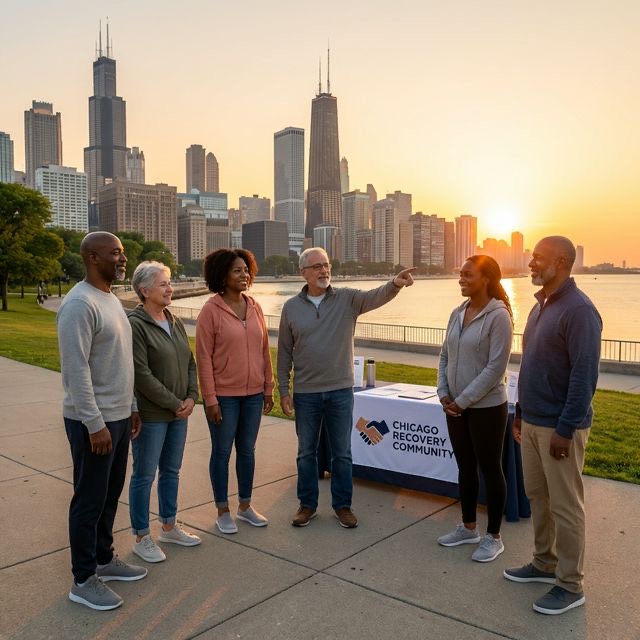
In the absence of adequate institutional support, community-based organizations on the South and West Sides have stepped in to fill critical gaps in the response to the opioid crisis. The Chicago Recovery Alliance, founded in 1992, has been a pioneer in harm reduction, distributing naloxone (Narcan) and fentanyl test strips, operating syringe exchange services, and providing recovery support to individuals across the city. Their "any positive change" philosophy meets people where they are, acknowledging that recovery is not a linear process and that keeping people alive is the essential first step toward eventual treatment engagement.
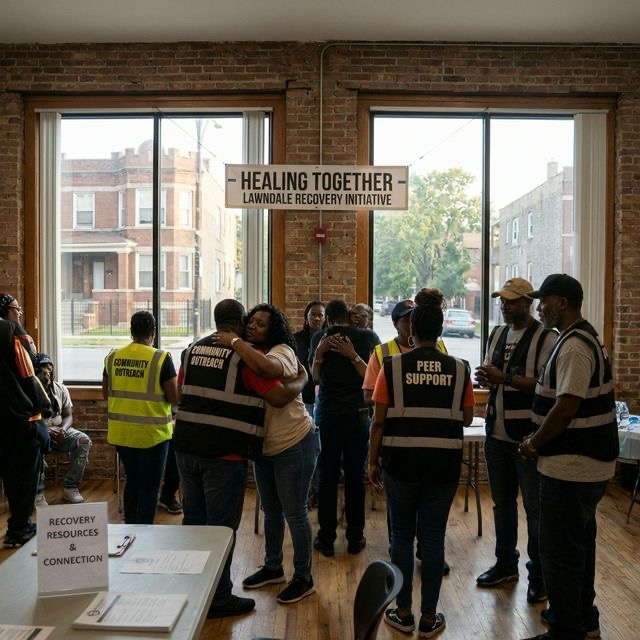
Faith-based organizations, which have historically served as the backbone of social support in South and West Side neighborhoods, are increasingly incorporating addiction recovery programming into their ministries. Churches and mosques in Englewood, Austin, and Garfield Park host support groups, recovery meetings, and community health events that connect residents with treatment resources in culturally familiar settings. Peer recovery support specialists, many of whom are themselves in recovery and from the communities they serve, provide a bridge between individuals in need and formal treatment systems.
Street outreach workers, employed by organizations like the Chicago Department of Public Health and community-based nonprofits, patrol neighborhoods with high overdose rates, distributing naloxone, providing basic wound care, and connecting individuals with treatment on the spot. Mobile medication-assisted treatment units have begun operating in several South and West Side neighborhoods, bringing buprenorphine and other medications directly to individuals who would not otherwise access clinic-based care. These low-barrier approaches are essential for reaching the most marginalized and underserved segments of the population.
Naloxone (Narcan) can reverse an opioid overdose within minutes and is available without a prescription at most Illinois pharmacies. Every household in which someone uses opioids, whether prescribed or illicit, should keep naloxone on hand. Free naloxone is available from the Chicago Recovery Alliance and many South and West Side community health centers. Learn how to use it before an emergency occurs.
Treatment Options for South and West Side Residents
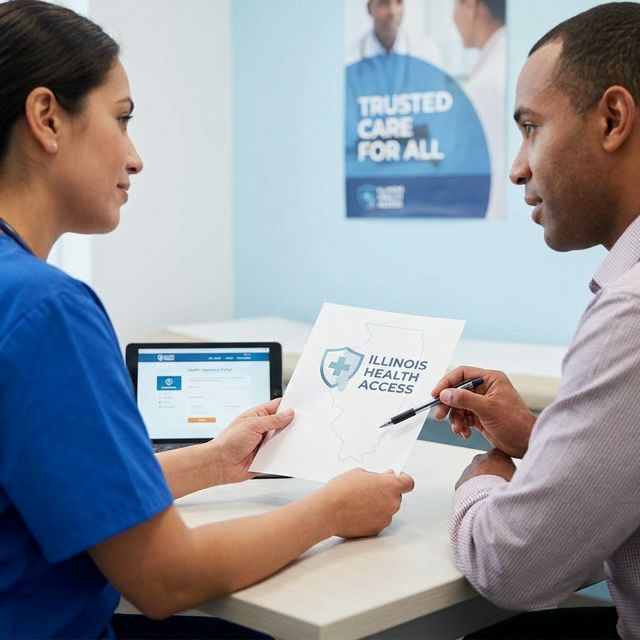
Despite the barriers, treatment options do exist for South and West Side residents, and navigating these options begins with understanding what is available. Stroger Hospital, the flagship of the Cook County Health system located on the Near West Side, provides medical detoxification and linkage to ongoing treatment. The UIC Hospital system offers addiction psychiatry services and medication-assisted treatment through its behavioral health clinics. Several federally qualified health centers on the South and West Sides have expanded their behavioral health services to include substance use disorder screening and treatment, often co-located with primary care and social services.
For residents seeking residential treatment, state-funded beds are available through Illinois SUPR-licensed providers, though wait times can be significant. Programs like Gateway Foundation, Haymarket Center, and Bobby E. Wright Comprehensive Behavioral Health Center offer residential and outpatient treatment to South and West Side residents, with many accepting Medicaid and offering sliding-scale fees. The Illinois Helpline (1-833-2-FIND-HELP) can help identify available beds and connect individuals with intake appointments at programs across the city and state.
Treatment Facilities Serving South and West Side Communities
Several established institutions provide addiction treatment services specifically designed for or accessible to residents of Chicago's South and West Side neighborhoods. These facilities accept Medicaid and state funding, reducing financial barriers to treatment.
- Stroger Hospital (Cook County Health) on the Near West Side provides emergency detox services and referrals to ongoing addiction treatment throughout the county health system
- Bobby E. Wright Comprehensive Behavioral Health Center offers culturally responsive addiction treatment specifically designed for Black communities on the West Side
- Gateway Foundation operates multiple locations in and around Chicago offering residential, outpatient, and medication-assisted treatment for a range of substance use disorders
- Haymarket Center on the Near West Side is one of the largest treatment providers in Illinois, offering detox, residential, outpatient, and recovery home services with a focus on serving underserved populations
The Case for Out-of-State Treatment
For many South and West Side residents, the environments in which they live are saturated with triggers for substance use. Open-air drug markets, networks of using associates, and the pervasive stress of living in communities with high rates of violence and poverty create conditions that make local recovery extraordinarily difficult. Leaving Chicago for treatment, while logistically challenging, can provide the separation from these environmental triggers that many individuals need to establish a foundation for recovery. Southern California, with its temperate climate and distance from Midwestern drug networks, offers a particularly compelling alternative.
Trust SoCal, located at 16537 Elm Cir in Fountain Valley, California, provides comprehensive addiction treatment in a therapeutic environment dramatically different from the streets of Englewood or Austin. The program's individualized approach addresses not only the substance use disorder itself but also the trauma, mental health conditions, and social challenges that drive addiction in communities like those on Chicago's South and West Sides. Travel coordination, insurance verification, and culturally informed care are central to Trust SoCal's approach to serving out-of-state clients. Contact the admissions team at (949) 280-8360 for a confidential consultation.
If you or a loved one on Chicago's South or West Side is considering out-of-state treatment, start by verifying insurance coverage for out-of-network or out-of-state providers. Trust SoCal's admissions team can assist with this process at no cost. Direct flights from O'Hare and Midway to Orange County, California take approximately four hours, and the admissions team can help coordinate travel logistics.
Addressing Racial Disparities in Treatment and Recovery
Any meaningful response to the opioid crisis on Chicago's South and West Sides must grapple directly with racial disparities in treatment access and outcomes. Research consistently demonstrates that Black Americans are less likely to receive medication-assisted treatment for opioid use disorder, less likely to be referred to treatment by healthcare providers, and more likely to be diverted to the criminal justice system rather than the treatment system when substance use is identified. These disparities are not the result of individual choices but of systemic failures that must be addressed through policy reform, provider education, and community investment.
Culturally responsive treatment models that center the lived experiences of Black Chicagoans are essential. This means programs staffed by providers who reflect the communities they serve, treatment approaches that incorporate African American cultural traditions and healing practices, and organizational structures that give community members genuine voice and power in program design and governance. It also means addressing the social determinants of health that drive addiction, including housing, employment, education, and safety, as integral components of the treatment and recovery process rather than as separate problems to be handled by other systems.
The movement toward equity in addiction treatment is gaining momentum in Chicago, driven by advocacy organizations, community leaders, and a growing recognition among policymakers that the status quo is both unjust and ineffective. Increased funding for South and West Side treatment providers, expansion of mobile MAT services, investment in peer recovery support, and criminal justice reform that diverts individuals from incarceration to treatment are all critical steps toward closing the racial gap in opioid crisis outcomes.
Taking Action: Next Steps for Individuals and Families
If you or someone you love on Chicago's South or West Side is struggling with opioid addiction, taking the first step toward recovery is both the most important and the most difficult thing you can do. Start by calling the Illinois Helpline at 1-833-2-FIND-HELP, which provides free, confidential referrals to treatment programs that accept Medicaid and uninsured individuals. If you prefer to explore out-of-state treatment options, Trust SoCal's admissions team is available at (949) 280-8360 to discuss your situation, verify your insurance, and help you understand your options.
Keep naloxone in your home and learn how to use it. Attend a family support group through Al-Anon, Nar-Anon, or a local faith-based organization. Talk to your primary care provider about screening for substance use disorders and medication-assisted treatment options. Remember that addiction is a medical condition, not a moral failing, and that effective treatment exists. Recovery is possible for everyone, regardless of neighborhood, income level, or past experiences with the treatment system.
For opioid overdose emergencies, call 911 immediately. Illinois Good Samaritan laws protect callers from drug possession charges. For non-emergency treatment referrals, call the Illinois Helpline at 1-833-2-FIND-HELP or Trust SoCal at (949) 280-8360. The 988 Suicide and Crisis Lifeline provides 24/7 support for mental health emergencies.

Rachel Handa, Clinical Director
Clinical Director & Therapist