Key Takeaways
- New Mexico is home to 23 federally recognized tribes and pueblos, many of which operate their own behavioral health and addiction treatment programs.
- The Indian Health Service (IHS) provides addiction treatment services at facilities throughout New Mexico including the Albuquerque Area Indian Health Service headquarters.
- Culturally informed treatment that integrates traditional healing practices with evidence-based therapies shows significantly better outcomes for Native American individuals.
- Substance use disorders disproportionately impact Native American communities in New Mexico due to historical trauma, systemic inequities, and limited access to specialized care.
- Both IHS coverage and Centennial Care Medicaid can be used to fund addiction treatment for eligible Native American residents of New Mexico.
- Trust SoCal in Fountain Valley, California welcomes Native American individuals and provides culturally sensitive care with experience serving diverse populations.
The Scope of Addiction in Native American Communities in New Mexico
New Mexico is home to 23 federally recognized tribes and pueblos, from the Navajo Nation in the northwest to the Mescalero Apache Reservation in the south-central region, and 19 Pueblo communities scattered along the Rio Grande corridor from Taos to Isleta. These communities represent some of the most culturally rich and historically significant populations in the American Southwest, and they are also among the most severely impacted by substance use disorders. National data from the Substance Abuse and Mental Health Services Administration consistently shows that American Indian and Alaska Native populations experience substance use disorders at rates significantly higher than the general population.
In New Mexico specifically, the disparities are stark. Native American residents experience alcohol-related death rates that are multiples of the state average, and drug overdose deaths involving opioids and methamphetamine have surged in tribal communities in recent years. The intersection of historical trauma, intergenerational grief, poverty, geographic isolation, and systemic healthcare inequities has created conditions in which addiction thrives and treatment remains difficult to access. Many Pueblo communities and reservation areas are located far from the urban treatment centers in Albuquerque and Santa Fe, creating a geographic barrier that compounds the shortage of culturally appropriate services.
Understanding the context of addiction in Native American communities requires acknowledging the role of colonization, forced assimilation policies, the boarding school era, and ongoing systemic discrimination. These historical forces have produced deep intergenerational wounds that manifest in elevated rates of substance use, mental health disorders, suicide, and domestic violence. Effective addiction treatment for Native American individuals must address these root causes through culturally informed approaches that honor traditional healing practices while integrating evidence-based clinical therapies.
If you or a Native American community member is experiencing a substance abuse emergency, call 911 immediately. For non-emergency treatment guidance, contact the IHS Albuquerque Area behavioral health line or Trust SoCal at (949) 280-8360 for compassionate, culturally sensitive support.
Indian Health Service Addiction Treatment in New Mexico
The Indian Health Service (IHS) is the federal agency responsible for providing healthcare to members of federally recognized tribes, and the Albuquerque Area IHS office coordinates services across much of New Mexico. IHS facilities throughout the state offer varying levels of addiction treatment, from outpatient behavioral health counseling at local clinics to more intensive programs at larger facilities. The Albuquerque Indian Health Center, located near the Indian Pueblo Cultural Center, provides outpatient substance abuse counseling, psychiatric services, and medication-assisted treatment for Native American residents of the metro area.
Beyond the Albuquerque facility, IHS operates service units at multiple locations across New Mexico including the Santa Fe Indian Hospital, the Acoma-Canoncito-Laguna Hospital, the Zuni Comprehensive Community Health Center, and the Northern Navajo Medical Center. Each facility offers behavioral health services, though the scope and intensity of addiction treatment varies significantly by location. Some facilities provide only outpatient counseling, while others can arrange referrals to residential treatment programs either within IHS or through purchased and referred care agreements with private facilities.
One of the significant challenges with IHS addiction treatment is the chronic underfunding of the Indian Health Service itself. Despite a treaty obligation to provide healthcare to tribal members, IHS consistently receives per-capita funding far below what federal programs like Medicare or the Veterans Administration receive. This funding gap translates directly into longer wait times, fewer treatment beds, limited staff, and reduced access to the full continuum of care that many Native American individuals need. Understanding these systemic limitations is important for individuals and families who may need to explore supplementary treatment options beyond the IHS system.
Native American individuals eligible for IHS services may also qualify for Centennial Care Medicaid, which can expand treatment options beyond what IHS alone provides. Dual eligibility can significantly improve access to residential treatment, medication-assisted treatment, and out-of-state programs like Trust SoCal.
Culturally Informed Treatment Approaches
Research consistently demonstrates that addiction treatment outcomes for Native American individuals improve significantly when culturally informed practices are integrated into the clinical model. Culturally informed treatment does not mean replacing evidence-based therapies with traditional practices; rather, it means creating a treatment environment where Indigenous identity, cultural values, spiritual practices, and historical context are respected, incorporated, and supported alongside proven clinical interventions like cognitive behavioral therapy, motivational interviewing, and medication-assisted treatment.
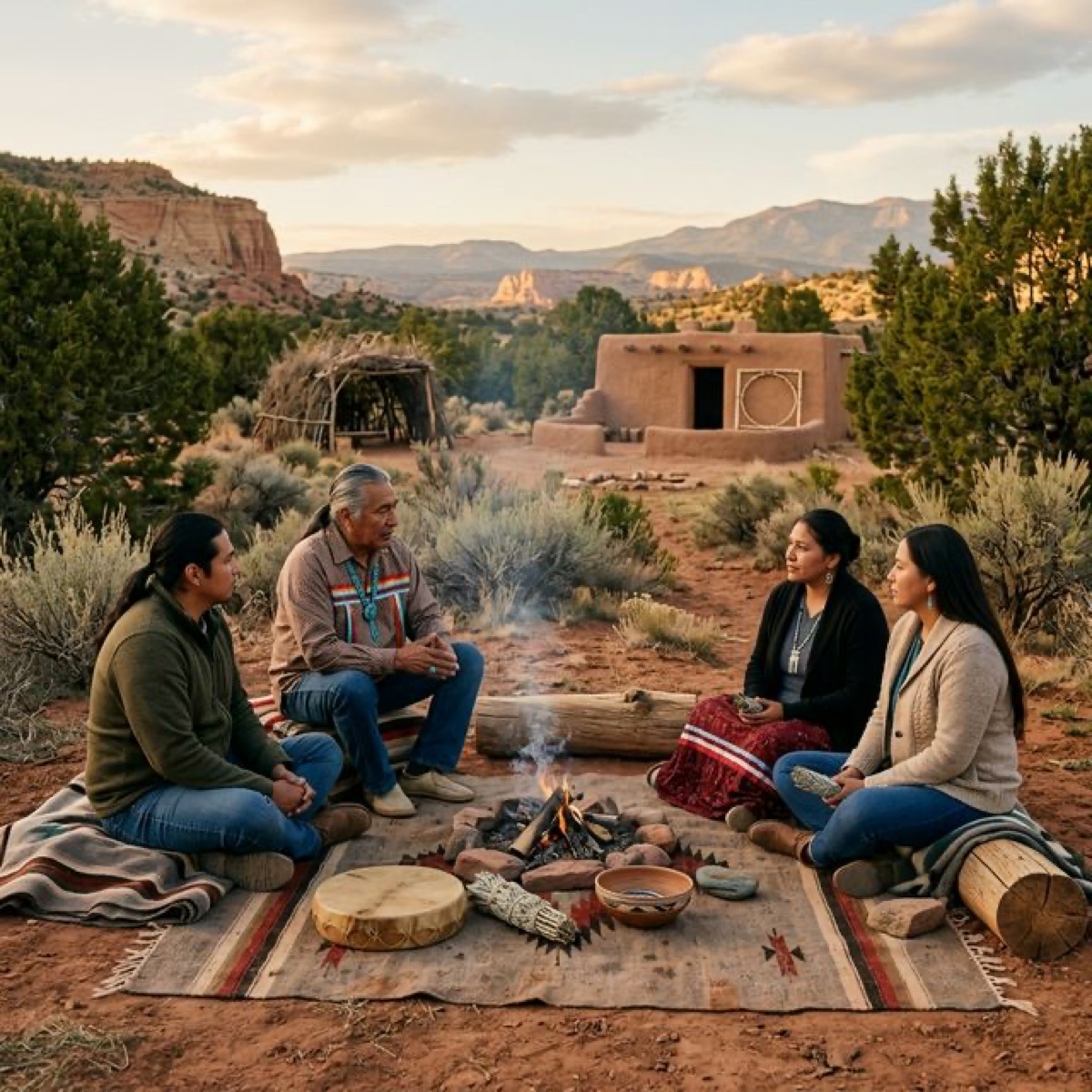
Many tribal behavioral health programs in New Mexico have developed treatment models that weave together traditional healing ceremonies, talking circles, sweat lodge ceremonies, and connections to elders and medicine people with individual therapy, group counseling, and relapse prevention education. Programs at Isleta Pueblo, Laguna Pueblo, and the Navajo Nation have pioneered these integrated approaches, demonstrating that honoring cultural identity is not just ethically important but clinically effective. Individuals who see their cultural values reflected in their treatment are more likely to engage, complete programs, and sustain long-term recovery.
For Native American individuals seeking treatment outside of tribal programs, it is essential to choose a provider that demonstrates genuine cultural competence rather than superficial awareness. This means asking about staff training in historical trauma, the availability of spiritual and cultural programming, and the facility's experience working with Indigenous clients. Trust SoCal in Fountain Valley, California has experience serving individuals from diverse cultural backgrounds and works collaboratively with each client to ensure that their cultural and spiritual needs are respected and incorporated into their individualized treatment plan.
Traditional Healing Practices in Recovery
Traditional healing practices play a vital role in the recovery journeys of many Native American individuals. These practices are as diverse as the tribes and pueblos of New Mexico themselves, and no single approach represents all Indigenous traditions. However, several practices are commonly integrated into culturally informed addiction treatment programs throughout the state.
- Talking circles provide a structured, non-hierarchical space for individuals to share their experiences, process emotions, and build community support
- Sweat lodge ceremonies facilitate physical, emotional, and spiritual purification and are used in many treatment programs as a component of holistic healing
- Connection to elders and medicine people provides spiritual guidance and cultural grounding during the vulnerable early stages of recovery
- Art, storytelling, and land-based healing activities help individuals reconnect with cultural identity and process intergenerational trauma
- Ceremonial practices specific to individual tribes and pueblos may be incorporated with guidance from traditional leaders and in coordination with clinical staff
Addressing Historical and Intergenerational Trauma
Effective addiction treatment for Native American individuals must address the historical and intergenerational trauma that underlies many substance use disorders. Treatment providers in New Mexico are increasingly trained in trauma-informed care models that recognize the lasting impacts of colonization, forced relocation, the boarding school system, and ongoing systemic discrimination. Programs that explicitly address historical trauma help individuals understand the connections between collective experience and personal substance use, reducing shame and creating pathways to healing.
- Trauma-informed care principles ensure that treatment environments are safe, trustworthy, and empowering for Indigenous clients
- Historical trauma psychoeducation helps individuals understand the intergenerational transmission of grief and substance use patterns
- Grief and loss processing is incorporated into therapy to address the cumulative losses experienced by Native American communities
- Strengths-based approaches emphasize cultural resilience, community bonds, and traditional knowledge as assets in recovery
Pueblo Community Behavioral Health Programs
Many of New Mexico's 19 Pueblo communities operate their own behavioral health departments that provide addiction treatment and prevention services to tribal members. These programs are uniquely positioned to deliver culturally specific care because they are embedded within the communities they serve and staffed by individuals who understand Pueblo culture, language, and values from lived experience. Programs at Isleta Pueblo, located just south of Albuquerque along I-25, Sandia Pueblo to the north, and Santo Domingo Pueblo between Albuquerque and Santa Fe, represent some of the most established tribal behavioral health programs in the Rio Grande corridor.
Pueblo behavioral health programs typically offer outpatient counseling, substance abuse prevention programming, cultural activities, and crisis intervention services. Some pueblos have developed more intensive programming including partial hospitalization and intensive outpatient levels of care. However, few Pueblo communities have the resources to operate full residential treatment programs, which means that members requiring inpatient care must often seek services in Albuquerque, Santa Fe, or out of state. The coordination between Pueblo behavioral health departments and external treatment providers is a critical component of ensuring continuity of care.
For Pueblo community members who need residential treatment, the combination of IHS referral authority and Centennial Care Medicaid coverage can fund placement at licensed residential facilities both in New Mexico and out of state. Trust SoCal has worked with Native American individuals from New Mexico Pueblo communities and understands the importance of maintaining cultural connections throughout the treatment process. The facility supports ongoing communication with tribal behavioral health programs and can coordinate with community resources for a culturally grounded discharge plan.
Pueblo community members considering out-of-state treatment should connect with their tribal behavioral health department before leaving. This ensures continuity of care and facilitates a smooth transition back to community-based support after treatment at facilities like Trust SoCal.
Substance Use Patterns in Native American Communities
Understanding the specific substances driving addiction in Native American communities across New Mexico is essential for effective treatment planning. Alcohol has historically been the most devastatingly prevalent substance, and New Mexico's Native American communities continue to experience alcohol-related mortality rates that far exceed both the state and national averages. Alcohol use disorder in these communities is deeply intertwined with social, economic, and historical factors, and treatment must address the full context of an individual's relationship with alcohol rather than focusing solely on the substance itself.
In recent years, methamphetamine has emerged as a particularly destructive force in both urban and rural Native American communities across New Mexico. The drug's availability along trafficking routes that cross through tribal lands, combined with its powerful addictive properties, has led to rising rates of methamphetamine use disorder among tribal members of all ages. Opioids, including heroin and illicitly manufactured fentanyl, have also penetrated Native American communities in New Mexico, contributing to a sharp increase in overdose deaths. The contamination of the drug supply with fentanyl has made any illicit drug use potentially fatal.
Prescription drug misuse, including opioid painkillers and benzodiazepines, also affects Native American communities, particularly in areas where chronic pain conditions are prevalent and alternative pain management options are limited. The co-occurrence of substance use disorders with mental health conditions including depression, PTSD, and anxiety is extremely common, making integrated dual-diagnosis treatment essential. Treatment programs that address only the substance use without treating underlying mental health conditions are unlikely to produce lasting recovery.
Navigating Insurance and Funding for Native American Treatment
Native American individuals in New Mexico often have access to multiple sources of treatment funding, though navigating these options can be confusing. IHS-eligible individuals can receive treatment at IHS facilities at no cost, and IHS can also authorize purchased and referred care at non-IHS facilities when the needed services are not available within the IHS system. Additionally, many Native American residents qualify for Centennial Care Medicaid, which significantly expands the range of treatment facilities available to them beyond the IHS network.
The combination of IHS eligibility and Centennial Care coverage creates an important safety net that can fund even out-of-state treatment at facilities like Trust SoCal. Some tribal governments also maintain their own behavioral health funding through casino revenues, federal grants, or tribal health funds that can supplement IHS and Medicaid coverage. Individuals should contact their tribal enrollment office and behavioral health department to understand the full range of resources available to them before making treatment decisions.
Trust SoCal's admissions team has experience navigating the complexities of insurance coverage for Native American individuals and can help determine what combination of IHS referral authority, Centennial Care Medicaid, tribal funds, and private insurance can be used to fund treatment. The initial call is always free and confidential. Contact (949) 280-8360 to discuss your specific situation and explore all available funding options.
Key Funding Sources for Native American Treatment
Multiple funding streams can be combined to cover the cost of addiction treatment for Native American individuals from New Mexico. Understanding all available options maximizes the chance of accessing the most appropriate level of care without financial barriers.
- Indian Health Service direct care at IHS facilities is available to enrolled members of federally recognized tribes at no out-of-pocket cost
- IHS Purchased and Referred Care (PRC) can authorize treatment at non-IHS facilities when needed services are unavailable within the system
- Centennial Care Medicaid covers a comprehensive range of substance use disorder treatment services for income-eligible individuals
- Tribal behavioral health funds from casino revenues, federal grants, or tribal appropriations may supplement other coverage sources
- Private insurance plans carried by employed tribal members are subject to the same parity requirements as any other plan under the ACA
Why Some Native American Individuals Choose Out-of-State Treatment
For many Native American individuals in New Mexico, leaving the state for addiction treatment is not about rejecting their community but about creating the space needed for individual healing before returning home. The deep social interconnection of tribal communities, while a tremendous strength, can also present challenges during early recovery. Everyone in the community may know about an individual's struggles, and the social dynamics of small, close-knit communities can create pressures that complicate the early recovery process. Traveling to a place like Orange County, California provides anonymity, distance from environmental triggers, and the opportunity to focus entirely on personal healing.
Trust SoCal in Fountain Valley, California has welcomed Native American individuals from New Mexico and provides a treatment environment that is both clinically excellent and culturally respectful. The facility is located at 16537 Elm Cir, Fountain Valley, CA 92708, and is easily accessible via direct flights from Albuquerque International Sunport to John Wayne Airport in Orange County. The clinical team works with each individual to incorporate their cultural and spiritual values into the treatment process, and the discharge planning team coordinates with tribal behavioral health programs to ensure a supported return to community.
The decision to seek treatment out of state is deeply personal, and it should be made in consultation with family, tribal behavioral health professionals, and the treatment team at the receiving facility. For many Native American individuals, the experience of recovery in a new environment provides fresh perspective and new tools that they can bring back to their home community, ultimately strengthening both their personal recovery and the recovery resources available to their tribe.
Healing does not mean forgetting where you come from. Sometimes it means going somewhere new so you can find the strength to return home as the person your community needs you to be.
— Trust SoCal Clinical Team
Resources and Next Steps for Native American Families
If you are a Native American individual or family member in New Mexico seeking addiction treatment, know that help is available from multiple sources. Start by contacting your tribal behavioral health department to learn about local services and funding options. Reach out to the Albuquerque Area Indian Health Service office to explore IHS-funded treatment opportunities. Check your eligibility for Centennial Care Medicaid through the New Mexico Human Services Department, which can expand your treatment options significantly beyond the IHS network alone.
For individuals considering treatment at Trust SoCal in Orange County, California, the process begins with a free, confidential phone call to (949) 280-8360. The admissions team will listen to your situation, verify your insurance or explore other funding options, explain what treatment at the facility involves, and answer any questions you may have about traveling from New Mexico. There is no obligation and no pressure. The goal is simply to help you understand your options and take the next step when you are ready.
Recovery is possible, and it is achievable in a way that honors your cultural identity, your community connections, and your personal values. Whether you choose to seek treatment close to home at a tribal program, at a facility in Albuquerque or Santa Fe, or at a program like Trust SoCal in Southern California, the most important thing is that you reach out for help. Addiction is a treatable condition, and thousands of Native American individuals across New Mexico are living proof that recovery is not only possible but transformative.
Kristin Stevens, LCSW
Licensed Clinical Social Worker