Key Takeaways
- Naloxone (brand name Narcan) is a safe, FDA-approved medication that reverses opioid overdoses within minutes.
- Los Angeles County distributes free naloxone through pharmacies, health clinics, community organizations, and harm reduction programs.
- California law allows anyone to obtain and administer naloxone without a prescription and provides legal protection to those who use it in good faith.
- In the fentanyl era, carrying naloxone is recommended for anyone who uses opioids, lives with someone who does, or works in settings where overdose may occur.
- Trust SoCal incorporates overdose prevention education and naloxone training into its treatment and discharge planning.
What Is Naloxone and How Does It Work
Naloxone is an opioid antagonist medication that rapidly reverses the effects of an opioid overdose. When administered to someone experiencing an overdose, naloxone displaces opioid molecules from receptors in the brain, restoring normal breathing within two to five minutes. It is available as a nasal spray (Narcan) and as an injectable.
Naloxone only works on opioid overdoses. It will not reverse overdoses caused by stimulants, benzodiazepines, or alcohol, though it is safe to administer even when the substance involved is unknown. If opioids are not involved, naloxone simply has no effect and causes no harm.
The rise of illicitly manufactured fentanyl in the LA County drug supply has made naloxone more critical than ever. Fentanyl is 50 to 100 times more potent than morphine, and its presence in counterfeit pills, heroin, and even stimulants has dramatically increased the risk of accidental overdose.
Fentanyl is now found in counterfeit pills, heroin, methamphetamine, and cocaine across LA County. Carrying naloxone can save a life even if opioids are not the intended substance of use.
Where to Get Free Naloxone in LA County
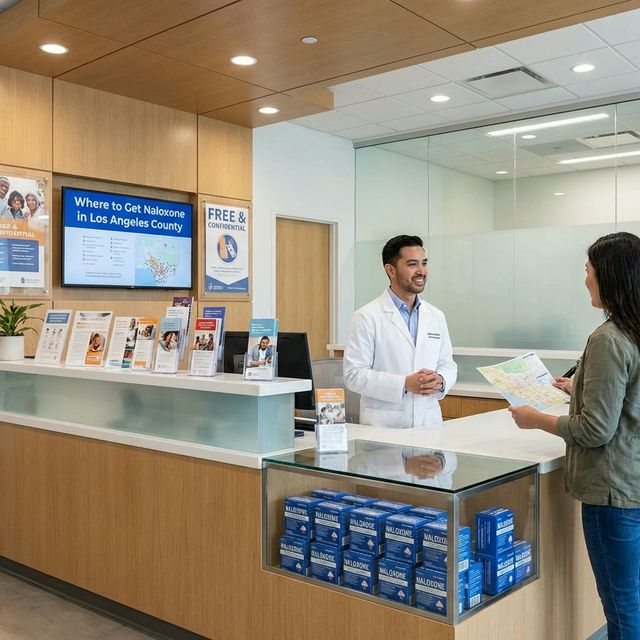
Los Angeles County has established an extensive naloxone distribution network to ensure that this life-saving medication is accessible to anyone who may need it. Free naloxone is available at multiple types of locations throughout the county.
The LA County Department of Public Health operates a naloxone distribution program that supplies free nasal spray naloxone kits through community partners. Many pharmacies in LA County also dispense naloxone without a prescription under California's standing order, though pharmacy-dispensed naloxone may require a copay depending on insurance.
- LA County Department of Public Health community distribution events
- Community health centers and federally qualified health centers
- Harm reduction organizations including needle exchange programs
- Homeless shelters and transitional housing programs
- VA facilities and veteran service organizations
- Some public libraries and community centers
- Pharmacies under California's standing order (may require copay)
How to Administer Naloxone
Administering nasal spray naloxone (Narcan) requires no medical training. The device is designed for layperson use in emergency situations. Recognizing the signs of an opioid overdose and acting quickly can mean the difference between life and death.
Signs of an opioid overdose include slow or absent breathing, blue or grayish lips and fingertips, unresponsiveness, pinpoint pupils, and gurgling or choking sounds. If you observe these signs, call 911 immediately, then administer naloxone.
- 1Call 911 immediately and report a suspected overdose.
- 2Lay the person on their back on a flat surface.
- 3Remove the Narcan nasal spray from its packaging.
- 4Tilt the person's head back and insert the nozzle into one nostril.
- 5Press the plunger firmly to release the full dose.
- 6If there is no response within two to three minutes, administer a second dose in the other nostril.
- 7Place the person in the recovery position (on their side) and stay with them until emergency services arrive.
Naloxone wears off in 30 to 90 minutes, while opioid effects can last much longer. Always call 911 even if the person appears to recover, as a second overdose can occur after naloxone wears off.
California's Legal Protections for Naloxone Use
California law provides strong legal protections for both obtaining and administering naloxone. Under California Business and Professions Code Section 4052.01, pharmacists can dispense naloxone without a prescription. Health and Safety Code Section 1714.22 provides immunity from civil liability for anyone who administers naloxone in good faith to a person experiencing an overdose.
California's Good Samaritan law (Health and Safety Code 11376.5) also provides limited immunity from prosecution for drug possession to individuals who call 911 to report an overdose. This protection is designed to encourage bystanders to call for help without fear of arrest.
These legal protections mean that there is essentially no legal risk to carrying and using naloxone. The only risk is not having it when it is needed.
Naloxone and Comprehensive Addiction Treatment
While naloxone is a critical emergency intervention, it is not a substitute for addiction treatment. Surviving an overdose often serves as a powerful motivator for individuals to seek help, and connecting overdose survivors with treatment resources is a high priority for emergency medical and public health systems.
Trust SoCal incorporates overdose prevention education into its treatment curriculum, ensuring that clients and their families understand how to recognize and respond to an overdose. Upon discharge, clients who are prescribed opioid medications or who may be at risk receive naloxone kits and training.
If a naloxone reversal has brought you or a loved one back from an overdose, consider it a second chance. Trust SoCal is available 24/7 to discuss treatment options. Call (949) 280-8360 for a confidential assessment.

Rachel Handa, Clinical Director
Clinical Director & Therapist