Key Takeaways
- Delta-8 THC is a psychoactive cannabinoid sold through a legal loophole in the 2018 Farm Bill that classified hemp as legal; it is not the same as CBD and does produce intoxication, dependence, and impairment.
- Synthetic cannabinoids (K2, Spice) are chemically unrelated to natural cannabis and act as full agonists at cannabinoid receptors, producing effects that are far more dangerous and unpredictable than THC.
- Delta-8 THC products are largely unregulated and have been found to contain contaminants, residual solvents, heavy metals, and inaccurate potency labeling in independent laboratory testing.
- Synthetic cannabinoids have been linked to mass casualty events, with multiple incidents of dozens of people simultaneously overdosing from a single contaminated batch.
- Both delta-8 THC and synthetic cannabinoids can produce cannabis use disorder requiring professional treatment, and synthetic cannabinoid withdrawal can be significantly more severe than marijuana withdrawal.
- The FDA has issued consumer warnings about delta-8 THC products, reporting over 100 adverse event reports including hallucinations, vomiting, tremor, anxiety, and loss of consciousness.
The Expanding Universe of Cannabinoid Products
The cannabinoid marketplace has undergone a dramatic transformation in recent years, expanding far beyond the traditional marijuana (delta-9 THC) and CBD products that most consumers recognize. Delta-8 THC, delta-10 THC, THC-O acetate, HHC (hexahydrocannabinol), and a growing list of novel hemp-derived cannabinoids have flooded gas stations, convenience stores, and online retailers, often marketed with minimal regulation and misleading safety claims. Simultaneously, synthetic cannabinoids continue to circulate in illicit markets despite decades of evidence documenting their extreme danger.
Understanding the distinction between these products is critical because they carry vastly different risk profiles. Natural marijuana, while not without health consequences, has a well-characterized safety profile developed over decades of research. Delta-8 THC occupies a middle ground: a psychoactive substance with poorly studied effects sold in unregulated forms. Synthetic cannabinoids represent the extreme end of the danger spectrum: potent, unpredictable chemicals that have caused hundreds of deaths and thousands of hospitalizations.
For individuals and families in Orange County navigating this confusing landscape, reliable information about what these substances actually are, how they differ pharmacologically, and what risks they carry is essential for making informed decisions and recognizing when professional help is needed.
Delta-8 THC, synthetic cannabinoids, and traditional marijuana are three fundamentally different substances with different safety profiles, legal statuses, and health risks. Being informed about each is essential in today's rapidly evolving cannabinoid marketplace.
Delta-8 THC: The Legal Loophole Cannabinoid
Delta-8 THC (delta-8-tetrahydrocannabinol) is a naturally occurring cannabinoid found in cannabis plants, but only in trace amounts. The delta-8 products sold commercially are not extracted from cannabis; instead, they are synthesized from CBD derived from legal hemp through a chemical conversion process using acids and solvents. This manufacturing process is the source of significant safety concerns, as it can produce contaminants, unknown byproducts, and inconsistent potency.
The legal basis for delta-8 THC sales rests on the 2018 Farm Bill, which legalized hemp and hemp-derived products containing less than 0.3 percent delta-9 THC. Because delta-8 is a different isomer of THC, some manufacturers and retailers argue it falls outside the delta-9 restriction. This legal interpretation has been challenged by the DEA and several state governments, creating a patchwork of regulation where delta-8 is legal in some states, banned in others, and exists in legal uncertainty in many more.
From a pharmacological perspective, delta-8 THC is psychoactive. It binds to CB1 cannabinoid receptors in the brain, the same receptors targeted by delta-9 THC, though with somewhat lower affinity. Users report effects similar to marijuana but milder: relaxation, euphoria, altered perception, and appetite stimulation. However, "milder" does not mean "safe," and the lack of manufacturing regulation means that the actual content of delta-8 products is frequently inconsistent with label claims.
Safety Concerns with Delta-8 Products
Independent laboratory testing of commercially available delta-8 products has revealed alarming quality control failures. Studies have found products containing significantly more or less delta-8 than labeled, detectable levels of delta-9 THC exceeding legal limits, residual solvents from the conversion process, heavy metals, pesticides, and unknown chemical byproducts whose health effects have never been studied.
The FDA has received over 100 adverse event reports associated with delta-8 THC products, including reports of hallucinations, vomiting, tremor, anxiety, dizziness, confusion, and loss of consciousness. Between December 2020 and February 2022, poison control centers received over 2,300 delta-8 related exposure cases, with 70 percent requiring healthcare evaluation and 8 percent resulting in hospital admission. Children are particularly vulnerable to accidental exposure due to the candy, gummy, and cookie formats many delta-8 products take.
- No FDA oversight of manufacturing processes or quality standards
- Products frequently mislabeled for potency and cannabinoid content
- Chemical conversion process can produce toxic byproducts
- Residual solvents, heavy metals, and pesticides detected in tested products
- Child-attractive packaging has led to pediatric poisoning cases
- Over 2,300 poison control calls related to delta-8 in a 14-month period
Synthetic Cannabinoids: K2, Spice, and Their Deadly Variants
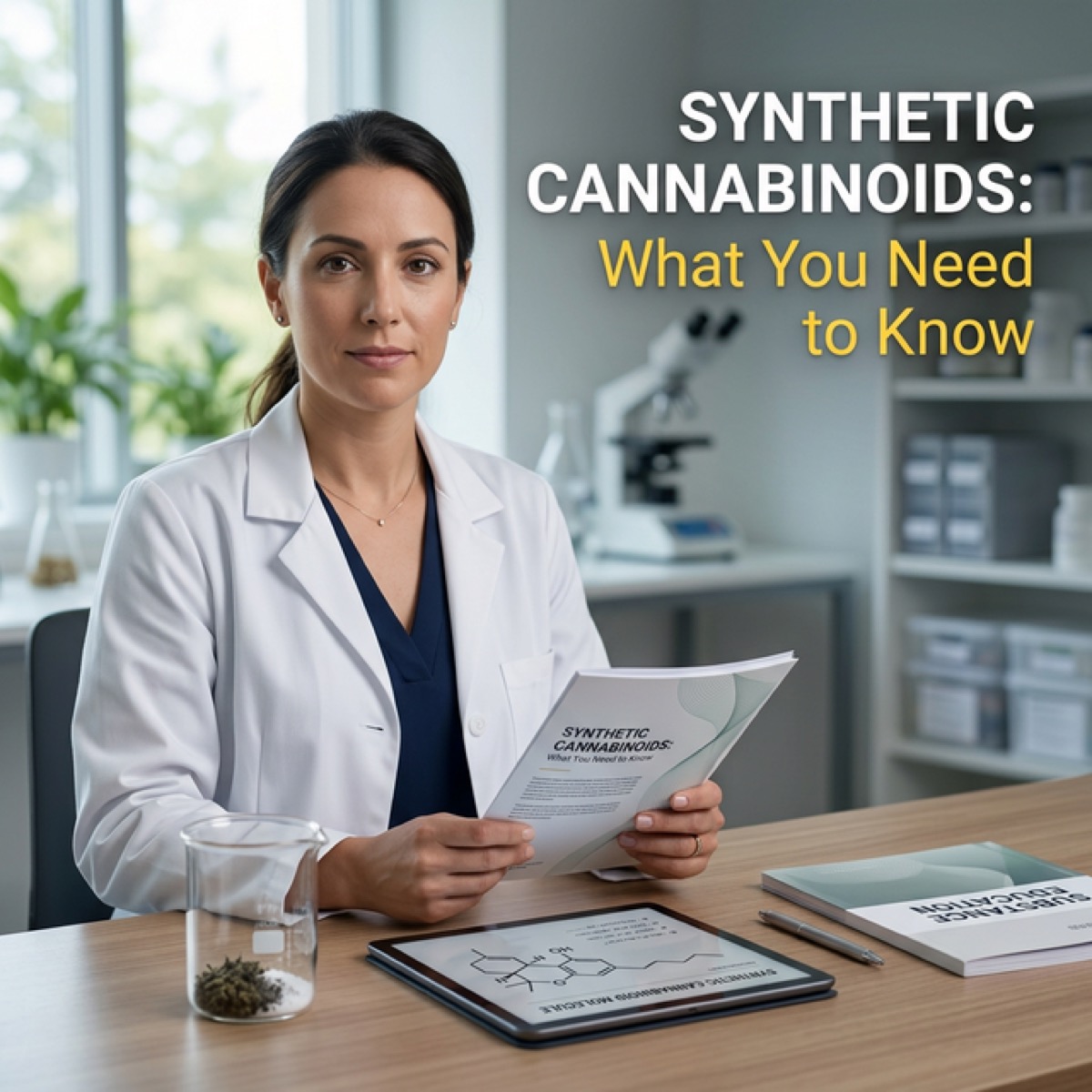
Synthetic cannabinoids are a class of laboratory-created chemicals that are structurally unrelated to THC but bind to the same CB1 receptors in the brain. Unlike delta-8 THC, which is an isomer of the natural cannabinoid, synthetic cannabinoids are entirely artificial compounds designed to mimic and amplify cannabinoid effects. They are typically sprayed onto dried plant material and sold as "incense" or "potpourri" labeled "not for human consumption," though their sole purpose is recreational drug use.
The critical pharmacological distinction is that while THC is a partial agonist at CB1 receptors, producing moderate activation, synthetic cannabinoids are typically full agonists that produce maximal receptor activation. This difference translates to effects that can be 10 to 800 times more potent than THC, with a dramatically higher risk of serious adverse events. The comparison is roughly analogous to the difference between codeine and fentanyl in the opioid world: same receptor target, vastly different potency and danger.
Synthetic cannabinoids have been responsible for mass casualty events in cities across the United States. In 2018, a single batch of K2 in New Haven, Connecticut caused over 70 overdoses in a single day. In Illinois, a batch contaminated with brodifacoum (rat poison) caused severe bleeding in over 150 people and killed four. These incidents illustrate the extreme unpredictability of synthetic cannabinoid products, where users have no way of knowing the potency, specific chemical, or contaminants in any given batch.
Acute Dangers of Synthetic Cannabinoids
The acute effects of synthetic cannabinoids can include severe psychosis with hallucinations and paranoia, seizures, cardiovascular collapse, acute kidney injury, rhabdomyolysis, and death. Unlike natural cannabis, which has an extremely low acute toxicity profile, synthetic cannabinoids have a well-documented body count. Emergency departments report that synthetic cannabinoid presentations are markedly different from and more medically serious than marijuana-related visits.
The unpredictability of synthetic cannabinoid effects is compounded by the constant rotation of specific chemicals used by manufacturers. When a particular synthetic cannabinoid is scheduled as a controlled substance, manufacturers alter the molecular structure slightly to create a new, technically legal compound. This chemical arms race means that users never know which specific compound they are consuming, making informed dosing impossible and adverse reactions difficult to predict or treat.
- Severe psychosis with visual and auditory hallucinations
- Tonic-clonic seizures and status epilepticus
- Acute kidney injury requiring dialysis
- Rhabdomyolysis (muscle breakdown) with potentially fatal complications
- Cardiovascular events including myocardial infarction in young users
- Hyperthermia (dangerously elevated body temperature)
- Death from direct toxicity, particularly with newer-generation compounds
Withdrawal from Synthetic Cannabinoids
Withdrawal from synthetic cannabinoids is generally more severe than withdrawal from natural cannabis, reflecting the higher potency and full agonist activity at CB1 receptors. Symptoms can include severe anxiety, irritability, insomnia, nausea, vomiting, diarrhea, diaphoresis, tremor, tachycardia, and intense cravings. Some individuals experience psychotic symptoms during withdrawal that can persist for days to weeks.
The duration of synthetic cannabinoid withdrawal varies by the specific compound used and the duration and frequency of use, but acute symptoms typically last 5 to 14 days with potential protracted symptoms extending weeks. Medical supervision during withdrawal is recommended due to the unpredictable nature of these substances and the possibility of seizures or severe psychiatric symptoms.
- Withdrawal onset within hours of last use for heavy daily users
- Severe anxiety and irritability exceeding typical cannabis withdrawal
- Insomnia lasting one to three weeks in heavy users
- Nausea, vomiting, and diarrhea requiring supportive care
- Possible psychotic symptoms during withdrawal
- Seizure risk with certain synthetic cannabinoid compounds
Cannabis Use Disorder: When Any Cannabinoid Becomes a Problem
Cannabis use disorder, as defined by the DSM-5, can develop from the use of any cannabinoid product, including traditional marijuana, delta-8 THC, and synthetic cannabinoids. The disorder is characterized by continued use despite negative consequences, inability to cut back, tolerance, withdrawal, cravings, and functional impairment. Approximately 10 percent of regular cannabis users develop cannabis use disorder, with the rate rising to approximately 17 percent for those who begin use during adolescence.
The proliferation of high-potency cannabinoid products, including THC concentrates, delta-8 edibles with unclear dosing, and synthetic cannabinoids, may be accelerating the development of cannabis use disorder in some users. Higher potency products produce more rapid tolerance development and more significant neurological adaptation, which translates to more severe dependence and withdrawal when use is discontinued.
Treatment for cannabis use disorder is evidence-based and effective. Cognitive behavioral therapy, motivational enhancement therapy, and contingency management have all demonstrated efficacy. For individuals using synthetic cannabinoids, medical detox may be appropriate given the more severe withdrawal profile. Trust SoCal's programs in Fountain Valley address cannabis use disorder across all cannabinoid product types with individualized treatment plans.
Cannabis use disorder is a recognized medical condition, not a moral failing. If you find that you cannot stop or reduce your use of any cannabinoid product despite wanting to, professional treatment can help. Trust SoCal offers confidential assessments at (949) 280-8360.
Harm Reduction and Informed Decision-Making
For individuals who choose to use cannabinoid products, harm reduction principles can minimize risk. With delta-8 THC, this means purchasing only from vendors who provide current, third-party certificates of analysis from accredited laboratories, starting with very low doses due to potency variability, avoiding products in child-attractive packaging if children are present in the home, and never driving or operating machinery after use.
For synthetic cannabinoids, the harm reduction message is straightforward: there is no safe dose. The unpredictability of potency, chemical identity, and contaminant profile makes any use a gamble with potentially fatal consequences. If you or someone you know is using synthetic cannabinoids, the safest course of action is cessation, preferably with medical support given the withdrawal risks.
If you or someone you love is struggling with any cannabinoid product, including delta-8 THC, traditional marijuana, or synthetic cannabinoids, Trust SoCal provides compassionate, evidence-based treatment in Fountain Valley, California. Our team understands the evolving cannabinoid landscape and provides care tailored to the specific substance and individual needs. Call (949) 280-8360 to explore treatment options.
Medical disclaimer: This article is for educational purposes only and does not constitute medical advice. If you are experiencing adverse effects from any cannabinoid product, seek emergency medical care. Contact Poison Control at 1-800-222-1222 or SAMHSA at 1-800-662-4357 for treatment referrals.
The Regulatory Future of Novel Cannabinoids
The regulatory landscape for delta-8 THC and related hemp-derived cannabinoids is rapidly evolving. As of 2025, more than 20 states have enacted restrictions or bans on delta-8 THC, while others have incorporated it into their existing cannabis regulatory frameworks. Federal action remains uncertain, though the FDA has signaled increasing concern about unregulated cannabinoid products and their public health implications.
In California, delta-8 THC derived from hemp occupies a complex regulatory position. The state has one of the most developed cannabis regulatory systems in the country, but hemp-derived products have historically fallen through regulatory gaps. Recent legislative efforts have sought to bring hemp-derived cannabinoids under the same cannabis regulatory framework, which would impose manufacturing standards, testing requirements, and age restrictions that currently do not apply.
For consumers in Orange County and throughout Southern California, the practical takeaway is that regulatory oversight of delta-8 and related products remains insufficient to guarantee safety. Until comprehensive regulation is in place, consumers face a marketplace where product quality, potency, and purity vary widely and label claims cannot be trusted. Making informed choices requires understanding these limitations and exercising appropriate caution.

Medical Review Board, MD, ABAM
Medical Director & Reviewer