Key Takeaways
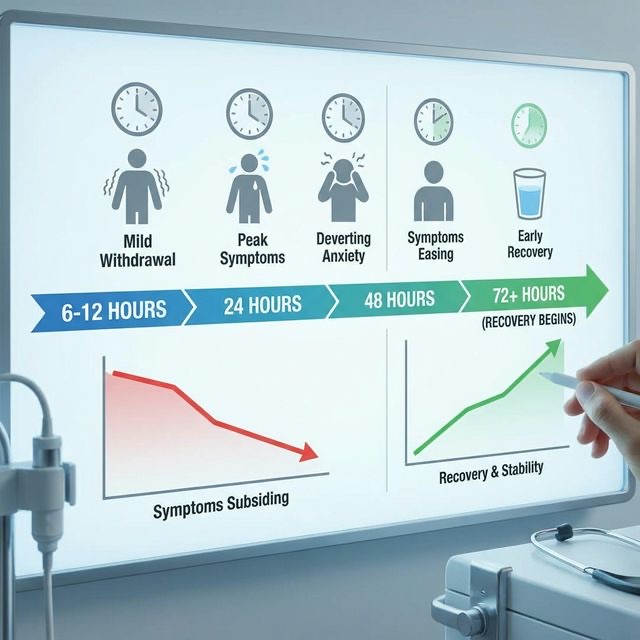
- Alcohol withdrawal symptoms can begin as early as 6 hours after the last drink and typically peak between 24 and 72 hours.
- Delirium tremens (DTs), the most severe form of alcohol withdrawal, occurs in approximately 3-5% of people withdrawing from alcohol and can be fatal without treatment.
- The complete alcohol detox timeline typically spans 5 to 7 days for acute withdrawal, though post-acute symptoms may persist for weeks to months.
- Medical detox uses medications like benzodiazepines (Librium, Ativan, Valium) to prevent seizures and manage withdrawal symptoms safely.
- The CIWA-Ar protocol is the gold standard for monitoring and treating alcohol withdrawal in clinical settings.
- Attempting to detox from alcohol at home without medical supervision is dangerous and potentially life-threatening, especially for heavy or long-term drinkers.
Understanding the Alcohol Detox Timeline
The alcohol detox timeline follows a predictable but highly variable pattern that depends on the severity and duration of alcohol dependence, overall health status, age, and whether the individual has experienced previous withdrawal episodes. Understanding this timeline is essential because alcohol withdrawal is a medical emergency that requires professional monitoring and, in many cases, medication management.
When a person who has developed physical dependence on alcohol stops drinking, their nervous system, which has adapted to the constant presence of a depressant substance, becomes hyperexcitable. This neurological rebound effect produces the constellation of symptoms known as alcohol withdrawal syndrome. The severity ranges from mild anxiety and tremors to life-threatening seizures and delirium tremens.
At Trust SoCal in Orange County, our medical team uses evidence-based protocols to guide every client safely through the alcohol detox timeline. The information in this guide is provided for educational purposes, but it is critical to understand that alcohol detox should never be attempted without medical supervision. If you or someone you know is ready to stop drinking, please contact our admissions team at (949) 280-8360 to discuss safe medical detox options. Aetna, Anthem, Blue Shield, Cigna, and UnitedHealthcare PPO plans typically cover medically necessary alcohol detox; we verify those benefits before admission.
Alcohol withdrawal can be fatal. Do not attempt to detox from alcohol at home, especially if you have been drinking heavily for an extended period, have a history of withdrawal seizures, or have co-occurring medical conditions. Medical detox is the only safe approach. If you have employer PPO insurance, call (949) 280-8360 to check Aetna, Cigna, or UnitedHealthcare coverage in minutes.
Hours 6-12: The Alcohol Detox Timeline Begins
The first symptoms of alcohol withdrawal typically appear within 6 to 12 hours after the last drink. For heavy drinkers who maintain a consistent blood alcohol level throughout the day, symptoms may begin even sooner as alcohol levels in the blood begin to drop. These early symptoms are often mild but signal the beginning of the withdrawal process.
During this early phase, individuals commonly experience anxiety, restlessness, irritability, nausea, abdominal discomfort, headache, insomnia, increased heart rate, and mild tremors in the hands. Some people also experience excessive sweating and a slight elevation in blood pressure. These symptoms may feel similar to a bad hangover, which leads some people to underestimate the severity of what is to come.
In a medical detox setting, this is the period when the clinical team performs a baseline assessment using the Clinical Institute Withdrawal Assessment for Alcohol (CIWA-Ar) scale. This standardized tool measures the severity of withdrawal symptoms across 10 categories and guides medication dosing decisions. Vital signs are monitored regularly, and initial medications may be administered to prevent symptom escalation.
Hours 12-24: Symptoms Intensify
Between 12 and 24 hours into the alcohol detox timeline, withdrawal symptoms typically begin to intensify. The anxiety that began as mild nervousness may escalate to significant agitation. Tremors become more pronounced and may be visible in the hands, arms, and eyelids. Nausea may progress to vomiting, and sweating becomes profuse. Heart rate and blood pressure continue to rise.
This period also brings the first risk of alcohol withdrawal seizures for some individuals. Seizures most commonly occur between 12 and 48 hours after the last drink, with the highest risk concentrated around the 24-hour mark. These are generalized tonic-clonic seizures that involve the entire body and represent a medical emergency. Individuals with a history of withdrawal seizures, those with heavy, prolonged drinking histories, and those who have undergone multiple previous detox episodes (a phenomenon called kindling) are at highest risk.
In medical detox, this is the period when medication management becomes most critical. Benzodiazepines, the first-line medications for alcohol withdrawal, are administered on a symptom-triggered or fixed-schedule basis depending on the clinical protocol. Librium (chlordiazepoxide), Ativan (lorazepam), and Valium (diazepam) are the most commonly used medications. They work by replacing the depressant effect of alcohol on the GABA receptors, reducing nervous system hyperexcitability, and preventing seizures.
The CIWA-Ar (Clinical Institute Withdrawal Assessment for Alcohol, Revised) scores symptoms on a scale of 0-67. Scores below 10 indicate mild withdrawal, 10-18 indicate moderate withdrawal, and scores above 20 indicate severe withdrawal requiring aggressive medical intervention.
Hours 24-72: Peak Withdrawal and Delirium Tremens Risk
The period between 24 and 72 hours represents the most dangerous phase of the alcohol detox timeline. Withdrawal symptoms typically reach their peak intensity during this window, and the risk of delirium tremens (DTs), the most severe and potentially fatal complication of alcohol withdrawal, is highest.
Delirium tremens affects approximately 3-5% of individuals withdrawing from alcohol, but the mortality rate without treatment can reach 15-20%. With proper medical management, the mortality rate drops to 1-4%. DTs are characterized by profound confusion and disorientation, visual, auditory, or tactile hallucinations, severe agitation, dramatic fluctuations in blood pressure and heart rate, high fever, and seizures. DTs represent a medical emergency that requires intensive care.
Even for individuals who do not develop DTs, the 24-72 hour window is typically the most uncomfortable part of the alcohol detox timeline. Symptoms may include severe anxiety, intense cravings, profuse sweating, nausea and vomiting, elevated temperature, rapid heart rate, tremors, insomnia, and difficulty concentrating. In medical detox, the team responds to escalating symptoms with increased medication dosing, IV fluids to prevent dehydration, electrolyte monitoring and replacement, and constant reassurance and support.
Risk Factors for Delirium Tremens
Understanding who is at highest risk for DTs helps medical teams prepare appropriate interventions. The following factors significantly increase DTs risk.
- History of previous DTs episodes
- History of alcohol withdrawal seizures
- Heavy, sustained drinking over many years
- Abnormal liver function
- Co-occurring medical conditions, especially infections
- Advanced age
- Concurrent use of other central nervous system depressants
- Previous multiple detox episodes (kindling effect)
Days 3-5: Gradual Stabilization
For most individuals, the most acute phase of alcohol withdrawal begins to subside between days 3 and 5 of the alcohol detox timeline. Vital signs begin to stabilize, the intensity of physical symptoms decreases, and the risk of seizures and DTs diminishes significantly. However, this does not mean withdrawal is complete, and medical monitoring remains important throughout this phase.
During this stabilization period, some individuals experience what is known as protracted withdrawal or post-acute withdrawal syndrome (PAWS). Symptoms of PAWS include persistent anxiety, mood instability, sleep disturbances, difficulty concentrating, and intermittent cravings. These symptoms are less severe than acute withdrawal but can persist for weeks or even months, creating an ongoing risk for relapse if not properly managed.
As acute withdrawal resolves, the focus of medical detox shifts toward preparing the client for the next phase of treatment. Benzodiazepine doses are tapered and discontinued, nutritional deficiencies common in chronic alcohol use (particularly thiamine and other B vitamins) are addressed, and the clinical team begins discussing the transition to residential treatment, PHP, or IOP programming.
Thiamine (Vitamin B1) supplementation is critical during alcohol detox to prevent Wernicke-Korsakoff syndrome, a serious neurological condition caused by thiamine deficiency that is common in chronic alcohol use. Medical detox protocols include thiamine administration from the first day.
Days 5-7 and Beyond: Completing Acute Detox
By days 5 through 7, most individuals have completed the acute phase of the alcohol detox timeline. Physical symptoms have largely resolved, vital signs have stabilized, and the immediate medical risks have passed. However, it is essential to understand that detox is not treatment; it is only the first step in a comprehensive recovery plan.
Post-acute withdrawal symptoms including insomnia, anxiety, mood swings, fatigue, and intermittent cravings may continue for weeks to months following acute detox. These persistent symptoms are a primary driver of early relapse, which is why transitioning directly from detox to ongoing treatment is critical. Research shows that detox alone, without continued therapy and support, has an extremely high relapse rate.
At Trust SoCal, our detox program seamlessly transitions into residential treatment, PHP, or IOP based on each client's clinical needs. This continuity of care ensures that the physical stabilization achieved during detox is followed by the therapeutic work necessary to address the psychological, behavioral, and social dimensions of alcohol addiction. We recommend discussing your complete treatment plan with our clinical team before beginning detox so that the transition is smooth and uninterrupted.
Medications Used During the Alcohol Detox Timeline
Medication management is the cornerstone of safe, effective alcohol medical detox. The primary goals of medication use during alcohol withdrawal are preventing seizures, managing symptoms of autonomic hyperactivity, reducing the risk of delirium tremens, and ensuring client comfort throughout the process.
Benzodiazepines remain the gold standard for alcohol withdrawal management. Chlordiazepoxide (Librium) is commonly used for its long-acting properties and smooth pharmacological profile. Lorazepam (Ativan) is preferred for patients with liver impairment because it does not require hepatic metabolism. Diazepam (Valium) provides rapid symptom relief and has self-tapering properties due to its active metabolites. The choice of benzodiazepine and dosing protocol is individualized based on clinical assessment.
Additional medications used during the alcohol detox timeline may include anticonvulsants such as gabapentin or carbamazepine as adjuncts or alternatives to benzodiazepines, beta-blockers like propranolol for managing elevated heart rate and blood pressure, thiamine and other B vitamins to prevent Wernicke-Korsakoff syndrome, anti-nausea medications, and sleep aids for severe insomnia. As the client moves beyond detox, medications for relapse prevention such as naltrexone, acamprosate, or disulfiram may be introduced.

Rachel Handa, Clinical Director
Clinical Director & Therapist