Key Takeaways
- Approximately 37 percent of individuals with alcohol use disorder also meet criteria for at least one co-occurring mental health condition, and the true rate is likely higher due to underdiagnosis.
- The relationship is bidirectional: mental health conditions increase the risk of alcohol abuse, and chronic alcohol abuse can cause or worsen psychiatric disorders including depression, anxiety, and PTSD.
- Self-medication, using alcohol to manage symptoms of anxiety, depression, trauma, or insomnia, is one of the most common pathways from mental health struggles to alcohol dependence.
- Effective treatment must address both conditions simultaneously through integrated dual-diagnosis programs; treating only one while ignoring the other dramatically increases relapse risk.
- Alcohol's effects on brain chemistry, particularly serotonin, GABA, and dopamine systems, can mimic, mask, and exacerbate virtually every psychiatric condition.
The Bidirectional Relationship Between Alcohol and Mental Health
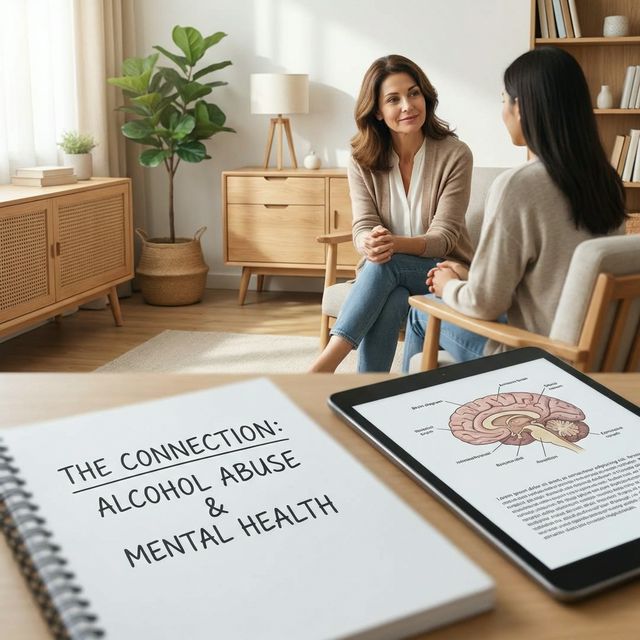
The relationship between alcohol abuse and mental health disorders is one of the most well-documented and clinically significant associations in behavioral medicine. Rather than a simple cause-and-effect dynamic, the connection operates bidirectionally: mental health conditions increase vulnerability to alcohol abuse, and chronic alcohol abuse creates, worsens, and complicates psychiatric disorders. This mutually reinforcing cycle makes both conditions more severe and more resistant to treatment when left unaddressed.
National epidemiological data reveals that individuals with any mental health disorder are approximately twice as likely to develop alcohol use disorder compared to the general population. Conversely, individuals with alcohol use disorder are 2 to 4 times more likely to develop depression, 3 times more likely to develop an anxiety disorder, and significantly more likely to experience suicidal ideation. These statistics underscore that alcohol and mental health are not separate issues but deeply intertwined dimensions of the same clinical picture.
At Trust SoCal in Fountain Valley, our dual-diagnosis treatment programs are specifically designed to address this interconnected relationship. Our clinical team recognizes that treating alcohol dependence without addressing underlying or co-occurring mental health conditions is a formula for relapse, and treating psychiatric conditions while ignoring problematic alcohol use undermines therapeutic progress.
The Substance Abuse and Mental Health Services Administration reports that approximately 9.2 million adults in the United States experience both a mental health disorder and a substance use disorder. Only 7.4 percent of these individuals receive treatment for both conditions simultaneously.
How Alcohol Affects Brain Chemistry and Mental Health
Alcohol produces its mood-altering effects by interacting with multiple neurotransmitter systems in the brain, and chronic use fundamentally disrupts the neurochemical balance that underlies healthy emotional regulation. Understanding these mechanisms explains why alcohol appears to relieve mental health symptoms in the short term while dramatically worsening them over time.
Alcohol enhances the activity of GABA, the brain's primary inhibitory neurotransmitter, producing the relaxation, reduced anxiety, and social disinhibition that make alcohol appealing as a self-medication tool. Simultaneously, it suppresses glutamate, the brain's primary excitatory neurotransmitter, further contributing to sedation and anxiety relief. However, with chronic use, the brain compensates by downregulating GABA receptors and upregulating glutamate activity, leaving the individual in a state of heightened anxiety and neural excitability whenever alcohol is not present.
Alcohol also disrupts serotonin and dopamine systems, neurotransmitters directly involved in mood regulation, motivation, and the experience of pleasure. Chronic alcohol use depletes serotonin levels and desensitizes dopamine receptors, contributing to the depression, anhedonia, and emotional flatness that characterize both active alcohol use disorder and early recovery. These neurochemical changes can persist for months after alcohol cessation, requiring patience and professional support during the recovery process.
Alcohol and Depression: A Dangerous Cycle
The relationship between alcohol and depression exemplifies the bidirectional nature of the alcohol-mental health connection. Individuals with depression may turn to alcohol for temporary relief from persistent sadness, hopelessness, and emotional pain. Alcohol's short-term mood-elevating effects provide an illusion of relief that reinforces continued use. However, alcohol is fundamentally a central nervous system depressant, and its chronic use deepens depression through serotonin depletion, disrupted sleep architecture, social isolation, and the accumulation of alcohol-related life consequences.
Alcohol-induced depressive disorder is a clinically recognized condition in which chronic alcohol use directly causes depressive symptoms that are indistinguishable from major depressive disorder. Differentiating between primary depression that preceded alcohol use and alcohol-induced depression that resulted from it requires careful clinical assessment, often including a period of monitored sobriety to observe whether depressive symptoms remit independently.
The suicide risk at the intersection of alcohol and depression is particularly acute. Alcohol impairs judgment, reduces impulse control, and amplifies emotional pain, making suicidal ideation more likely to progress to a suicide attempt. Studies indicate that alcohol is involved in approximately 22 percent of all suicide deaths. Trust SoCal's clinical team conducts thorough suicide risk assessments and implements safety protocols for all clients presenting with co-occurring alcohol use and depressive disorders.
If you or someone you know is experiencing suicidal thoughts in the context of alcohol use, please contact the 988 Suicide and Crisis Lifeline by calling or texting 988, or contact Trust SoCal at (949) 280-8360 for immediate assessment and support.
Alcohol and Anxiety Disorders
Anxiety disorders are the most common mental health conditions in the United States, and alcohol is the most commonly used substance for self-medication of anxiety symptoms. The immediate anxiolytic (anxiety-reducing) effects of alcohol, mediated through GABA enhancement, provide rapid but temporary relief that powerfully reinforces continued use. Unfortunately, this relief is followed by a rebound effect in which anxiety returns at levels exceeding baseline, driving a cycle of escalating use.
Chronic alcohol use worsens anxiety through multiple mechanisms. The brain's adaptation to chronic GABA enhancement produces heightened baseline anxiety through GABA downregulation and glutamate upregulation. Sleep disruption, which is both a cause and consequence of anxiety, is significantly worsened by alcohol despite the drug's initial sedative effects. The social, occupational, and health consequences of alcohol abuse create additional sources of anxiety that compound the original condition.
Individuals with specific anxiety conditions including generalized anxiety disorder, social anxiety disorder, panic disorder, and post-traumatic stress disorder are all at elevated risk for developing alcohol use disorder. At Trust SoCal, our treatment approach addresses both the anxiety condition and the alcohol dependence through integrated therapy that includes cognitive behavioral therapy for anxiety management, exposure-based techniques where appropriate, and evidence-based pharmacotherapy using non-addictive medications.
Self-Medication: The Bridge Between Mental Health and Alcohol Abuse
Self-medication theory provides one of the most compelling frameworks for understanding how mental health conditions lead to substance abuse. The theory posits that individuals use psychoactive substances not primarily for pleasure but to manage uncomfortable psychological states that they lack other effective tools to address. Alcohol, with its anxiolytic, mood-elevating, and sedative properties, is an exceptionally versatile self-medication agent.
Common self-medication patterns include using alcohol to fall asleep when insomnia accompanies anxiety or depression, drinking to manage social anxiety in professional or social settings, using alcohol to numb the hyperarousal and intrusive memories of PTSD, and drinking to offset the emotional flatness or side effects of psychiatric medications. Each pattern provides short-term symptom relief while creating long-term dependence and worsening the underlying condition.
Breaking the self-medication cycle requires developing alternative, sustainable coping strategies that address the underlying need alcohol was serving. This is why dual-diagnosis treatment is essential: addressing the alcohol use without providing effective alternatives for managing the mental health condition leaves the individual without tools to cope, making relapse nearly inevitable. Trust SoCal's comprehensive approach ensures that clients leave treatment equipped with practical skills and ongoing support for managing both conditions.
If you find yourself reaching for alcohol specifically to manage anxiety, depression, insomnia, or emotional pain, this pattern is a significant warning sign. Professional help can provide safer, more effective strategies for managing these symptoms without the risks of alcohol dependence.
Dual-Diagnosis Treatment: Addressing Both Conditions Together
Integrated dual-diagnosis treatment represents the clinical gold standard for co-occurring alcohol use disorder and mental health conditions. This approach treats both conditions simultaneously within the same treatment framework, recognizing that they are interconnected aspects of a single clinical presentation rather than separate problems requiring separate solutions.
At Trust SoCal, dual-diagnosis treatment involves comprehensive psychiatric evaluation, medication management for both conditions where indicated, individual therapy addressing trauma and cognitive patterns, group therapy focused on building peer support and coping skills, and family therapy to address relational dynamics affected by both the alcohol use and the mental health condition. Our clinical team includes addiction psychiatrists, licensed therapists, and counselors with specific training in co-occurring disorders.
The evidence overwhelmingly supports integrated treatment over sequential or parallel treatment approaches. Studies show that individuals who receive integrated dual-diagnosis treatment have lower relapse rates, better psychiatric outcomes, improved quality of life, and reduced hospitalization rates compared to those who receive treatment for only one condition or treatment for each condition in separate, uncoordinated settings. Contact Trust SoCal at (949) 280-8360 to learn about our dual-diagnosis programs in Orange County.

Courtney Rolle, CMHC
Clinical Mental Health Counselor