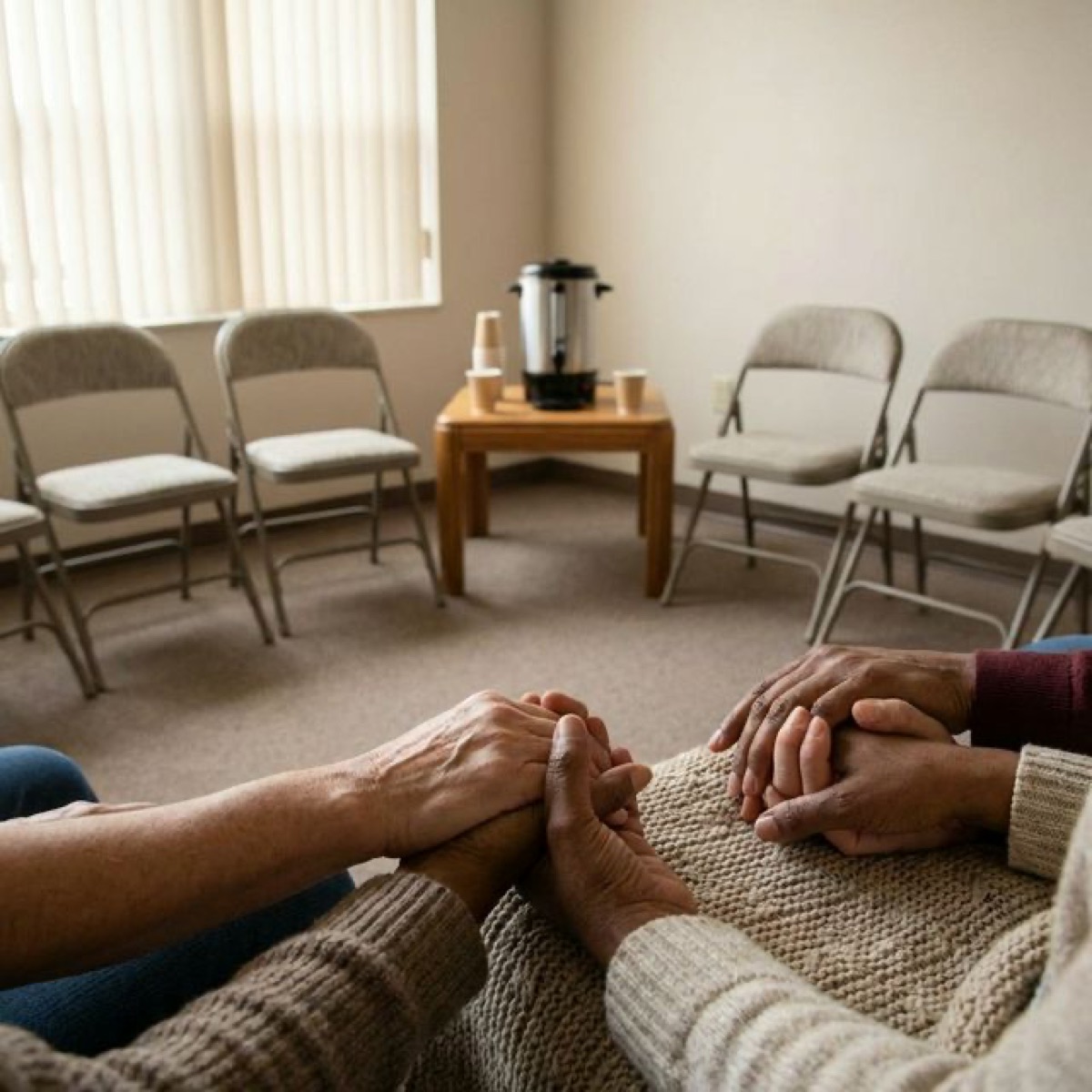
Key Takeaways
- Al-Anon is for families and friends of alcoholics, while Nar-Anon serves families and friends of people addicted to drugs — both follow a twelve-step framework.
- Family support groups help members understand that they did not cause, cannot control, and cannot cure their loved one's addiction.
- Meetings are free, confidential, and available in person throughout Orange County as well as online.
- Participating in a support group reduces feelings of isolation and provides practical strategies for managing the impact of a loved one's addiction.
- Family support groups complement professional treatment and therapy, providing ongoing community support.
What Are Al-Anon and Nar-Anon?
Al-Anon Family Groups and Nar-Anon Family Groups are twelve-step fellowship programs designed specifically for the families and friends of people with addiction. Al-Anon was founded in 1951 by Lois Wilson, the wife of Alcoholics Anonymous co-founder Bill Wilson, recognizing that family members needed their own path to recovery. Nar-Anon was established in 1967 to serve families affected by drug addiction.
Both programs are based on the twelve steps and twelve traditions originally developed by Alcoholics Anonymous, adapted for the family member's perspective. The core philosophy centers on three foundational principles: you did not cause the addiction, you cannot control it, and you cannot cure it. These three C's provide a framework for releasing the guilt and responsibility that family members often carry.
Al-Anon and Nar-Anon are not therapy, and they are not religious organizations, although they do reference a "Higher Power" that each member defines for themselves. They are peer support communities where people who share similar experiences come together to learn, grow, and support one another.
Al-Anon estimates that over 24,000 groups meet worldwide, with hundreds of meetings available throughout Southern California. Nar-Anon has a growing presence with meetings in most major metropolitan areas including Orange County.
What to Expect at Your First Meeting
Walking into your first Al-Anon or Nar-Anon meeting can feel intimidating, but the experience is typically welcoming and low-pressure. Meetings usually last about an hour and follow a structured format. A meeting leader opens with readings from approved literature, and then members share their experiences either on a topic or in an open format.
You are never required to speak. Many newcomers attend several meetings before they feel comfortable sharing, and that is perfectly acceptable. The tradition of anonymity means that what is shared in the meeting stays in the meeting, creating a safe space for honesty and vulnerability.
Most meetings are free, though a basket may be passed for voluntary contributions to cover room rental and literature costs. There are no membership dues, no sign-up sheets, and no attendance requirements. You can attend as many or as few meetings as you like, and you can try different groups until you find one that feels like a good fit.
Typical Meeting Format
While formats vary slightly between groups, most Al-Anon and Nar-Anon meetings follow a similar structure.
- 1Opening readings including the Serenity Prayer and the Twelve Steps
- 2A topic is introduced by the meeting leader, often drawn from conference-approved literature
- 3Members share their experiences related to the topic, typically for three to five minutes each
- 4Cross-talk (commenting on another member's share) is generally discouraged to maintain a safe environment
- 5The meeting closes with a group recitation or moment of reflection
- 6Newcomers are often welcomed and may receive introductory literature
How Support Groups Help Family Members
The benefits of participating in family support groups extend far beyond the hour spent in the meeting room. Members consistently report reduced feelings of isolation, improved ability to set boundaries, greater emotional stability, and a more realistic understanding of their role in their loved one's recovery.
One of the most profound benefits is the realization that you are not alone. When you sit in a room full of people who understand exactly what you are going through, the shame and secrecy that often accompany a loved one's addiction begin to lift. You discover that intelligent, caring, competent people from all walks of life are navigating the same challenges you face.
Support groups also provide practical tools for daily life. You learn how to detach with love, how to stop enabling without stopping caring, and how to take care of your own needs without guilt. These skills are not theoretical — they are shared by people who have applied them in their own lives and can speak to what works and what does not.
Finding Meetings in Orange County
Orange County has a robust network of Al-Anon and Nar-Anon meetings, with groups meeting in Fountain Valley, Huntington Beach, Irvine, Costa Mesa, Anaheim, Santa Ana, and many other cities throughout the county. Meetings are held at various times throughout the day and week, making it possible to find a meeting that fits your schedule.
To find Al-Anon meetings, visit the Al-Anon website and use their meeting finder, or call the Orange County Al-Anon Information Service. For Nar-Anon meetings, the Nar-Anon website offers a similar search tool. Many meetings are now also available online through video platforms, which can be a good option for those who prefer anonymity or have scheduling constraints.
Trust SoCal in Fountain Valley can also help connect family members with local support groups. Our family programming includes referrals to community-based support groups as part of our comprehensive approach to family healing. Call (949) 280-8360 for assistance finding meetings near you.
Other Family Support Options
While Al-Anon and Nar-Anon are the most well-known family support programs, they are not the only options. SMART Recovery Family & Friends is a science-based alternative that does not use the twelve-step framework. Instead, it focuses on evidence-based tools from cognitive behavioral therapy and motivational interviewing to help family members cope.
Celebrate Recovery is a faith-based program offered through many churches that addresses a wide range of hurts, habits, and hang-ups, including the impact of a loved one's addiction. Family therapy at a treatment center like Trust SoCal provides professional clinical support that complements peer-based groups.
The best approach often combines multiple resources. Many family members attend Al-Anon or Nar-Anon for peer support, participate in family therapy for clinical guidance, and practice self-care routines that sustain their own health and well-being. There is no single right path — the key is finding the combination that works for you and committing to your own recovery process.
- Al-Anon: for families and friends of people with alcohol addiction
- Nar-Anon: for families and friends of people with drug addiction
- SMART Recovery Family & Friends: science-based, non-twelve-step approach
- Celebrate Recovery: faith-based program offered through churches
- Family therapy at treatment centers like Trust SoCal
- Online support communities and forums
Starting Your Own Recovery Journey
Joining a family support group is a powerful declaration that your well-being matters. Regardless of whether your loved one is in active addiction, in treatment, or in long-term recovery, you deserve support, community, and tools for your own healing. The impact of a loved one's addiction does not disappear the moment they get sober, and your recovery journey is valid and important in its own right.
Start by attending at least six meetings before deciding whether a particular group is right for you. Each meeting has its own personality, and it may take a few tries to find the community that resonates with you. Give yourself permission to explore different options and be patient with the process.
If you are unsure where to start or want guidance on what resources might be most helpful for your situation, the team at Trust SoCal is here to help. Our family support specialists understand the unique challenges that families face and can connect you with the right resources. Reach out at (949) 280-8360 to begin your own path to healing.
Courtney Rolle, CMHC
Clinical Mental Health Counselor