Key Takeaways
- The Navajo Nation has declared a state of emergency around substance abuse and overdose deaths.
- Historical trauma from colonization and boarding schools underpins much of the current addiction crisis.
- Culturally competent treatment integrates traditional spiritual practices with evidence-based approaches.
- Navajo Nation Health System operates comprehensive behavioral health services across tribal lands.
- Recovery honors clan identity, spiritual traditions, and connection to tribal community.
The Crisis and Its Historical Roots
The Navajo Nation, spanning over 27,000 square miles across Arizona, New Mexico, and Utah, faces one of the most severe addiction and overdose crises in the United States. The crisis is not new—it represents the convergence of historical trauma, ongoing socioeconomic marginalization, limited economic opportunity, and current substance market dynamics. Understanding addiction in the Navajo Nation requires understanding this historical and systemic context.
The Long Walk of 1864-1868, when the U.S. government forcibly relocated Navajo people from their homeland to Bosque Redondo, created generations of trauma. Boarding schools—from the late 1800s through the 20th century—criminalized Navajo language, culture, and identity, severing children from family and community. These historical atrocities created intergenerational trauma that continues to affect Navajo communities today.
Recovery for Navajo Nation members requires acknowledgment of this history and integration of cultural healing practices that help individuals reclaim identity, reconnect with community, and build lives based on cultural values rather than substance-driven cycles.
If a Navajo Nation member is overdosing, call 911 immediately. Narcan is available at Navajo Nation clinics and pharmacies. For culturally competent addiction treatment consultation, call Trust SoCal at (949) 280-8360.
Navajo Nation Health System and Behavioral Health Services
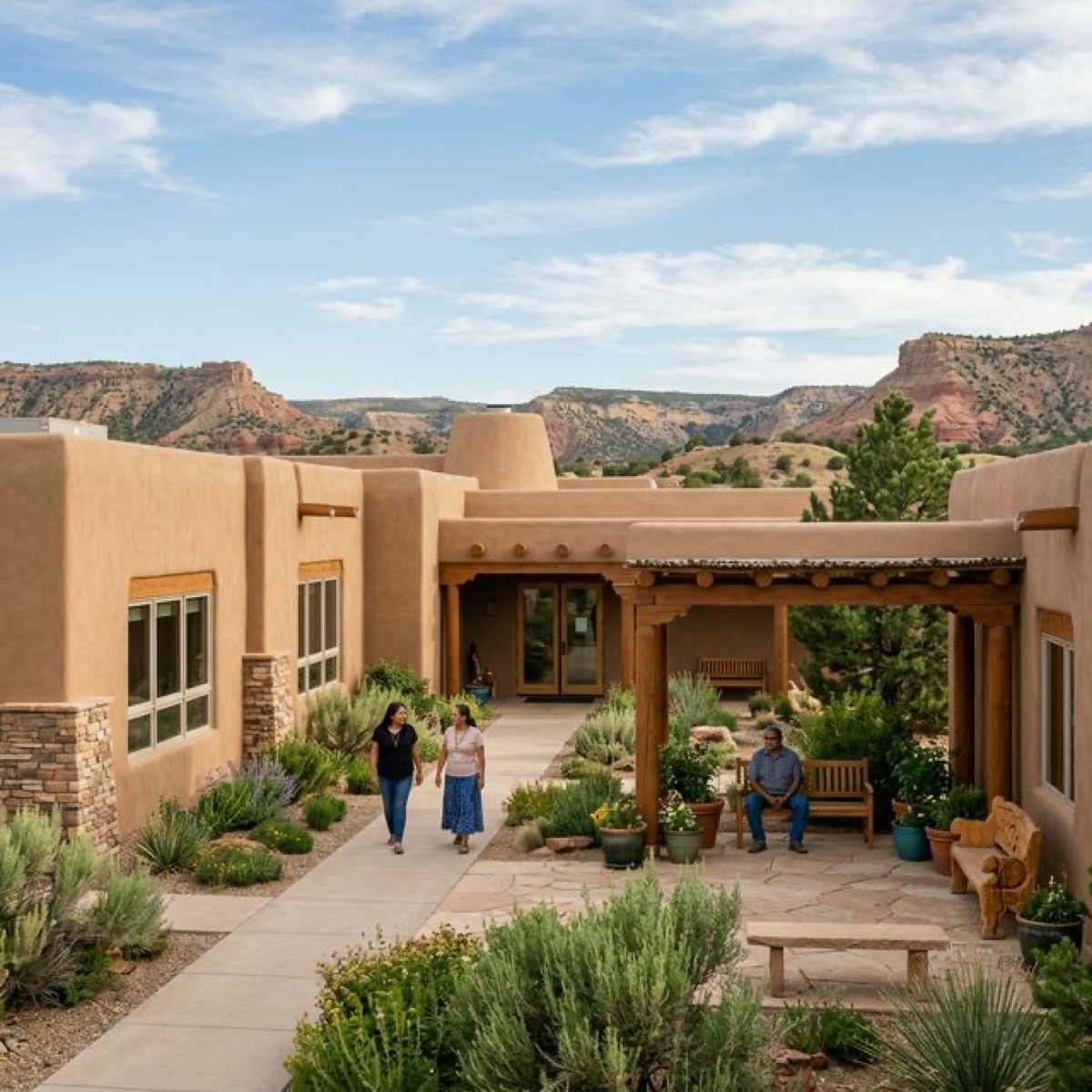
The Navajo Nation Health System operates comprehensive behavioral health services throughout tribal lands, including substance abuse treatment, crisis intervention, and recovery support. Services are available to enrolled tribal members and others living on Navajo Nation.
Beyond the health system, tribal community organizations, cultural centers, and traditional healers provide important resources for recovery. The most effective treatment approaches integrate these traditional resources with evidence-based medicine and psychology.
Behavioral Health Services
Navajo Nation Health System operates behavioral health clinics providing outpatient counseling, psychiatric services, substance abuse treatment, and emergency crisis intervention throughout the nation.
- Behavioral health clinics in all major Navajo Nation communities
- Individual and group counseling for substance use disorders
- Psychiatric medication management and mental health treatment
- Emergency crisis services available 24/7
- Services available to all Navajo Nation members
Medication-Assisted Treatment
Medication-assisted treatment (MAT) with buprenorphine is increasingly available through Navajo Nation Health System clinics. MAT is the evidence-based standard for opioid addiction treatment.
- Buprenorphine maintenance therapy through tribal health clinics
- Integration with behavioral health counseling
- Covered under tribal health insurance for eligible members
- Ongoing medication management and support
Traditional Healing Integration
Quality behavioral health services within the Navajo Nation recognize the central importance of traditional spiritual practices and healing. Treatment providers coordinate with traditional healers, allow flexibility for ceremonial participation, and integrate cultural elements.
- Coordination with traditional healers and medicine people
- Flexibility in treatment schedules for ceremonial participation
- Use of Navajo language in treatment settings
- Integration of clan identity and spiritual traditions into recovery planning
Intergenerational Trauma and Healing
Addiction in the Navajo Nation cannot be separated from historical and ongoing trauma. Individual recovery is deepened by connecting with collective history, understanding how trauma has been transmitted across generations, and engaging in healing practices that address both personal and community wounds.
Trauma-informed treatment helps individuals understand how historical events have shaped their family systems, coping patterns, and vulnerability to substance abuse. This understanding creates context and meaning for recovery work.
Understanding Historical Trauma
Individuals benefit from education about historical trauma—the Long Walk, boarding schools, ongoing colonialism—and how these events created intergenerational patterns affecting current communities.
- Education about Long Walk, boarding schools, and historical trauma
- Understanding intergenerational transmission of trauma through families
- Recognizing current systemic inequities and ongoing colonialism
- Connection to cultural pride and identity as resistance to trauma effects
Ceremony and Spiritual Healing
Navajo spiritual practices—including ceremonies, prayers, and connection to spiritual traditions—are central to healing. Treatment should support rather than interfere with ceremonial participation.
- Flexibility for participation in traditional ceremonies and spiritual practices
- Collaboration with traditional healers and spiritual practitioners
- Integration of prayer, spirituality, and cultural teachings into recovery
- Connection to sacred places and spiritual resources
Why Some Navajo Nation Members Choose Out-of-State Treatment
While Navajo Nation Health System provides important services, some individuals benefit from intensive residential treatment in larger centers. Others may travel out of state for specialized services unavailable on the nation. When choosing out-of-state treatment, selecting programs with cultural competence and commitment to tribal coordination is essential.
Quality out-of-state programs respect tribal sovereignty, support traditional practices, and maintain connections to tribal health and community systems.
When Out-of-State Treatment Is Appropriate
Out-of-state residential treatment may be recommended for individuals with severe substance use disorders, complex co-occurring conditions, or previous unsuccessful treatment attempts.
- Severe opioid dependence requiring intensive medical detox
- Significant co-occurring mental health conditions (severe PTSD, depression)
- Previous unsuccessful attempts at local or outpatient treatment
- Individual request for intensive immersion in recovery community
Culturally Competent Out-of-State Programs
Out-of-state programs should demonstrate genuine cultural competence: staff training in Native American history and contemporary issues, flexibility for traditional practices, and commitment to anti-racism.
- Staff trained in Native American history, trauma, and cultural competence
- Flexibility for participation in spiritual practices and ceremonies
- Coordination with Navajo Nation Health System for continuity of care
- Peer support from other Native American individuals in recovery
- Explicit commitment to decolonial approaches and tribal sovereignty
Trust SoCal: Treatment Honoring Navajo Identity
Trust SoCal in Southern California serves Navajo Nation members and other Native American patients. The program demonstrates cultural competence, allows flexibility for traditional practices, and coordinates with tribal health systems.
- Staff trained in Native American history, trauma, and cultural issues
- Flexibility for spiritual practice and ceremonial participation
- Coordination with Navajo Nation Health System throughout treatment
- Peer support from Native American patients in recovery
- Call (949) 280-8360 to discuss program fit and tribal health coordination
Clan, Family, and Community in Recovery
Traditional Navajo identity is rooted in clan relationships. Clan connections, extended family networks, and tribal community are protective factors in recovery. Effective treatment activates and strengthens these connections.
When a Navajo Nation member travels out of state for treatment, family and clan support become even more important. Quality programs facilitate family involvement and support ongoing tribal and community connection.
Clan and Family Involvement
Treatment plans should activate clan networks, extended family support, and community leadership. Family therapy may include multiple family members, elders, and cultural leaders.
- Family therapy including clan members and extended network
- Incorporation of clan teachings and relationships into recovery planning
- Involvement of respected elders and community leaders
- Regular communication with family and clan during treatment
Community Support and Peer Networks
Recovery-focused community connections and peer support strengthen sustained sobriety. Support groups, community organizations, and recovery networks within the Navajo Nation provide ongoing accountability and connection.
- Peer support groups specifically for Navajo Nation members
- Community-based recovery organizations and cultural centers
- Connection to tribal youth programs and community initiatives
- Online support for connection to broader Native American recovery community
Aftercare and Reintegration into Tribal Community
Returning from out-of-state treatment to the Navajo Nation requires careful planning. Individuals should transition back to Navajo Nation Health System care, engage with peer support and community, and reconnect with clan and family.
Sustained recovery depends on ongoing psychiatric medication management, regular outpatient engagement, support group participation, and meaningful life activity within the tribal community.
Coordination with Navajo Nation Health System
Upon return to the nation, individuals should establish care with Navajo Nation Health System providers. Outpatient behavioral health clinics provide ongoing treatment and psychiatric support.
- Navajo Nation Health System outpatient intake scheduled before arrival
- Monthly psychiatric medication management and reviews
- Individual and group counseling integrated with cultural approaches
- Medication-assisted treatment if appropriate for opioid addiction
Peer Support and Spiritual Practice
Sustained recovery depends on peer support, spiritual connection, and meaningful activity. Regular support group participation, ceremonial engagement, and community involvement provide structure and purpose.
- Peer support groups for individuals in recovery
- Participation in traditional ceremonies and spiritual practices
- Connection to clan and extended family networks
- Meaningful work, education, or community service
Financial Resources and Coverage
Navajo Nation members have coverage through tribal health insurance. Additionally, Centennial Care Medicaid and other insurance options may be available. Treatment programs work to identify available resources.
Navajo Nation Tribal Health Insurance
Enrolled tribal members have access to comprehensive tribal health insurance covering all levels of addiction treatment through the Navajo Nation Health System at no out-of-pocket cost.
- Outpatient behavioral health services fully covered
- Medication-assisted treatment with no cost-sharing
- Emergency psychiatric services covered
- Services available throughout Navajo Nation
Centennial Care and Other Options
Individuals without tribal health insurance may be eligible for Centennial Care Medicaid or other insurance options covering addiction treatment.
- Centennial Care covers all levels of addiction treatment
- Private insurance options for employed individuals
- Financial assistance programs for uninsured individuals
- Payment plans available for out-of-pocket costs
Healing for the Navajo Nation
The addiction crisis in the Navajo Nation is severe, but recovery is possible and is happening. Individuals and families who are ready for change should reach out to Navajo Nation Health System providers or consider treatment options that honor cultural identity and tribal sovereignty.
Recovery strengthens families and communities. Supporting individual recovery is supporting the strength and future of the Navajo Nation.
Local Resources and Tribal Support
The first step is reaching out to Navajo Nation Health System or another trusted provider for assessment and discussion of treatment options.
- Contact nearest Navajo Nation Health System behavioral health clinic
- Emergency services available 24/7 at all major Navajo Nation medical centers
- Tribal social services and community support organizations
- Call Trust SoCal at (949) 280-8360 for consultation about all options
Exploring All Treatment Paths
Whether pursuing treatment through tribal health system or considering out-of-state residential programs, discussing all options with professionals helps identify the best path forward.
- Contact Navajo Nation Health System for comprehensive discussion of options
- If considering out-of-state care, ask about cultural competence and tribal coordination
- Request to speak with other Navajo Nation members in recovery
- Take time for decision-making that honors both individual needs and cultural values

Trust SoCal Editorial Team, Clinical Review Board
Editorial & Clinical Review